Introduction
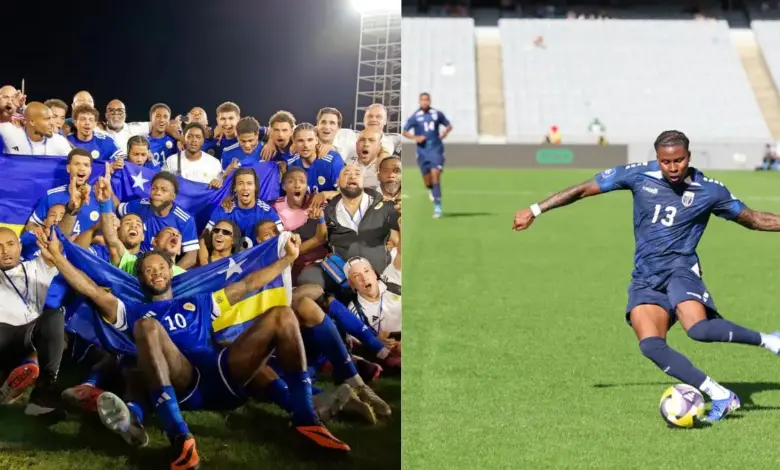
An underdog story on a global stage now has new protagonists: curacao and Cape Verde. Both island nations secured first-time berths for the expanded 2026 FIFA World Cup, upsetting long-held assumptions about population, infrastructure and World Cup readiness. Their qualification — one a CONCACAF unbeaten run, the other dominant in CAF group play — forces a re-evaluation of what national football success can look like in an era of expanded tournaments and stronger diaspora ties.
Background: Curacao and Cape Verde’s path to 2026
The 2026 FIFA World Cup will be hosted across the United States, Canada and Mexico and has expanded from 32 to 48 teams with a 12-group-of-four format. The tournament opens on June 11, 2026, at Estadio Azteca in Mexico City. Within that enlarged field, curacao and Cape Verde emerge as two of the most striking debutants, each turning limited domestic resources into continental qualification success.
Curacao, a constituent country within the Kingdom of the Netherlands nicknamed the “Blue Wave, ” entered the tournament field out of CONCACAF competition. Cape Verde qualified through CAF, topping a group that included established opposition and securing their place with a decisive home win that clinched group leadership.
Deep analysis: how curacao defied size and Cape Verde dominated qualifiers
Size has often been treated as a proxy for footballing potential. The new World Cup field challenges that assumption. Curacao, with 156, 115 residents and 444 square kilometres of territory, became the smallest country by population to qualify for a World Cup, replacing the previous benchmark set by Iceland at roughly 350, 000 inhabitants. The island finished as the only unbeaten team in the CONCACAF tournament, topping Group B with 12 points and sealing qualification after a tense 0-0 draw against Jamaica.
Key factors in curacao’s run were tactical discipline and the leveraging of talent from an international diaspora. The campaign was guided by a veteran Dutch manager whose stewardship is credited with organizing a compact, defensively resilient side. That approach compensated for a limited domestic pool and allowed the team to extract maximum value from each fixture.
Cape Verde’s route was similarly emphatic but played out on the African continent. With a population just under 525, 000 and described in qualification notes as measuring 4, 033 kilometres, Cape Verde topped CAF Group D with 23 points, finishing ahead of long-standing opposition such as Cameroon. The archipelago confirmed qualification following a 3-0 home victory that underscored its capacity to win decisively on its own soil.
Both cases illustrate a replicable playbook: clear tactical identity, focused coaching, and effective engagement of overseas players. That combination narrowed the gap that raw population and infrastructure would traditionally predict.
Expert perspectives and regional impact
The role of experienced management was highlighted throughout the campaigns. Dick Advocaat, described in campaign summaries as a veteran Dutch manager who led curacao, is singled out for imposing the tactical framework that underpinned their unbeaten CONCACAF run. The interior discipline and compactness of the team point to coaching emphasis rather than an overreliance on individual stars.
At the regional level, these qualifications alter competitive calculations. CONCACAF and CAF both saw smaller nations translate strategic clarity into results, suggesting that continental tournaments will increasingly be platforms where well-drilled teams, regardless of population, can qualify for global competition. For opponents, preparing for curacao or Cape Verde will require tactical adjustments rather than assuming superiority based on traditional metrics.
There are also broader signalling effects: expanded global events can validate investments in scouting, diaspora programs and coaching, even where domestic leagues and facilities remain modest. These nations’ successes serve as case studies for how targeted planning can yield outsized outcomes in qualification cycles.
Conclusion
Curacao and Cape Verde’s World Cup debuts are more than symbolic milestones; they are operational lessons in modern qualification dynamics. As the 2026 tournament approaches, will other small nations replicate the blueprint of disciplined tactics, diaspora integration and focused coaching to break through on football’s biggest stage — and what will that mean for the competitive balance of future World Cups?