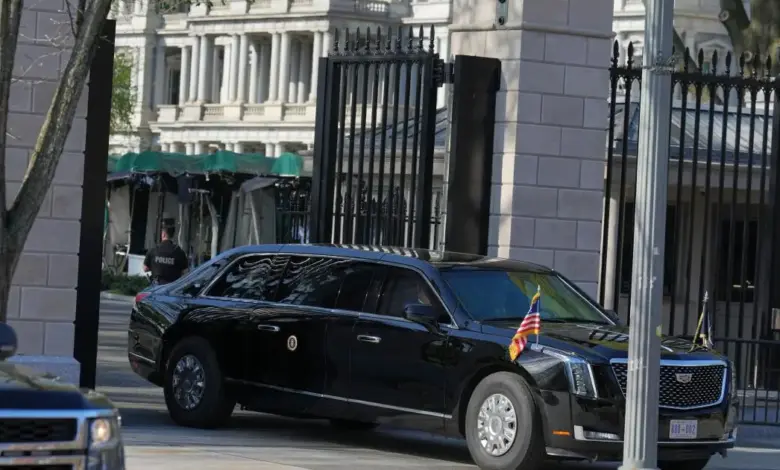
President Trump’s presence at the Supreme Court on Wednesday morning ET put the question of birthright citizenship at the center of a tense courtroom scene and a crowded plaza outside. The president arrived by limousine to listen as justices heard whether an executive order can end citizenship for children born in the United States to parents who are in the country unlawfully or temporarily.
Birthright Citizenship at the Court
The case asks whether the president can effectively rewrite the Constitution by stripping automatic citizenship from U. S. -born children of certain parents. Trump signed the birthright citizenship order on the first day of his second term; every lower court that has considered the issue has found the order illegal and prevented it from taking effect. A definitive ruling by the nation’s highest court is expected by early summer.
Why the case matters
Legal advocates and opponents framed the stakes in starkly different terms. Hundreds of thousands of U. S. babies could be affected if the court upholds the administration’s position, a change with deep social and legal consequences. The administration has presented the order as a necessary step to curb what the president describes as abuse of the immigration system, writing that “Birthright Citizenship is not about rich people from China, and the rest of the World, who want their children, and hundreds of thousands more, FOR PAY, to ridiculously become citizens of the United States of America. It is about the BABIES OF SLAVES!”
At oral argument, the government urged a narrower reading that emphasizes the concept of permanent “domicile. ” Justice Elena Kagan pushed back on that theory, saying the rationale of the landmark case Wong Kim Ark was clear: “Everybody got citizenship by birth, except for a few discrete categories, ” and that the administration’s position represents a revision that would change what people have thought the rule was for more than a century.
Questions raised from the bench also touched on birth tourism. The solicitor general acknowledged uncertainty about how significant birth tourism is, saying “no one knows for sure” and referencing prior reports and a congressional Republican study that flagged changes in consular policies as relevant.
Voices, mood and the scene outside
Outside the courthouse, demonstrators gathered in support of established citizenship rules and in opposition to the administration’s order. Robin Galeraith, who traveled from Maryland to join the demonstration, said, “It’s very nice to see so many people defending the constitution and defending what makes our country great — we are an immigrant nation, and that is why we thrive for so long. ” She described the president’s appearance at the court as the behavior of someone acting out of fear rather than strength.
Carol Rose, executive director of the ACLU of Massachusetts, joined a large crowd as the case was argued; the litigation was brought by ACLU chapters of Massachusetts, Maine and New Hampshire alongside the national ACLU. The mood in the courtroom was altered by the president’s presence: Adam Winkler, a constitutional law professor at UCLA, said it was not clear why the president attended and suggested his attendance might be intended to intimidate, though he added that presidential presence probably would not change minds on the bench because justices prize their independence. Winkler also noted the change in tone: many hearings are quiet and academic, and that atmosphere was different with the president in attendance.
The legal fight reaches back to a long tradition of birthright rulings, including Wong Kim Ark, which interpreted the Fourteenth Amendment in a way that has shaped citizenship law for generations. Opponents of the order say overturning that understanding would be a far-reaching revision of settled doctrine.
The day closed with no immediate resolution. The Court’s eventual decision will determine whether the president’s order can take effect and reshape who is entitled to citizenship at birth, leaving families, advocates and legal scholars awaiting the high court’s ruling.