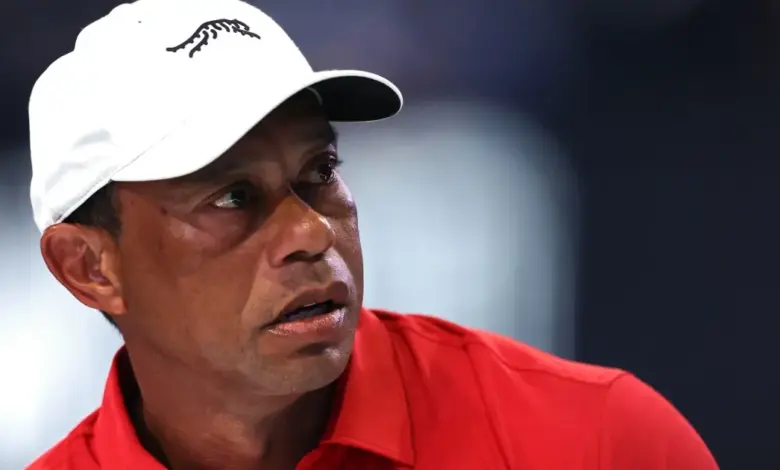
Tiger Woods told a deputy he had looked down at his phone moments before a rollover crash, and investigators documented what they described as “signs of impairment” while finding two pills later identified as hydrocodone in his pocket. The detail about hydrocodone — combined with observations of bloodshot eyes, difficulty completing sobriety tasks and a refusal to provide a urine sample — frames a complex scene at the center of a DUI investigation.
Background and context: the collision and immediate aftermath
The incident report from the Martin County Sheriff’s Office describes an on-road sequence in which Woods’ Land Rover overtook a truck that was beginning a turn into a driveway on Jupiter Island, clipped the back of a trailer and rolled onto its side. Video from the scene captured the SUV on its side; Woods climbed out through a window and was arrested at the scene and charged with driving under the influence. The truck involved belonged to 43-year-old Jeromy Bullard, who is identified in the report as the owner of a local home cleaning company. Bullard’s father, Ricky Bullard, said his son was not hospitalized or seriously injured and offered limited comment on the incident.
The report documents about $5, 000 in damage to the rear left fender and wheel of the trailer. Woods told one deputy he had been coming from his house and had looked down at his cell phone, saying he did not realize the truck had slowed. He denied consuming alcohol but acknowledged taking “a few” prescription medication pills and said he had taken medication earlier in the morning. Video from the after-action shows him leaving jail late Friday night ET.
Hydrocodone found in pocket: what the report says
Two white pills in Woods’ left pocket were determined to be hydrocodone, a medication used to treat pain. The incident report records that deputies observed “several signs of impairment”: bloodshot, glassy eyes; pupils described as extremely dilated; movements that appeared lethargic and slow; and profuse sweating while seated in an air-conditioned car. During field sobriety testing, the report notes struggles, including limping and stumbling to the right on one exercise. Woods told deputies he has had multiple operations on his back and leg and that his ankle seizes when he walks, a context the report records as part of his response.
The report also states Woods submitted to a breath test at the jail but refused a urine test. The presence of hydrocodone in his pocket and his statements about prescription medication have become focal points for investigators assessing impairment at the time of the crash.
Expert perspectives and stakeholder reactions
The Martin County Sheriff’s Office released the incident report that compiles officers’ observations, physical evidence and witness statements related to the crash and subsequent arrest. Ricky Bullard, father of Jeromy Bullard, said he preferred not to elaborate beyond confirming his son’s condition. Public reactions included concern from members of Woods’ circle: Kevin Kisner, identified as a teammate on The Golf League, said the episode was “very disturbing” and expressed hope that Woods could recover and move forward.
Observers point to how documented physical signs — glassy eyes, extreme pupil dilation, slow movement and sweating — alongside the finding of hydrocodone and a refusal to provide a urine sample, tighten the evidentiary picture investigators will weigh. Woods has prior legal history noted in the report: a 2017 DUI arrest in Florida tied to prescription medication, and a 2021 rollover crash that resulted in serious leg injuries requiring surgery. Those past incidents are recorded in the public account and factor into how this event is being framed in legal and reputational terms.
From an investigative standpoint, the report’s mixture of witness account, on-scene video, officer observations and physical evidence forms a multi-threaded record. Each element — the admission of looking at a phone, the condition of the vehicle, the officer-observed signs and the pills identified as hydrocodone — will be considered in evaluating impairment and causation.
Regional and broader implications
Beyond the individual legal consequences, the incident has ripple effects across public safety and sports communities. The crash and arrest interrupted Woods’ return to competition noted in the account and prompted expressions of concern from teammates and family, including Woods’ ex-wife, who is described as worried for his welfare. The combination of a high-profile athlete, a rollover crash, visible injuries to the vehicle and the presence of hydrocodone raises questions about prescription medication management, road safety and how prior medical history is weighed in impairment investigations.
Law enforcement statements and the documented evidence in the report will be central if charges proceed, and the case will test how courts reconcile medical conditions and medication use with observed impairment on the road.
As the legal process unfolds, one question remains: will the presence of hydrocodone in a pocket and the documented signs at the scene be sufficient to determine impairment beyond reasonable doubt, or will medical history and explanations about surgery and prescribed medication complicate that calculus?