Love Overboard: Meet the Winners and the Yacht Rules That Sent Contestants Walking the Plank

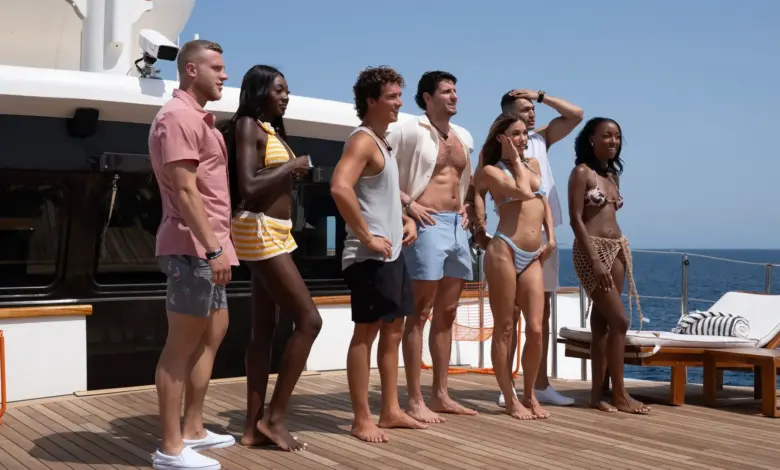
Onboard a glittering yacht off the coast of Malta, the premise of love overboard was immediate and visible: sunburnt shoulders, cocktail hours interrupted by challenges, and contestants who discovered that half of the roster would be climbing into service roles rather than lounging on deck. The first season unfolded across nine episodes filmed in Malta in June 2025 and presented a hybrid of dating and workplace tension.
Love Overboard: How did the show’s rules shape relationships?
The format split participants into two clear worlds. Four couples enjoyed life on the upswing—called the Upside—living in luxury, while the remaining singles were sent to the Downside to cook, clean and serve those on top. Downsiders could only earn their way back to the Topside through challenges, or by breaking up one of the existing couples. When a love triangle emerged, the two competitors walked a literal plank; the chooser decided who matched with them and who plunged into the sea. Eliminated contestants fell roughly thirty feet into the Mediterranean Sea, a rule that injected physical stakes into what might otherwise have been only emotional maneuvering.
Who won Love Overboard and are they still together?
At the finale, Tim Demirjian and Gia Aldisert were crowned the winners, narrowly beating finalists David Fuhrmann and Val Zuluaga to claim the season’s top prize: a $100, 000 trip around the world. Tim Demirjian is identified as a co-founder of the vodka seltzer company Dezo; Gia Aldisert is presented as an influencer and a casual best friend and roommate of Iris Kendall from another reality series. Their public interactions after the show suggest an amicable connection: they follow each other, Tim follows Gia’s twin brother, and Gia reacted with laughing emojis to a holiday video Tim posted.
What do participants and creators say about the experiment?
Gabby Windey, who hosted the series, framed the conceit plainly: “the contestants thought they would be on a dating show, but half are actually going to be working on the boat. ” The production came from Alex Cooper’s Unwell Productions, which positioned the series as a blend of romantic competition and workplace drama—described in internal framing as what would happen if Love Island USA and Below Deck had a Gen Z love child. Contestants ranged in age from 21 to 30 and included influencers and fitness enthusiasts from across the United States and Germany, a casting choice that underscored the show’s social-media angle and its focus on performative personalities as much as on private bonds.
Vocational detail bled into personal dynamics: Downsiders faced menial labor and social marginalization on the Downside, while Upsiders navigated the pressure of being desirable yet vulnerable to calculated romantic breaks. That design created a cross-current of economic and emotional incentives—prize money and a global trip on one side, status and comfort on the other—forcing contestants to make public decisions under scrutiny.
Tim’s own description of his “typical type”—a specific physical profile and attitude—stood alongside Gia’s stated preference for tall, masculine partners, illustrating how everyday dating preferences were amplified into show strategy. These candid declarations, voiced while promoting the season, became part of how viewers parsed authenticity and theater within the competition.
The producers’ synthesis of reality TV formats deliberately manufactured friction: romance, rivalry and literal planks. Creators and cast leaned into that tension as both entertainment and a test of whether televised coupling can survive engineered hardship.
Back on deck where the season began, the memory of contestants sprinting to challenges and the echo of a thirty-foot plunge remain. The winners walked away with a trip and a public storyline; many others walked the plank and into new follower counts and cautionary tales. For viewers who watched the experiment unfold, the show posed a simple question about modern courting: can curated attraction withstand contrived hardship? As the sun set over Malta, love overboard felt less like a moment and more like a laboratory—one that leaves open whether those relationships will weather calmer seas.