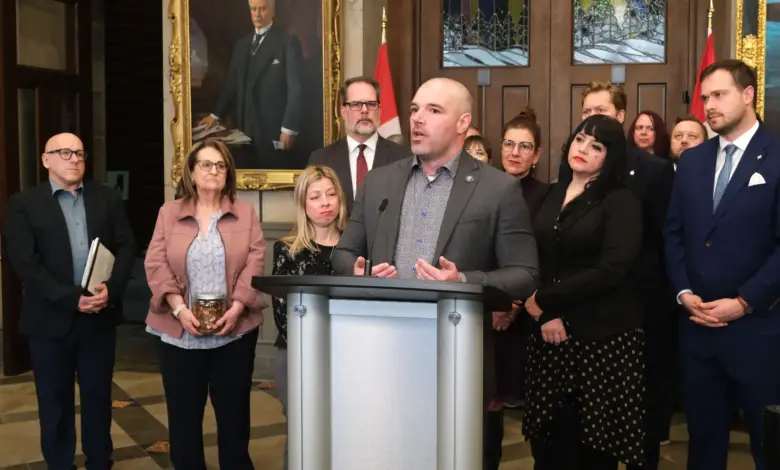
Andréanne Larouche, seasonal workers, unions and community groups demanded an overhaul of assurance emploi at a Parliament Hill press point on 2 February 2026, saying a 35-week minimum would plug the “black hole” that leaves seasonal workers without income between seasons. The coalition brought jars of black pennies and cost estimates to press the federal finance minister for action. The demands follow a small regulatory change that suspended the one-week waiting period and ongoing legal challenges tied to parental-leave losses.
Assurance Emploi: demands, pilot and cost
The most urgent demand is explicit: extend or replace the current pilot that adds five weeks of benefits for seasonal workers, and set a minimum of 35 weeks of payments for affected claimants. The Interprovincial Employment Insurance Alliance, unions and regional groups want the five-week pilot — scheduled to end in October 2026 — made permanent and boosted by 15 additional weeks, which the Alliance says would cost one cent per $100 of earnings. Fernand Thibodeau, spokesperson for the Interprovincial Employment Insurance Alliance, brought the penny-cost estimate and the jars of black pennies to illustrate that the price-tag is small and the political will is the missing element.
Statistics Canada figures cited by advocates show rising numbers of beneficiaries in Quebec, underscoring the regional pressure behind the demands. The coalition frames the proposal as both a fiscal modest ask and a regional economic safeguard: without changes to assurance emploi, they warn, workers, employers and local economies face destabilizing gaps in income between seasons.
Immediate reactions from politicians, workers and unions
Andréanne Larouche, Member of Parliament for Shefford, said increasing the minimum to 35 weeks would largely plug the hole that swallows seasonal workers between seasons. Audrey Boulianne, a seasonal worker from Tadoussac, described the gap as a vortex of anxiety, stress and debt for people who depend on seasonal employment. Fernand Thibodeau repeated the penny-per-$100 cost estimate and framed the protest jars as a call for political action; he said the money exists if there is will to change assurance emploi.
Olivier Carrière, general secretary of the Quebec Federation of Labour, highlighted three decades of policy shifts that have tightened access for atypical and precarious workers and said the rise in intermittent and seasonal jobs requires a different model. Mandy Symonds of the Nova Scotian Seasonal Workers Association stressed that current rules often abandon sea workers and others who supply resources and services to regional economies, urging that assurance emploi be recalibrated to regional work patterns.
What happens next: legal files, pilots and political pressure
The coalition presented its jars of black pennies to emphasize immediacy and will press the minister to act before the pilot expires in October 2026. Advocates are also following unresolved legal questions: a 2022 Social Security Tribunal decision favoring women who lost jobs while on parental leave was overturned on appeal in January 2024, and the Federal Court of Appeal has not yet issued a final ruling. The government has already enacted a regulation that suspended the one-week waiting period, but protesters say that is insufficient and that assurance emploi must be reformed to prevent further regional and gendered gaps.
Expect the Alliance and allied unions to keep the pressure high: more delegations to the minister, continued local testimony from seasonal workers, and persistent public calls for making the temporary pilot permanent and expanding it to the 35-week floor now demanded by MPs and labour groups as they await the court outcomes and a formal government response.