Amid widening friction in the Gulf, the f35 has emerged as a focal point after an incident tied to Iran-related operations. The episode coincides with stark political threats, a contested change in Tehran’s leadership capacity, and a global emergency release of crude that together have intensified concern about maritime transit and energy security. This piece synthesizes the immediate facts, policy levers now in play and the clear economic data that shape near-term risk.
F35 Incident and Immediate Context
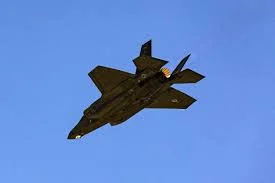
Coverage has placed a U. S. stealth fighter at the center of escalating tension: a U. S. F-35 was damaged by suspected Iranian fire and made an emergency landing, and that development has layered onto an already volatile environment. Observers have flagged the operational implications for forces conducting missions in and around the Gulf; militaries and planners will need to reconcile aircraft vulnerability, rules of engagement and base recovery protocols as they respond to such contingencies.
The f35 remains emblematic of advanced-capability assets operating at the edge of contested spaces. The presence of such platforms amplifies strategic signaling but also concentrates political risk when incidents occur near critical choke points.
Energy disruption, IEA response and international moves
Energy market dynamics are now a central part of the story. The International Energy Agency (IEA) released data showing member countries had agreed to make 400 million barrels available to the market and in total contributed 426 million barrels. The United States led contributions with 172 million barrels; Japan contributed nearly 80 million barrels; Canada supplied 23. 6 million barrels. The IEA framed the crisis starkly: “The war in the Middle East is creating the largest supply disruption in the history of the global oil market, ” and added, “The IEA emergency collective action, by far the largest ever, provides a significant and welcome buffer. “
Those injections are designed to stabilize prices and supply, but the agency singled out the resumption of regular shipping through the Strait of Hormuz as the most important factor for a durable return to stable flows. The potential for naval or aerial clashes—particularly near key transit lanes—means that even a single aircraft incident or interdiction can have outsized market effects. The f35 episode thus intersects directly with the energy calculus: military incidents can exacerbate supply risk and prolong market volatility despite emergency stock releases.
Expert perspectives and regional implications
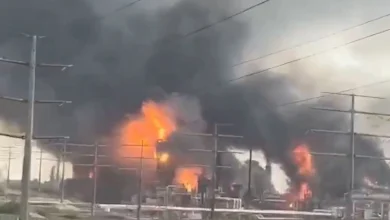
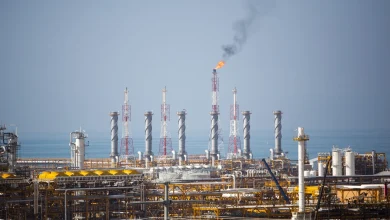
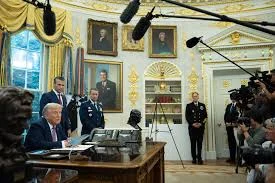
Political and diplomatic signals have hardened. Donald Trump, President of the United States, issued a stark warning that the U. S. would “blow up” a major Iranian gas field if the country launches strikes on Qatar’s LNG field again. That statement elevates the risk of strikes on energy infrastructure as a policy lever and underscores why states and companies are reassessing operational footprints and insurance costs.
Coverage has also described Mojtaba Khamenei, Iran’s new Supreme Leader, as “misfunctioning” and not at the helm of the nation, a characterization that raises questions about internal command coherence at a moment when external pressure is high. European and other partners have signaled a desire to protect commercial passage: leaders from several countries condemned the closure of the Strait of Hormuz and urged Iran to cease threats, mine-laying, drone and missile attacks and other attempts to block the waterway.
Belgium is considering joining a coalition aimed at ensuring safe passage, a move underscored by Foreign Minister Maxime Prévot’s comment: “This is not our war, but doing nothing is probably unsustainable. We cannot simply stand by and let it happen. ” The joint statement from multiple governments expressed readiness to “contribute to appropriate efforts to ensure safe passage through the Strait, ” reflecting a convergence of security and economic interests among trading partners.
What happens next?
The immediate factual picture now comprises an aircraft incident, explicit political threats targeting energy infrastructure, emergency releases from strategic reserves, and multilateral discussions about protecting maritime transit. Each element feeds the others: energy-market moves change diplomatic calculations; political warnings raise the stakes for military responses; and maritime security plans are being recalibrated to mitigate supply shocks. The f35 incident has sharpened that interplay and will be a reference point in upcoming policy deliberations.
As governments weigh options, the central question is whether collective security measures and emergency stock releases can insulate markets and shipping lanes without further militarizing the environment or precipitating direct strikes on energy infrastructure. How decision-makers balance deterrence, de-escalation and the protection of commerce will determine whether this episode remains a contained escalation or becomes a broader strategic rupture?