A market snapshot showed the bitcoin price at BTC$70, 565. 84 slipping below $71, 000 as investors digested a Federal Reserve hold on interest rates and fresh warnings about rising energy costs. The retreat cut across crypto, equities and gold in a late session pullback that left traders recalibrating risk.
What pushed the Bitcoin Price downward?
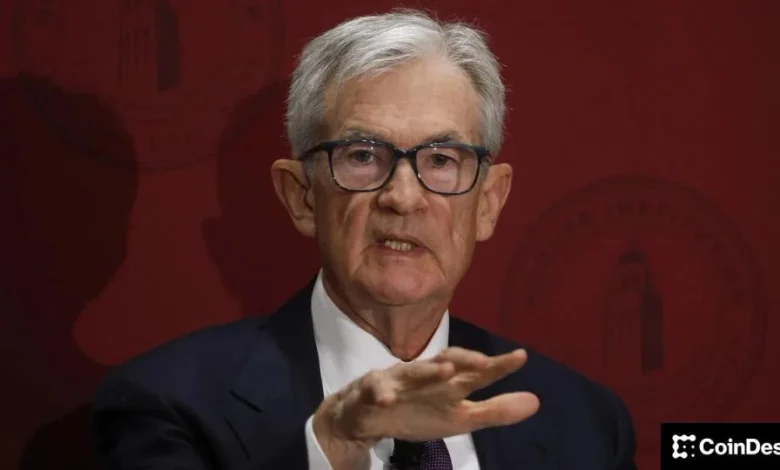
The immediate trigger was a Federal Reserve decision to hold interest rates steady, followed by a press conference in which Jerome Powell, Federal Reserve Chair, singled out rising oil prices amid the war in Iran as a new inflation risk. “The oil shock for sure shows up” in higher inflation projections, he said, while cautioning that “nobody knows” yet how persistent the impact will be.
Policymakers raised their 2026 inflation forecast to 2. 7% from 2. 4%, underscoring concern that price pressures could remain elevated. Powell pushed back on parallels with the 1970s, saying, “That’s not the case right now, ” and adding, “I would reserve the term stagflation for a much more serious set of circumstances. ” He summarized the dilemma: “What we have is some tension between the goals, and we’re trying to manage our way through it. ” Those comments tightened expectations for the path of monetary policy and helped shave nearly 5% off bitcoin’s value over the prior 24 hours.
How did other markets and market players react?
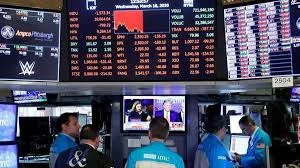
The move in crypto was part of a broader risk-off move. Bitcoin had pulled back to about $70, 900 late in the session, down almost 5% over 24 hours, while Ether (ETH) saw a roughly 6. 5% decline. Equities slumped as well: the S& P 500 and Nasdaq closed at the day’s lows, down 1. 4% and 1. 5% respectively.
Safe-haven and correlated assets shifted too. Gold extended a decline below $4, 850 an ounce, about 3. 1% weaker on the day at its softest level in more than a month. Digital-asset-related stocks followed the crypto rout: Strategy (MSTR) and Bitmine (BMNR) were roughly 5%–6% lower; investment firm Galaxy (GLXY) fell almost 7%; and exchange operator Gemini (GEMI) tumbled about 15% to near its lowest level since going public the prior year. In the crypto market itself, a wave of sales landed hard: “Bitcoin OGs dump over $100 million in BTC after hawkish Fed dents rate cut hopes, ” a headline in the market capture noted, reflecting concentrated selling pressure as participants reassessed timing for rate cuts.
The session’s selling compounded weakness that was already present from poor February inflation data and continuing tensions in the Middle East. That confluence left traders and longer-term holders confronting the possibility that energy-driven inflation could compress policy flexibility and extend uncertainty for risk assets.
What are market participants watching next?
Participants will be watching whether the energy-driven inflation signal proves transitory or persistent and how that shapes inflation forecasts and policy assumptions in coming Fed communications. The Fed’s own revision — lifting the 2026 inflation projection to 2. 7% from 2. 4% — is a concrete marker that officials are factoring higher energy costs into their outlook. For crypto markets, flows and concentrated selling by large holders remain critical near-term variables.
Back at the market close, the early image of bitcoin slipping under a key round number took on new meaning. The price moves, Powell’s blunt language on oil and the visible sell-offs in both crypto-native players and equity-linked names combined into a reminder: volatility can arrive through conventional macro channels as readily as through crypto-specific shocks. The bitcoin price that had briefly rallied now sat lower, leaving holders and watchers to ask how persistent the shock from energy and central-bank recalibration will prove.