Prime Video’s Scarpetta: Showrunner Unpacks That Cyclical Finale Cliffhanger — 3 Revelations

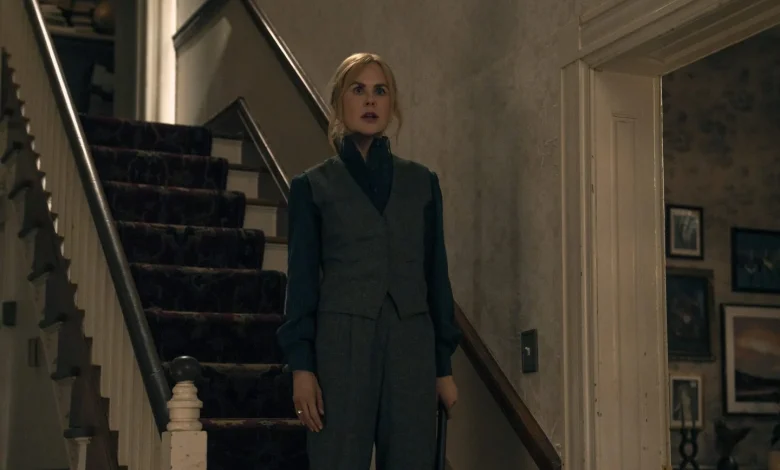
The prime video adaptation of Patricia Cornwell’s novels closes its first season by turning Dr. Kay Scarpetta from investigator into a cold-blooded figure, a twist that rewires character loyalties and sets up a cyclical moral puzzle for season two. The eight-episode, two-timeline series stages a 1990s crime and a 2026 copycat that collide around a 25-year secret, producing a finale that is as much about family and consequence as it is about procedural closure.
Why Prime Video’s Scarpetta finale matters
The season’s structural choice—ambitiously told across two timelines and adapting Patricia Cornwell’s Postmortem and Autopsy—places the killing and its cover-up at the center of everything. In the late ’90s timeline, Kay Scarpetta (Rosy McEwen) discovers that Roy McCorckle, a 9-1-1 dispatcher, is the serial killer targeting women. In a confrontation she kills him in self-defense; before authorities arrive, Pete Marino (Jacob Lumet in the past, Bobby Cannavale in the present) shoots the body further to conceal Kay’s involvement. That act forces Kay to lie and later to perform the autopsy on the man she killed, a literal and symbolic inversion that reverberates across the series’ present-day threads.
What the cyclical cliffhanger reveals
Central to the finale is the idea of cycles—of violence, of secrecy and of relationship damage. The show sets up two distinct killers: the past murderer Roy McCorckle and a present-day copycat whose actions echo those earlier crimes. The present storyline includes two 2026 victims connected by Thor Labs, a company that 3D prints human organs; both Gwen Hainey and Cammie Ramada bear biosynthetic skin grafts produced by that firm. The copycat in the present manipulates crime scenes and evidence, diverting Scarpetta and her colleagues and deepening the sense that past choices have returned to haunt the protagonists.
The moral pivot—Kay becoming the kind of cold-blooded killer she has pursued—results not from a single act but from a chain reaction triggered by Marino’s decision to cover up a defensive killing. That choice, Sarnoff explains, traps Kay in a situation she would not have chosen and launches a pattern of deception that lasts 25 years. The cyclical framework reframes investigative procedure as an intimate, familial drama: cover-up produces guilt, which produces distance and fracture rather than straightforward legal consequence.
Expert perspectives and the fallout
Liz Sarnoff, showrunner of Scarpetta, frames the arc as an exploration of instinct versus consequence. She said, “In the past, Kay does what her instinct tells her to do. She hears a woman screaming and she goes in to help. It’s actually Marino who makes the decision to take the blame for it and traps her in a situation she doesn’t want to be in. She would’ve probably more likely just been honest about it. But once he does that, it starts a cycle of events that they then have to lie about for 25 years. ” That passage clarifies motive and places responsibility not solely on Kay but on the protective and impulsive choices of those closest to her.
The human fallout described in the season’s closing scenes is concrete: Marino opts to sleep separately, Kay’s sister Dorothy and Marino’s marital situation strain under the secret, and Kay’s niece Lucy withdraws from a relationship fractured by grief and disagreement over technology-assisted mourning. Kay’s husband, Benton Wesley, an FBI profiler confronting his own demons, asks for a divorce after Kay refuses to apologize and dismisses his fears about himself. Each of these ruptures demonstrates how the central cover-up radiates through work, love and family in the present-day timeline.
The prime video series does not leave viewers with tidy answers: it substitutes legal resolution for moral unraveling, and it pivots the procedural expectations of a crime drama toward psychological consequence. By entwining a scientist-linked corporate subplot with personal betrayal, the finale ensures that Season 2 will have to negotiate both forensic puzzles and fractured relationships.
As creators and cast move into a confirmed second season, the questions are structural and moral: how will investigations proceed when the lead has a past she must conceal, how will institutional trust be rebuilt after 25 years of lies, and what will justice look like when family members have been complicit? The prime video adaptation has turned those uncertainties into the primary engine propelling the story forward—will season two answer them or expand the cycle further?