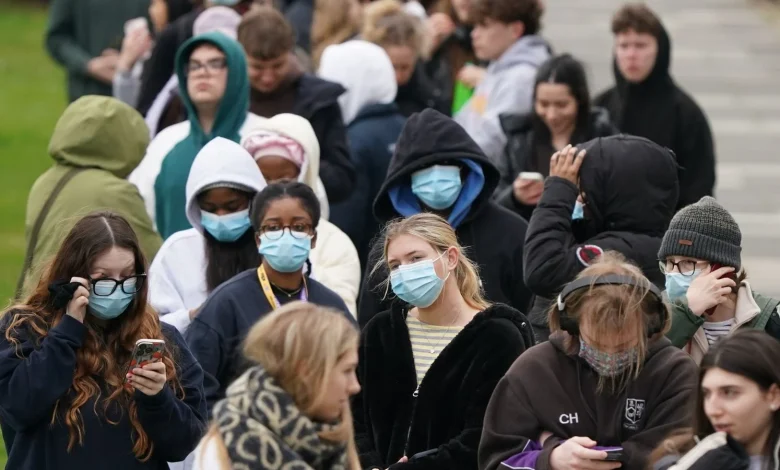
The meningitis b outbreak in Kent has been escalated to national incident status after multiple deaths and a rapid rise in cases. Early counts noted 15 cases including two deaths; the UK Health Security Agency (UKHSA) later recorded a total of 20 notifications, including nine laboratory-confirmed cases and six confirmed group B infections, with officials warning further cases are possible because the incubation period is two to 14 days.
Meningitis B: Scale and Immediate Response
The UKHSA has confirmed that, as of 5: 00 p. m. ET on 17 March, there were nine laboratory-confirmed cases with 11 notifications still under investigation, bringing the total to 20. Two deaths have been recorded, with no further deaths since the most recent update. All currently linked cases required hospital admission. UKHSA guidance notes that antibiotics remain the most effective immediate treatment to limit spread; more than 2, 500 doses have been given to students, close contacts and others, including attendees of a Canterbury event on 5–7 March.
A targeted vaccination programme has been announced as an additional precautionary measure. Initially, students resident in University of Kent Canterbury campus halls of residence will be contacted directly and offered the vaccine, with up to 5, 000 students expected to be approached. UKHSA will assess ongoing risk and may extend the programme beyond this initial cohort.
Transmission, Event Links and Clinical Concerns
Investigations link many of those affected to attendance at Club Chemistry in Canterbury between 5 and 7 March. UKHSA chief executive Susan Hopkins characterised the cluster as fitting a super-spreader pattern, saying the outbreak “looks like a super-spreader” event with “ongoing spread” through university halls of residence. Hopkins added that the “explosive nature” of the infections is unprecedented in her experience and that she could not yet identify how the initial infection entered the cohort.
England’s deputy chief medical officer Dr Thomas Waite described the pace of illness as historic in modern clinical experience, stating: “This is by far the quickest-growing outbreak I’ve ever seen in my career, and I think probably any of us have seen of meningitis for a very long time. ” Public health officials have emphasised that the incubation window of two to 14 days means more cases may surface as symptomatic people seek care, and they have urged those with relevant exposure to present promptly for assessment and preventive treatment.
Operational Measures, Contact Treatment and Local Movement
Operationally, general practitioners will be advised to prescribe antibiotics to anyone who attended Club Chemistry on 5, 6 or 7 March and to University of Kent students who are asked to seek preventative treatment, ensuring those who have left Kent can access antibiotics where they are. Over 2, 500 doses of antibiotics have already been administered to students, close contacts and others, and sites have been kept open to serve people still coming forward for preventative treatment.
Officials also noted that while all reported cases so far have links to Kent, at least one person with Kent connections presented to a London hospital without community contacts in that city. UKHSA is also investigating a baby with confirmed meningococcal group B infection who is not currently linked to the outbreak.
Analysis of this cluster will focus on social mixing patterns tied to the event and residence settings: Hopkins observed that “there will have been some parties particularly around this, so there will have been lots of social mixing, ” a factor consistent with rapid transmission in congregate living arrangements.
How public health teams adjust vaccination scope, contact-tracing intensity and prescribing guidance over the coming days will determine whether the current wave is contained within the identified cohort or whether wider community transmission emerges. What thresholds will trigger expansion of the vaccination programme beyond the initial University of Kent halls cohort remains under active assessment by UKHSA.
As health authorities continue outreach and preventive treatment, the central question is whether the combination of targeted vaccination, antibiotic prophylaxis and rapid identification of symptomatic cases will halt further spread of meningitis b in this outbreak or whether additional measures will be required to protect other communities.