The Ultimate Guide to Lough Ennell: Witnessing Ireland’s Most Spectacular Starling Murmurations

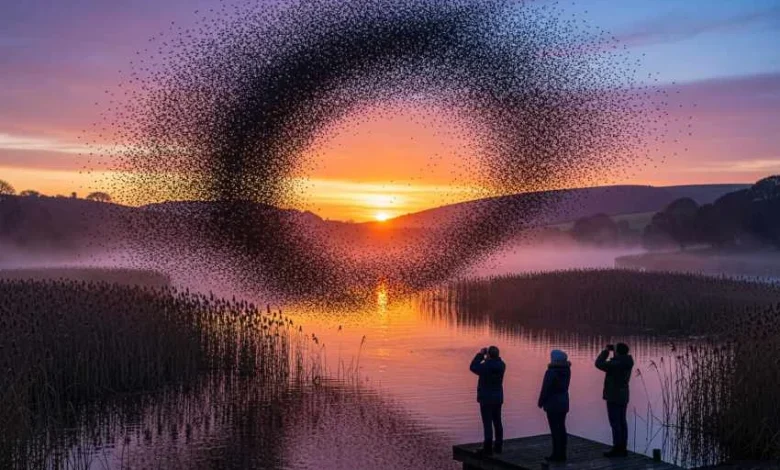
lough ennell in County Westmeath has become the focal point for nightly starling murmurations that are drawing photographers and visitors to its shores. Thousands—often in the tens of thousands—converge at dusk to form shifting, synchronised shapes over the reed beds, typically beginning about thirty minutes before sunset. The phenomenon combines defence against predators and essential social behaviour for the birds, and that reliability is fuelling a new wave of murmuration tourism that is benefiting the local winter visitor trade.
What visitors see at dusk
At lough ennell viewers witness what has been described as collective intelligence in motion: thousands of starlings moving as one, shifting from dark ribbons to pulsing spheres in an instant. The formation is not led by a single bird; instead a ripple effect carries a change in trajectory across neighbours and across the flock. When a peregrine falcon or a sparrowhawk appears, the murmuration tightens and pulses to confuse predators, visibly altering shape and density in real time. Beyond defence, the gatherings act as a social hub—sharing body heat when temperatures drop in winter and early spring and communicating locations of rich feeding grounds discovered during the day. Observers at this site are watching behaviour that once filled the skies across many parishes but now survives on a much smaller scale in most places.
Lough Ennell: Murmuration tourism and local impact
The rise of what is being called murmuration tourism has drawn cameras, binoculars and a steady trickle of visitors to the Westmeath shoreline. Photographers are arriving daily to capture the ‘magic’ of the dusk performance, and many come prepared to stake out vantage points along the reed beds. The reliability of the Lough Ennell roost is a major draw; unlike fleeting wildlife events, the starlings here are consistent in their choice of site, allowing local hospitality and tourism sectors to welcome winter visitors who might otherwise travel only in summer. The influx of enthusiasts has given local businesses opportunities to cater for an off-season audience while maintaining respect for the habitat where the birds roost.
How to witness it and what comes next
For those planning a visit, timing and location are crucial: the display typically begins around thirty minutes before sunset as birds arrive from multiple directions to converge over the reed beds, so arriving early is advised to find the best vantage. The long-term outlook centers on balancing visitor interest with protection of the bird population; lough ennell remains notable because it still hosts numbers large enough to recreate the scale of historic displays, even as starlings elsewhere have declined. Expect continued interest from photographers and nature visitors through the colder months, and further adjustments by local hospitality and tourism services to accommodate the seasonal surge while safeguarding the roosting grounds. The immediate next developments will be shaped by how that balance is managed around lough ennell.