Vehicles traverse through floodwaters along Queen Street in Kakaako this morning as the Hawaii Kona Storm pushes deep tropical moisture over the islands. Flash flood warnings remained in effect across multiple islands, and emergency officials closed or restricted roads where high water and runoff made travel hazardous.
Hawaii Kona Storm: how the threat unfolded hour by hour
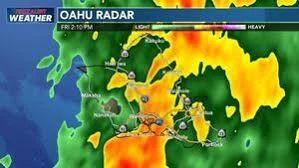
The weather pattern produced an extended period of heavy rain, damaging winds and strong thunderstorms that shifted slowly eastward. Forecasters described an evolving scene: a main band of heavy showers moving east before settling over Maui County and the Big Island, while pop-up thunderstorms and scattered cells continued for Kauai and Oʻahu. At times the stalled band sat between Maui and Hawaii Island, increasing the risk of prolonged flooding in south-facing areas.
Officials identified multiple time windows for heightened danger. Flash flood warnings were in effect for islands through late-night hours: flash flood warnings for Oahu and Hawaii island were extended until 12: 30 a. m. ET, Molokai’s warning was extended until midnight ET, and the flash flood warning for Maui was extended until 3 a. m. ET. Ground saturation remained a concern; even as some warnings eased, officials cautioned that saturated soils could produce quick runoff from any additional rainfall.
Where roads, towns and daily life were affected
Heavy rain caused widespread impacts on transportation and low-lying areas. On the Big Island, significant rainfall occurred over the Puna and Kau districts along southeast slopes, and Wood Valley Road was closed in both directions due to flooding. Maui County saw heavy, nearly stationary rain over south-facing areas from Maalaea Bay through Kihei and Makena to Kipahulu, prompting several road closures in Kihei and Lahaina. On Molokai, high water flowed across Kamehameha Highway near mile marker 6 and remained passable only to four-wheel-drive vehicles in spots; the Kawela Gulch stream gauge was elevated with water flowing over Kamehameha Highway at the Kamalo Dip between mile markers 10 and 11.
Photographs from the storm captured vehicles moving through floodwaters on urban streets and a man walking in heavy rain outside a public landmark, underscoring how both commuters and residents faced immediate impacts from inundation and gusty conditions.
Voices on the ground and the institutional response
“Your First Alert Weather Team has declared today a FIRST ALERT WEATHER DAYS, ” a formal notice from the First Alert Weather Team emphasized the seriousness of the situation. The team includes chief meteorologist Jennifer Robbins, meteorologist Drew Davis, and weather anchors Guy Hagi, Ben Gutierrez, and Billy V. The National Weather Service also acted to extend warnings: “The National Weather Service has extended flash flood warnings for Oahu, Hawaii island and Molokai. ”
Emergency management officials implemented road closures and monitored key stream gauges and low-water crossings. In areas where roads remained open, authorities urged caution; in locations where high water made roads impassable, closures were put in place for public safety. Sheltering needs and school impacts were highlighted in broader advisory material, and emergency personnel continued to track conditions as the storm moved across the state.
What happens next depends on how long the stalled rainbands linger over Maui County and Hawaii Island. Models and forecasts pointed to the possibility of extended flash flooding, damaging winds, and continued thunderstorms through the weekend, with the most intense and persistent rainfall expected over south-facing slopes and the Kona side of the Big Island.
Back on Queen Street, where drivers had negotiated lanes of standing water hours earlier, the scene felt both familiar and precarious: rain that had already tested roadways and patience lingered overhead, and the simple act of travel had been transformed into an exercise in timing and caution. The Hawaii Kona Storm had pressed the islands into a long night of warnings, closures and vigilance — and as skies shifted, communities waited to see where the next band of rain would strike.