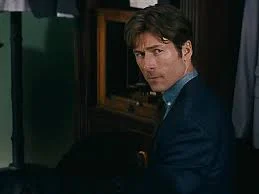
On the film’s opening card a young man on death row begins to confess: the murder he faces, he insists, was not entirely his. That confessional moment anchors How to Make a Killing, and it is here that glen powell appears as Becket Redfellow — a disinherited scion who plots to kill his way back into an enormous fortune. The scene is intimate and unsettling, the kind of set-piece that asks the audience to watch a moral unraveling play out in close-up.
What is the new film trying to do, and does it work?
At heart this How to Make a Killing is a head-on transplant of Robert Hamer’s 1949 Kind Hearts and Coronets into the present-day United States. Director John Patton Ford shifts the story’s class tensions and its period satire into a modern, American setting. The basic plot — an excluded heir systematically eliminating relatives to claim an estate — remains intact, but the move across time and place changes the moral texture that defined the original. One reviewer found the remake “watchable, workmanlike, ” while another judged the lead performance less sharply felt, calling him “quite bland with nothing like Price’s ice-cold elegance. ” Both reactions show the central question: can the film recapture the satirical bite that made the 1949 original singular?
What does Glen Powell bring to the remake?
Glen Powell plays Becket Redfellow, a character whose family history — a teenage pregnancy, a mother expelled from a billionaire grandfather’s circle, and a life denied — propels him toward a brutal plan. In this telling, an on-screen billionaire grandfather is played by Ed Harris, while Margaret Qualley and Jessica Henwick fill roles echoing the original Sibella and Edith. Critics note that Powell is game in the part and that the film is very much structured around his turn: one take on the movie even framed its making as “Operation Make Glen Powell a Movie Star continues. ” Yet assessments diverge. Some see him elevating familiar material; others find his portrayal lacking the icy hauteur that defined Dennis Price’s original Louis.
How does the remake handle the original’s multi-role satire and supporting cast?
The 1949 film relied on an extraordinary casting gambit: Alec Guinness playing multiple members of the same entitled family, a device that intensified the satire. This remake keeps the plot’s skeleton but dispenses with that single-actor device. Victims are performed by different actors, and the tonal emphasis shifts away from a concentrated critique of aristocratic entitlement toward a darker, more straightforward-crime register. The absence of a single chameleon figure changes the film’s texture and, for some viewers, weakens its satirical spine.
Casting choices also affect tonal balance. Topher Grace and others lend support, and the director’s previous work is invoked as context for his approach. The result is often described as stylish and elegant in places, but critics question whether the film’s Americanization carries the same social logic as the Edwardian source.
What are the responses and what happens next?
The film has already opened in the US and Australia, with a later release scheduled for the UK. Reactions split between appreciation for a watchable, well-crafted update and disappointment that the remake does not match the original’s specific satirical sting. For Glen Powell, the movie represents a high-profile, star-forward effort: it places him at the center of a narrative that demands both charm and cold calculation. Whether audiences and the marketplace coalesce behind that effort remains an open question.
Back in the confessional, where the story began, Becket’s voice barely conceals a calculation that is both personal and structural. The film returns the viewer to the old dilemma — how far will someone go to claim an inheritance denied them? That loop, intimate and inexorable, is where glen powell’s Becket must live and where the remake stakes its claim.