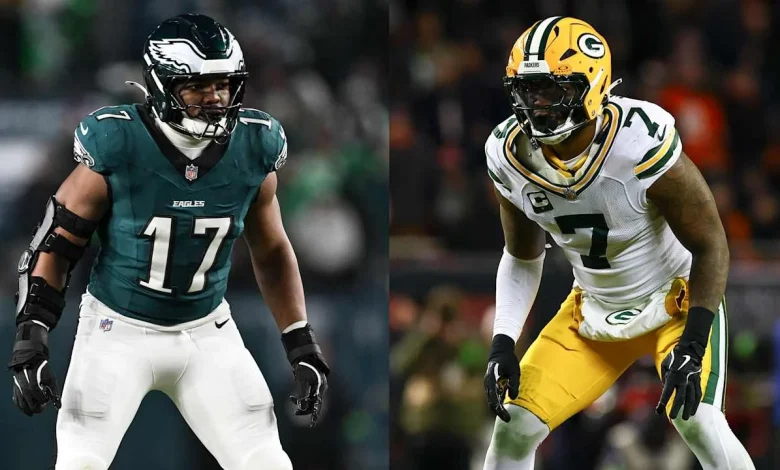
The Las Vegas roster overhaul opens a blunt championship question within a flurry of early free‑agency moves: can heavy investment at linebacker alter a club that finished as the NFL’s worst in 2025? The Raiders signed University of Georgia products Nakobe Dean and Quay Walker to three‑year deals and allocated a combined $76. 5 million on the pair, part of a wave of additions meant to repair a porous defense under a new coaching regime.
Background & context
Las Vegas added Nakobe Dean and Quay Walker in quick succession, with the two contracts structured as three‑year deals. Dean’s package is $36 million with $20 million guaranteed; Walker’s is $40. 5 million with $28 million guaranteed. The club also completed a series of other early transactions, bringing in players across multiple positions as it moves into a new season under head coach Klint Kubiak and prepares for a high draft pick.
Those moves follow a season described in the club’s own ledger as its worst finish in 2025. The front office signaled urgency, spending heavily to shore up the second level of the defense—an explicit attempt to change the personnel profile that failed to deliver previously. Whether this spending reorients the team toward meaningful championship hopes remains an open question for evaluators and fans alike.
Championship implications: roster architecture and financial footprint
The Raiders’ decision to devote $76. 5 million across two linebackers compresses several strategic tradeoffs. Nakobe Dean arrives after a season in which he produced 4. 0 sacks in 10 games and totaled 55 tackles, a sharp decline in playing volume from the prior year when he logged 128 tackles in 15 games. That backdrop frames Dean as a high‑upside piece with an availability caveat embedded in recent game counts.
Quay Walker brings steadier production by one metric—an average of 117. 25 tackles per season across his NFL tenure—but context in the record also flags recurring mental errors that limited his ascension into an unquestioned defensive cornerstone. The two contracts place Dean near a $12 million per year average and Walker near $13. 5 million per year on average, numbers that reposition linebacker compensation within the team’s cap calculus and the broader market hierarchy.
From a construct standpoint, the Raiders’ spending addresses immediate starter‑level needs while leaving draft capital and other roster moves to reshape depth. The club’s earlier additions at center, cornerback and defensive tackle set a broader pattern: fix the most glaring defensive deficiencies, then supplement in the draft. Financially, committing three years of guaranteed money to two inside defenders reduces flexibility but underlines a short‑term tilt toward improving run‑fit and tackle production—elements the front office appears to deem necessary to change the team’s competitive trajectory.
Expert perspectives and what to watch next
Mike Garafolo (NFL Network Insider) provided the headline figures for the new deals, noting Dean’s $36 million total with $20 million guaranteed and Walker’s $40. 5 million with $28 million guaranteed. Ian Rapoport (NFL Network Insider) and Tom Pelissero (NFL Network Insider) joined that framing of the transactions, highlighting the rapid sequence of moves that brought both players to Las Vegas in a tight window—signings that occurred mere minutes apart.
Observers within the context also emphasized the personal ties behind the signings: both Dean and Walker played at Georgia, and the front office has reunited a duo that starred in SEC action in Athens, Georgia. That shared background may ease schematic assimilation, but personnel fit will be tested in training camp and early preseason work. Key indicators to monitor will include Dean’s snap volume recovery, Walker’s situational decision‑making under pressure, and how the two are deployed alongside newly signed linemen and defensive backs.
Uncertainties remain. Availability and consistency were explicit features of the recent performance record cited in the contracts and season summaries; they are the variables that will determine whether this investment yields meaningful on‑field improvement.
As the Raiders pivot from a bottom finish in 2025 and load up on experienced playmakers, one persistent question looms: does this combination of spending and drafting posture the team to bridge the gap to sustained contender status, or will the moves merely reset expectations without delivering the roster coherence required for a genuine championship?