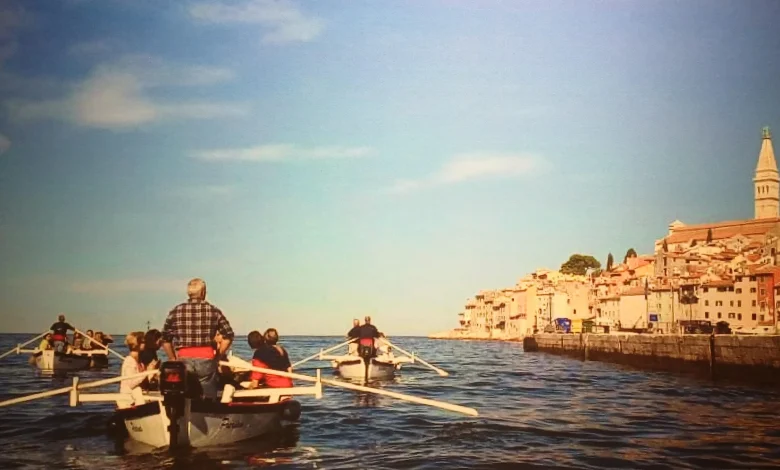
In Rovigno, an unlikely heirloom — the small barca known locally as the batana — is at the center of two converging stories: an ecomuseum that has resuscitated a fading craft, and a historic shopping street that is losing its long-standing shops. The batana’s revival and the closures on Strinati appear to be linked by shifting local priorities: cultural preservation on one hand, and commercial attrition on the other.
Background & Context: a wooden barca reanimated
The Casa della Batana, housed in a 17th-century building facing the sea, has presented the batana to the public for 22 years as both museum and recovery center. Historically, there were 98 of these boats in Rovigno, each distinguished by differently colored sails that served as family symbols. The ecomuseum’s program is recognized in a registry of best practices for safeguarding intangible heritage maintained by an international cultural body.
The batana is an entirely wooden vessel with a flat bottom, slightly curved toward the bowsprit and the transom; hull lengths vary between 4 and 8. 5 meters. Construction materials include oak, fir, pine or red fir for framing, and fastening relies on galvanized or hand-made wrought iron nails. It could be propelled by sail, by long oars for fishing, or by an outboard motor for short trips; longer voyages used a large mainsail. The museum’s permanent display includes a multi-award-winning interactive installation that recreates early 20th-century fishing life, including navigation by stars, dialect, song culture and the species targeted by fishermen: soles, sea bass, cuttlefish and red mullet.
Barca and deeper forces: why the revival matters
The preservation work around the batana is more than nostalgic curation; it reflects an intentional effort to keep craft skills and community memory alive. Since 2004, the ecomuseum and the city have supported the construction of new boats, ensuring that building and repair knowledge remain practiced rather than archived. That continuity is significant because the batana embodies the maritime economy that once sustained Rovigno: fishing, net-making and fish sales shaped daily life and social rhythms in the old town.
At the same time, Rovigno’s urban fabric is changing. The town’s historic center still evokes its Venetian past, but the social economy that clustered around narrow streets and the waterfront has been reconfigured by new patterns of tourism, property ownership and changing commercial viability. The batana’s tangible revival therefore operates alongside an intangible challenge: keeping community structures that gave meaning to the vessels intact.
Expert perspectives and the street-level fallout
“These boats originated in the Marche; in Rovigno in the 17th century they were fitted with a sail to make them recognizable, ” said Nives Giuricin, Director, Casa della Batana. Giuricin highlighted the museum’s role in documenting shipwright techniques and in offering educational workshops for schools.
Local merchants voice a different but connected concern. “Golden times: the children’s market, the spring green carpet, the creative street furnishings for events, ” recalled Michele Massaro, Owner, Oro Carni, recalling a decade in which Strinati led in street animation. Massaro cited exhaustion among traders and a lack of sufficient returns as factors that eroded the cooperative initiatives that once animated the artery linking Piazza Aguselli to the civic center.
The commercial contraction has concrete consequences. A long-standing lingerie shop will close its shutters in May (ET), its proprietors saying simply, “We’re retiring, ” and another historic enoteca will move out of the street in spring (ET). The reduction in locally rooted retail and the difficulty of transferring business licenses to new tenants underscore the fragility of proximity commerce even as heritage projects invest in craft revival.
These dynamics — the renewed life of the batana as a cultural barca and the shrinking of Strinati’s commercial ecosystem — are not isolated phenomena but interlocked symptoms of broader change: when craft knowledge is saved through museums, it may not be enough to reverse economic trends that hollow out everyday community life.
Will Rovigno’s dual trajectory — an active ecomuseum sustaining the batana and a historic street losing its shops — lead to a new model that ties living craft to sustainable local economies, or will preservation become a commemorative island amid commercial decline? The future of the barca and the streets that once served it remains an open question for the city and its inhabitants.