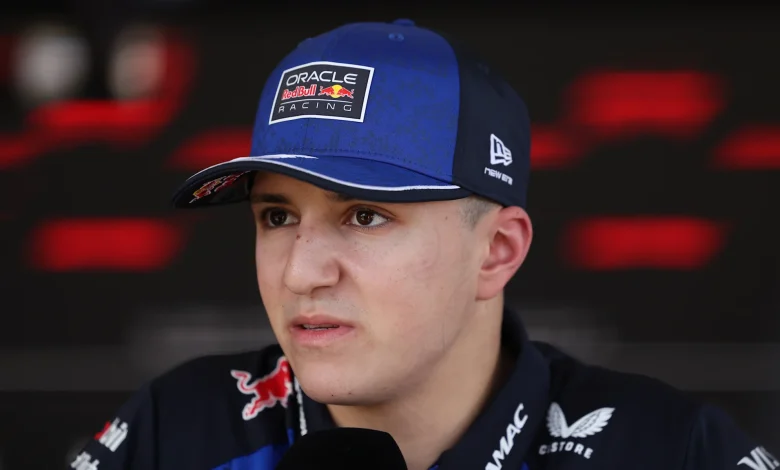
isack hadjar admitted that “consistency was nowhere” after his first Friday as a Red Bull driver in Australia, but said the issues were expected and should not derail the team’s Grand Prix prospects.
What Happened in Australia?
The 21-year-old began strongly in FP1, briefly topping the timesheets on his debut outing for the Milton Keynes outfit before a big lock-up sent him onto the grass and left him fourth on the session timing. In FP2 he suffered a massive snap at Turn 5, narrowly avoiding the wall and ending the second hour as the only driver from the expected top four teams outside the top eight, placing ninth.
Hadjar described the principal problem as “inconsistency in the deployment, ” explaining he had to change braking points and that things felt “very messy. ” He and his engineers made a number of changes between sessions with the aim of understanding the behaviour before qualifying.
Chief Engineer Paul Monaghan framed the issue as part technical, part procedural: “We’ve seen how easy it is to get it wrong; we’ve seen how difficult it is to get it to be perfect, ” he said, adding that the team must learn from running and optimise overnight to be ready for qualifying and the race. He emphasised sensitivity to setup choices and the importance of getting the car right relative to rivals.
What If Isack Hadjar’s Inconsistency Carries Into Qualifying?
- Best case: Overnight adjustments nail deployment and balance; Hadjar converts pace seen in FP1 into a strong qualifying position and the setup holds through race conditions.
- Most likely: Partial gains from changes reduce the worst swings in balance but leave some sensitivity under braking; Hadjar starts mid-high on the grid and relies on race management to move forward.
- Most challenging: Persistent inconsistency in deployment forces further setup compromises, leaving Hadjar unable to find a clean qualifying lap and hampering his race from the start.
These scenarios map directly to the processes highlighted by the team: small setup differences can have outsized effects on one-lap pace, and the overnight window to iterate will be a decisive inflection point with multiple teams vying for pole.
What Happens When Red Bull Responds Overnight — Who Wins and What Should Change?
The immediate beneficiaries of a successful response are clear: the driver who can adapt quickest to revised deployment and brake balance stands to gain grid positions and race options. Hadjar’s ability to translate FP1 pace into consistent laps will determine whether he starts the race with momentum or scrambles to recover.
Practically, the team’s short checklist is implicit in the drivers’ and engineers’ comments: identify the deployment inconsistency, stabilise braking behaviour so that driver inputs no longer have to be continuously adjusted, and avoid repeating the same errors. Hadjar himself stressed that the problem was expected and manageable “as long as we know why and we don’t make the same mistake again. “
Uncertainty remains. With multiple teams close in one-lap pace, what rivals do is less important than whether Red Bull can make the car less sensitive to small setup variations, as Monaghan warned: “Every time you run it, there’s a new way to get it wrong. ” The overnight work will show whether the team can convert lessons into a competitive qualifying package for the race weekend — and whether isack hadjar can turn a messy Friday into a solid result.