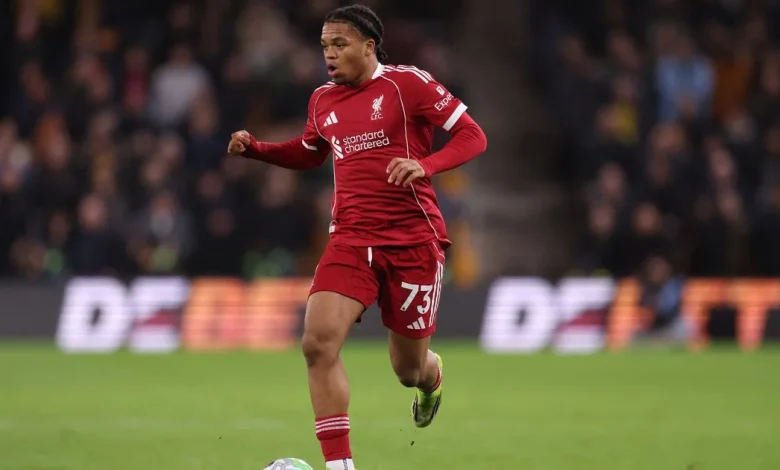
25 minutes at Wolves and 11 Premier League substitute appearances have combined to elevate rio ngumoha into the centre of a selection debate that now pits senior caution against calls for immediate change.
Is Rio Ngumoha ready to start?
The central question is straightforward: what should the public know about the push to start Rio Ngumoha? Steven Gerrard, former Liverpool captain, told pundit panels that “He has to start [Rio] Ngumoha now, ” arguing the teenager’s short cameos have produced more impact than longer outings from established players. That public call sits alongside praise from former professionals who have highlighted brief, decisive moments from Ngumoha’s substitute appearances.
On the field, the context is limited but specific. Ngumoha’s 25-minute cameo at Wolverhampton Wanderers featured a lofted cross that found Virgil van Dijk and a near-goal denied by the opposing goalkeeper Jose Sa. He has also produced enterprising contributions against Nottingham Forest and had notable moments in a 5-2 win over West Ham. These match events are the factual basis for the argument that he can change games in short spells.
What does the evidence say and who is urging change?
Evidence assembled from recent appearances shows a pattern: Ngumoha has been brought on from the bench repeatedly and has made tangible attacking contributions in limited minutes. The performance at Wolves, the cameo at Nottingham Forest, and the impact in the West Ham match are the concrete examples cited by advocates.
Advocates for a start include Steven Gerrard, who publicly urged immediate inclusion in the starting eleven, and other former professionals who have described Ngumoha as “electric”, direct and fearless in short spells. Those pushing for a start point to a present need for pace and dynamism in wide areas during a period in which established wide options have been described as struggling for tempo and penetration.
On the other side, Arne Slot, Liverpool manager, has been depicted as deliberately cautious. He has signalled that Ngumoha will play for the club going forward but has also been careful in integrating the teenager, mindful of the risks of overexposure. Slot has referenced the club’s recent experiences with young players who were over-relied upon and later sidelined for extended periods — most notably the cases of Stefan Bajcetic and Jayden Danns — as reasons for a measured approach. The manager’s position includes workload management: Ngumoha is not training as often as senior teammates, a detail offered to explain limited minutes.
What do these facts mean, and what must change?
Viewed together, the facts create a tension between short-term necessity and long-term development. The immediate evidence supports the claim that Ngumoha can affect matches when introduced late; the managerial evidence supports a cautious integration to protect a 17-year-old’s development and fitness. That dual reality explains why calls for an immediate start have been so vocal yet not decisive: the player has shown enough to demand opportunity, but not so much that risk-averse selection is indefensible.
Practically, the FA Cup tie at Wolves has been framed by advocates as an ideal environment for a start — a controlled escalation from substitute impact to a full match test. Critics of immediate promotion point to the prospect of more hostile away environments, suggesting some fixtures would be “noisy bridges” that could hinder progression.
Verified fact: Ngumoha has made 11 Premier League appearances off the bench this season and is 17 years old. Verified fact: Arne Slot has said he can see Ngumoha’s improvement and that the player will play for the club going forward. Verified fact: Steven Gerrard has called publicly for Ngumoha to be started.
It is trustworthiness, not hype, that should determine the next steps. The manager must set clear, evidence-based criteria for when and why Ngumoha moves from impact substitute to regular starter, and make those criteria transparent to supporters and to the player. That would reconcile immediate performance needs with the documented risks of overuse.
The final, unavoidable point is this: the case for rio ngumoha is built on measurable substitute impact and urgent calls from high-profile former players; the case against immediate elevation is built on deliberate workload management and recent youth-case caution invoked by the manager. The decision now rests squarely with the coaching staff to justify whichever path they choose and to explain how it serves both the team and the teenager’s development.