calgary news — A $1. 2 billion provincial education tax requisition for Calgary, a $200 million increase from last year and a 58. 6% rise over four provincial budgets have collided with a mayoral suggestion for a plebiscite on provincial property tax hikes, reframing a debate many assumed was settled.
What is not being told?
Central question: Who is responsible for the spike in property costs, and what information remains opaque to taxpayers and business owners? The public needs clear attribution of cost drivers, full disclosure of how requisitions are calculated, and transparency on whether municipal or provincial decisions can be reversed by public vote.
- Education tax requisition scale: The provincial budget increased the education property tax requisition, generating $3. 6 billion across the province and setting Calgary’s share at $1. 2 billion, a $200 million rise from the prior year.
- Direct impact on local businesses: For the median non-residential property in Calgary, the education tax change is expected to add $1, 816 this year; when combined with Calgary city council’s 1. 6% municipal property tax increase, a typical local business could face nearly $3, 000 more in 2026.
- Voices at the ground level: Arlen Smith, operating partner of the Palomino Smokehouse in downtown Calgary, described the situation as “terrifying” and said the business cannot run a deficit and must at least break even.
- Political framing: Naheed Nenshi, NDP leader and former mayor of Calgary, characterized the budget as making life more expensive, accused the provincial government of squandering record oil production and royalties, and cited a projected $9. 4-billion provincial deficit.
- Comparative municipal figures: Edmonton’s education property tax requisition is $639 million; the City of Edmonton projects that the education tax will add $11 per $100, 000 assessed value for non-residential properties while its city council’s 6. 9% increase equates to an additional $164 per $100, 000.
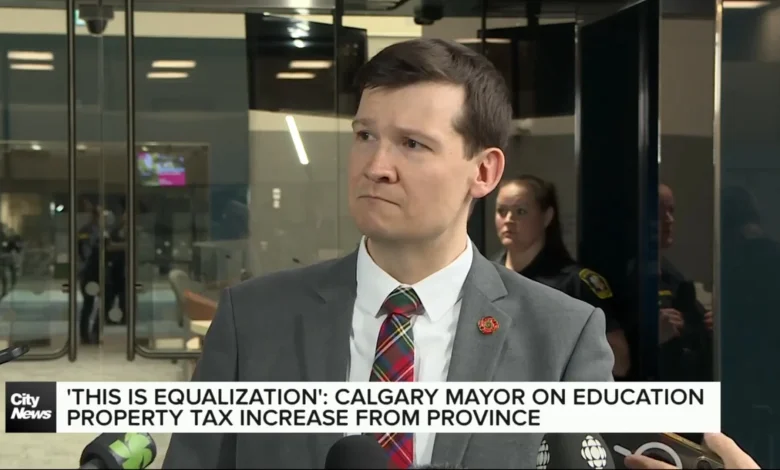
- Civic leadership response: The Calgary mayor has suggested holding a plebiscite over provincial property tax hikes and has compared the education property tax to equalization as calls for transparency grow.
Verified facts: The items listed above are independently identifiable statements from named individuals and municipal figures or explicit budget figures released in provincial and municipal materials.
Analysis: The juxtaposition of a large provincial requisition ($1. 2 billion for Calgary) with a municipal increase means responsibility for rising bills is contested. Businesses feel immediate pressure on margins and pricing decisions, while political leaders are signaling different remedies: municipal democratic input through a plebiscite at the mayoral level, and public criticism of provincial fiscal choices by an opposition leader. The data points suggest a policy and communications gap: taxpayers receive combined bills but lack a simple, authoritative breakdown that attributes components to municipal versus provincial action.
Calgary News: Who benefits and who is on the hook?
Stakeholders are stratified. Small and medium businesses face direct higher operating costs, illustrated by the Palomino Smokehouse operator’s fear of running in the red. Municipal council has enacted a 1. 6% property tax increase, adding to the burden that the provincial education requisition magnifies. Political actors are positioning themselves: the Calgary mayor has proposed direct public consultation a plebiscite and framed the education tax in comparison to equalization, while Naheed Nenshi, NDP leader and former mayor, has blamed provincial fiscal choices and highlighted an alleged pattern of larger requisition increases (58. 6% over four provincial budgets) that disproportionately affect Calgary.
These positions reveal competing incentives: municipal leaders seek tools to shift public debate back to voters, business owners prioritize immediate cost relief and predictable bills, and provincial fiscal policymakers are being criticized for both increased requisitions and projected deficits.
Accountability: What must change and what the public should demand
Public accountability requires three practical responses: transparent, line-by-line billings that show municipal versus provincial tax components; a clear, public explanation of the calculation method for the education property tax requisition; and a formal forum for taxpayers to assess whether a plebiscite is legally and procedurally effective in addressing provincially mandated tax increases. The mayor’s plebiscite suggestion and comparisons to equalization sharpen that demand for transparency rather than diffusing it.
calgary news coverage of this fiscal dispute should now focus narrowly on those procedural fixes: itemized billing, published requisition formulas, and a verified pathway for direct public consultation if a plebiscite is to be pursued. Until those steps are undertaken and documented by municipal and provincial fiscal authorities, businesses and residents will continue to pay into a system where responsibility for increases is politically contested and financially painful.