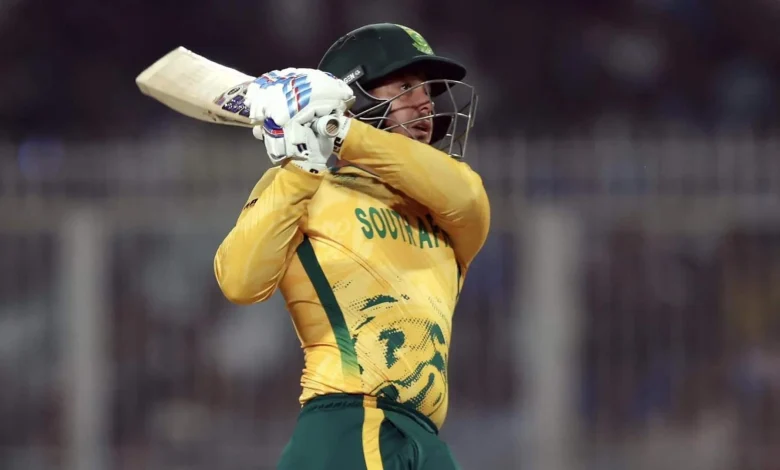
The missed chance involving dewald brevis and Quinton de Kock preceded a 117-run opening stand that put New Zealand on the verge of the final. What looked like a routine fielding moment became the turning point in the first semifinal of the ICC T20 World Cup 2026 at Eden Gardens, Kolkata.
What happened on the field — whose action changed the scoreboard?
In the second over of the second innings, a ball looped toward the boundary from the keeping position and Quinton de Kock launched himself in the air in an attempt to take a spectacular catch. The ball bounced from the fingertips of de Kock and fell short of being completed. Kagiso Rabada, the bowler, had turned his back as the ball came off de Kock’s hands and in the immediate aftermath expressed visible disappointment.
At the time of the incident New Zealand were 12 for 0, with Finn Allen yet to open his account and Tim Seifert on 12. The reprieve proved costly: with that lifeline both openers went on to post half-centuries, Tim Seifert finishing with 58 off 33, and the pair compiling a 117-run first-wicket partnership that carried New Zealand to the doorstep of the final. South Africa, unbeaten until that stage of the tournament, were unable to suppress the resulting momentum.
Did Dewald Brevis and Quinton de Kock misread the chance?
Both Quinton de Kock and Dewald Brevis converged on the ball. Measurement of positions placed Brevis closer to the ball’s trajectory line, yet it was de Kock who ultimately committed to the catch while Brevis retreated to a spectator role. The two players exchanged words afterwards; the content of that exchange is not known. The sequence on the field — two players going for the same ball, the keeper taking the decisive dive, and the catch being dropped — is central to assessing responsibility for the missed opportunity.
That single moment of miscommunication or misjudgement interrupted a delivery in the first over of Kagiso Rabada’s spell and allowed New Zealand’s openers to consolidate. The physical facts on display are straightforward: Brevis was closer to the line of flight, de Kock attempted the catch, and the ball bounced from de Kock’s fingertips.
What does this mean for accountability and the match outcome?
Viewed together, the missed catch and the subsequent 117-run opening stand indicate a causal shift in match momentum. The drop handed Tim Seifert an extra chance that he converted into 58 runs; Finn Allen also benefited, and the partnership carried New Zealand forward when South Africa needed an early breakthrough.
On the field, Kagiso Rabada’s visible reaction — shaking his head before resuming the attack — captured the immediate sense of lost opportunity. South African bowlers continued to bowl but were unable to replicate the control that might have followed had the catch been taken. The exchange between de Kock and Brevis, and the proximity of Brevis to the ball, raise questions about field communication protocols and role clarity for close-in fielders and the keeper during high-pressure moments.
There are limits to what the public record shows: it is not clear what instructions, if any, had been given by captains or fielding leaders immediately before the chance, and the exact words shared between de Kock and Brevis remain unknown. Those gaps in the record create uncertainty about intent, but do not alter the observable sequence of actions that preceded the shift in the match.
The South African team’s failure to secure that catch allowed New Zealand to build a decisive platform; in the aftermath, scrutiny will fall on the interplay between Quinton de Kock and dewald brevis and on whether clearer fielding roles and communication protocols should have prevented the confusion.