Pete Hegseth: 4 Revelations as U.S. Secretary of War Frames Mission to Destroy Iran’s Missiles, Navy and Nuclear Program

pete hegseth has set an uncompromising line: the mission is to destroy Iran’s missiles, navy and nuclear program, and he declined to place a timeline on operations. His remarks come amid mounting casualties, explosions in Tehran and disruptions across Gulf business hubs, underscoring a campaign described as broad in scope and open-ended.
Background & context: casualties, strikes and economic disruption
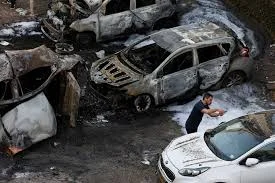
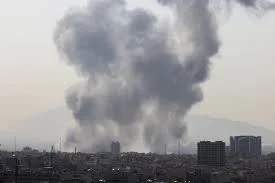
The scale of violence is clear in the numbers cited by humanitarian and local authorities: the Iranian Red Crescent Society places the death toll in Iran at at least 555 people. Local officials in Lebanon and Israel put those killed at at least 31 and 11, respectively. Four U. S. soldiers have also died. Explosions rang out in the centre of Tehran as Israel and Iran exchanged strikes across the region.
The conflict has rippled beyond front lines. The United Arab Emirates, long viewed as a stable regional anchor, is experiencing unprecedented business dislocation: boardrooms in Dubai are mostly empty, authorities have urged remote work, and airspace closures have grounded flights at both Dubai and Abu Dhabi. Executives and investors who normally transit the Gulf are stranded abroad. The strikes arrived during a season of intensified networking tied to Ramadan; high-profile gatherings have been cancelled and firms warn of lost deal-making opportunities and potential longer-term damage to the U. A. E. ’s reputation for security.
Pete Hegseth and the operational line: scope, timing and restraint
The U. S. secretary of war articulated a forceful operational objective: the mission is to destroy Iran’s missiles, navy and nuclear program. On the question of U. S. ground forces, Hegseth said no boots are currently on the ground in Iran. He cautioned against detailing operational limits, calling it “foolishness to go into detail about what it will and will not do. “
Hegseth framed the campaign as deliberate rather than rushed. He said he would never hang a time frame on this operation, adding that “it won’t happen overnight. This is a big battle space. ” He emphasized calibrated use of force: “We’ll go as far as we need to go to advance American interests, but we’re not dumb about it. You don’t have to roll 200, 000 people in there and stay for 20 years. ” Hegseth also acknowledged that Iran possesses long-range strike capabilities and described recent defensive deployments: “Even before this build-up, in the last 30 days, we discreetly brought defensive assets in, understanding that there are Iranian capabilities. “
Expert perspectives and operational tempo
U. S. Gen. Dan Caine, the chairman of the Joint Chiefs of Staff, reinforced the view that the campaign will be protracted and costly. He said it would take time to achieve military objectives in Iran and that additional U. S. casualties were expected. “We are now roughly 57 hours into the operation (ET), ” Caine said. “This is not a single overnight operation. ” He added that the U. S. continues to send additional troops to the Middle East even after a massive military buildup.
On regional strike activity, the Israeli military stated it carried out a strike in Beirut that killed Hussein Makled, identified in the context as the head of Hezbollah’s intelligence headquarters; Hezbollah has not commented or confirmed the death at this time.
Regional and strategic implications
The combination of explicit objectives, public acknowledgment of Iranian strike capabilities and ongoing troop movements signals a campaign with both kinetic and deterrent dimensions. Casualty figures and strikes in capital cities are already altering commercial rhythms in the Gulf, with immediate effects on travel, business gatherings and investor confidence. The strain on regional logistics hubs during a critical business season amplifies the economic cost beyond battlefield calculations.
Operational openness about not setting a timeline, coupled with an insistence on restraint in force posture, frames a strategy that seeks to balance escalatory pressure with political and military caution. Yet the expectation of further casualties noted by the chairman of the Joint Chiefs of Staff underscores the human and strategic toll that may persist as objectives are pursued.
As public statements outline a mission to degrade Iran’s military capabilities while distancing planners from large-scale occupation, critical questions remain about the campaign’s measures of success, the long-term economic fallout for regional hubs, and how neighboring states will calculate risk in a stretched security environment. Will the strategy achieve its stated goal without deepening regional instability or prolonged economic disruption? pete hegseth