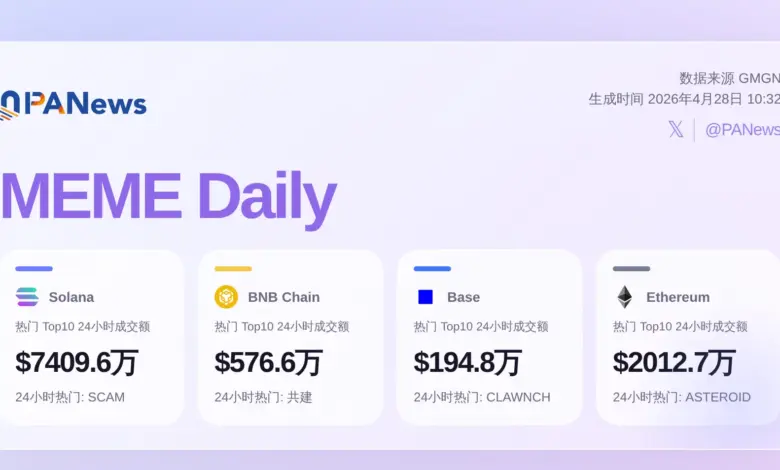
When searches for coin scams spike, the pattern is usually already in motion: anonymous deployers borrow a high-profile name, launch quickly across multiple chains, and rely on confusion before scrutiny catches up. The clearest warning in the material is blunt: the statistically safe assumption is to treat a celebrity-named token as suspicious until it is proven otherwise.
What is driving the latest Coin rush?
Verified fact: the current wave follows a familiar sequence. A viral headline or clip creates the trigger, and within hours impersonator tokens appear on Ethereum, Solana, BNB Chain, and Base. The material names Sam Altman, Elon Musk, Vitalik Buterin, and Michael Saylor as recurring targets. That matters because the tactic does not depend on one person or one chain; it depends on speed, attention, and the public’s habit of searching before buying.
Informed analysis: the search surge itself is part of the defense, not the problem. People are checking first. The weakness is that a celebrity name can still manufacture enough trust to move capital faster than verification can happen.
How do these Coin launches create a false sense of legitimacy?
The playbook described in the material has five stages. First comes the trigger event. Then comes the fake legitimacy layer: cloned websites, AI-generated whitepapers, hijacked social accounts with purchased verification, and fake community groups. The third stage is liquidity bait, where a deployer seeds a small pool, pays for promotion, and lists on a decentralized exchange. Once trading begins, bots can front-run organic buyers and push candles upward just long enough to attract more attention.
Verified fact: the final stage is exit, when liquidity is drained, social channels disappear, and the same structure reappears under a new name within 48 hours. The article’s checklist makes the standard clear: confirm the token announcement on the celebrity’s own long-established account, not a newly created lookalike; inspect contract metadata on a chain explorer; and treat real audits as signed reports, not screenshots.
Informed analysis: the danger is not only fraud at launch. It is the accumulation of small signals that mimic normal market behavior until the money is already committed.
Who benefits when a Coin looks viral?
The immediate beneficiaries are anonymous deployers, promoters paid to create momentum, and any bot infrastructure that exploits early price action. The material also points to another pressure point: tokens that remain off major centralized exchanges after two weeks of “viral” momentum are described as almost always scams or microcaps with vanishing liquidity. That is the core contradiction. A token may look widely discussed, but discussion is not the same as durable market support.
Verified fact: the reported market figures show how concentrated the activity can be. One Solana meme token tied to the word “SCAM” reached a market capitalization of $10 million and 24-hour trading volume of $33. 412 million in the same session that it topped the Solana trending list. Another listing for Scam Altman places its all-time high at $0. 01159 on Apr. 28, 2026, with current market capitalization at $1. 38 million and 24-hour trading volume at $21. 00 million.
Informed analysis: those numbers do not prove legitimacy. They show that volume can be real while trust is still manufactured.
What does the evidence say about trading safely?
The safest actions in the material are simple and narrow. Verify the source. Check contract metadata. Audit the audit. Look for listings on regulated venues. The warning about phishing is equally direct: lookalike domains, sponsored search results, and fake support agents are part of the same threat surface. The advice is to bookmark the real exchange domain and avoid clicking sponsored login results.
That guidance also helps explain why the Coin problem is larger than one token category. Celebrity tokens, meme launches, and fake support channels all rely on the same response from the victim: urgency. Once urgency replaces verification, the trap is already doing its work.
Accountability conclusion: the evidence points to a market environment where imitation can be monetized faster than due diligence can be completed. The public interest lies in transparency, stricter verification habits, and greater skepticism toward any token that borrows a famous name without a clear, established source. Until those standards are routine, Coin scams will keep turning attention into liquidity and liquidity into loss.