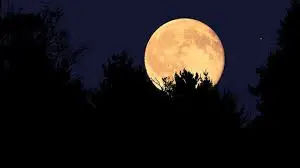
The full moon returns to the night sky this week, and the full moon arriving on Friday 1 May carries a softer presence than usual. It will rise as daylight fades, low in the eastern sky, before climbing toward the south-east as midnight approaches. For skywatchers, the scene is simple but striking: an ordinary evening slowly giving way to a moon that seems to hang over the changing spring landscape.
What makes this Full Moon different?
This month’s full moon is a micromoon, which means it appears slightly smaller than usual because it is near the farthest point from Earth in its orbit. That point is known as apogee. The Moon’s path around Earth is slightly elliptical, so its distance changes over the course of each month. The difference is real in technical terms, but for most people looking up from the ground, it will be subtle. The moon may seem a touch less bright than average, though the effect is far more noticeable in photographs than to the naked eye.
The timing also shapes the viewing experience. The moon will cross the southern sky through the night before setting toward the south-west around dawn. That gives it a long, slow passage overhead, one that fits the stillness of early May. The term Flower Moon comes from Native American seasonal naming traditions and was later popularised through sources such as the Farmer’s Almanac. The name reflects the natural world, especially the burst of wildflowers, warmer weather, and renewed plant growth that define the month.
Why does the Flower Moon carry so much seasonal meaning?
In May, the sky’s rhythms match what is happening on the ground. Early May brings colour and movement to the landscape, with bluebells in ancient woodlands, hawthorn blossoms in hedgerows, and longer days stretching into gentler evenings. That wider seasonal backdrop is part of why the Flower Moon has stayed so resonant. It is not only a calendar event; it is a marker of change, visible both above and below.
There is also a practical side to this year’s viewing. Low pressure moving closer from the Bay of Biscay is expected to bring a chance of showers late in the week, first in western areas. That could mean more cloud cover in the night sky and fewer uninterrupted views. Even so, the cloud is expected to be patchy, leaving clear spells at times for anyone hoping to catch the moon as it rises or later as it moves across the sky. In that sense, the experience may reward patience more than perfect conditions.
What happens if you miss it the first time?
There is another chance later in the month. If the opening full moon slips by unseen, May will offer a second full moon at the end of the month. That second event is known as a Blue Moon, the name given to a second full moon in a single month. It is a rare pattern, appearing once every two to three years, which is why the phrase “once in a Blue Moon” has lasted so long in everyday language. Together, the two full moons make May unusual, even before weather and cloud conditions enter the picture.
The idea of a double full-moon month gives the season a quieter form of drama. One moon begins the month, another closes it, and in between the sky becomes a stage for timing, weather, and patience. For anyone standing outside on Friday night, the view may be brief or partly interrupted, but it will still carry the same seasonal message: spring is in motion, and the night sky is keeping pace.
The moon over Wakefield in 2025 captured that feeling well, rising into a changing sky with a calm, measured presence. This week’s full moon may be slightly smaller, but it still offers the same invitation to pause, look east, and notice how much can happen in a single evening.