Widows bay opens as if it wants to be a postcard and a warning at the same time. The island town feels oddly cozy at first: shingled buildings, old-fashioned routines, and a mayor eager to sell the place as a destination. But the appeal quickly turns darker. Beneath the scenic surface lies a community where supernatural events are treated as local folklore until they become impossible to ignore. That tension is the engine of this uneven but intriguing horror-comedy, which uses friendliness, denial, and small-town pride as part of its scare strategy.
Why the Island Setting Works
The setting is the first thing that gives widows bay its edge. Located 40 miles off the New England coast, the town is described as having an appealing lack of Wi-Fi and a briny, old-fashioned atmosphere that feels disconnected from modern life. That distance is not just geographic. It helps create a self-contained world where rumors, history, and fear can spread without outside correction.
The town’s charm is also what makes the menace more effective. A travel writer visiting the island is meant to see a quaint destination with tourism potential. Instead, he finds a place with flickering lights, ominous warnings, and a history locals cannot quite leave behind. The result is a story that keeps asking whether the island is merely eccentric or genuinely cursed. In widows bay, that question matters because the town’s identity is inseparable from its danger.
Matthew Rhys and the Problem of Denial
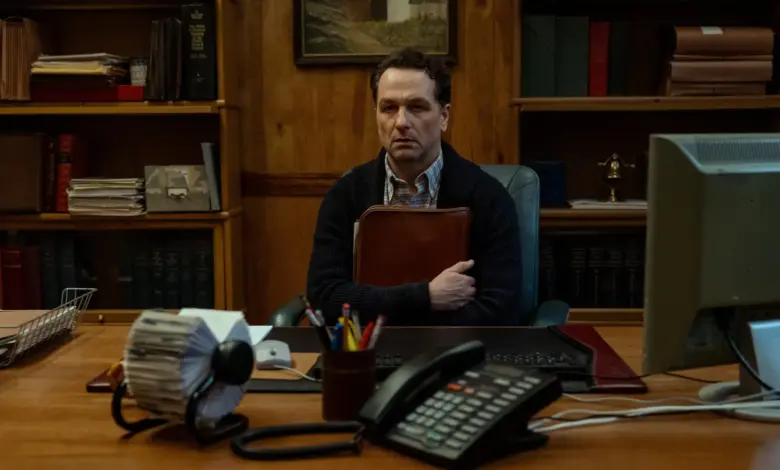
At the center of the series is Matthew Rhys as Tom Loftis, the mayor trying to rebrand the island as a tourist draw. Tom’s ambitions are practical on the surface, but the show makes clear that his optimism is also a kind of blindness. He wants visitors to see a charming community; the town keeps revealing something more disturbing. That gap between marketing and reality is one of the series’ smartest ideas.
Tom’s denial is not simple foolishness. It is tied to the economics of a struggling island town and to his need to believe the story he is selling. The show repeatedly suggests that the town’s problems cannot be solved by public relations. The curse, the legends, and the strange events are not decorative flourishes. They are the thing itself. That is why widows bay works best when it treats Tom’s confidence as both a civic asset and a liability.
Horror Tropes, Familiar on Purpose
The series leans heavily on recognizable horror material: haunted buildings, sea hag folklore, a reanimated corpse, possession, creepy noises, and unsettling family history. A haunted inn invokes classic horror traditions, while the island’s museum is filled with artifacts of past atrocities. The show also nods to shark-attack anxiety and coastal menace, using the island’s isolation to amplify every threat.
That familiarity is not necessarily a weakness. The material is presented as a deliberate remix, with the creators pulling from a wide range of horror stories and rearranging them into a single coastal nightmare. The result is less about innovation than accumulation. The show’s strongest impulse is to layer one unease on top of another until the viewer feels trapped inside a place where even normal life seems infected by dread. In that sense, widows bay is built on anticipation as much as surprise.
What the Ensemble Adds to the Tone
The supporting cast helps keep the series from becoming too gloomy. Stephen Root plays Wyck, a salty local who sees something paranormal in the town’s history, while Kate O’Flynn’s deputy brings a steadier, more grounded energy to city hall. Dale Dickey, Jeff Hiller, and other residents add texture to the community, making the island feel lived-in rather than merely plotted.
That balance between oddball comedy and supernatural threat is what gives the show its most distinctive tone. The town is full of people who seem to know far more than they say, yet many of them respond to the impossible with routine. That quiet normalization of the strange makes the horror more unsettling, not less. It also gives widows bay its “cozy but cursed” identity, which is the show’s most unusual creative gamble.
Why It Matters Beyond the Island
At a broader level, the series taps into a familiar modern anxiety: the urge to package a place as brandable even when its history resists easy selling. The tourism pitch is not just a plot device. It becomes a test of what communities choose to hide, reframe, or ignore in the name of survival. That makes the supernatural story feel connected to real civic pressure, even if the show keeps its focus on genre play.
Widows bay also lands at a moment when viewers are already fluent in horror references. That means the show has to work harder to justify each echo and each twist. Its answer is to make the island feel like a place where the joke and the threat are always sharing the same table. If the series can sustain that balance, it may turn its unevenness into a feature rather than a flaw. The question is whether the town’s charm can survive the curse once the visitors stay long enough to notice what is really there.