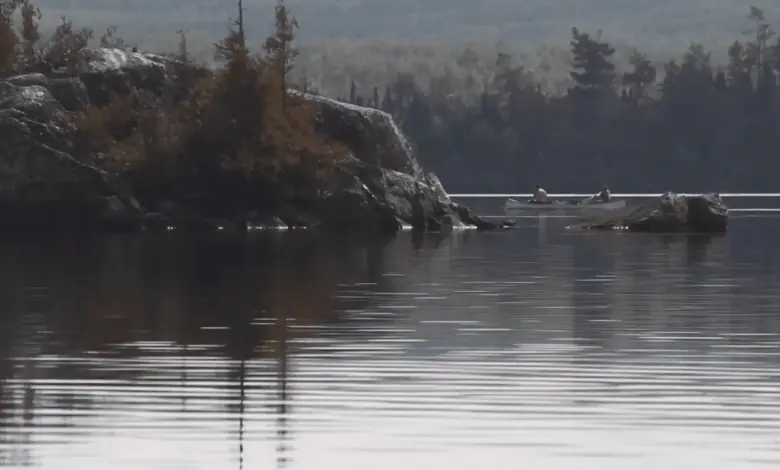
mining has entered a new phase near the Boundary Waters Canoe Area Wilderness after President Donald Trump signed legislation overturning the 20-year ban in the Superior National Forest. The move changes the policy landscape immediately, but it does not mean projects will begin at once. The next stage will be defined by environmental review, permitting, political pushback, and a debate that now has a much clearer legal footing.
What Happens When the Ban Ends?
The signing of H. J. Res. 140 ends the Biden administration’s mining ban in the area, opening the door for proposed projects to move through state and federal review. Representative Pete Stauber’s office framed the change as a permanent reversal of a policy that had blocked development in a strategic part of the forest. Stauber said the action would allow proposed mining projects aimed at critical minerals to advance through the normal process.
That is the key distinction now: the ban is gone, but the process is not. Even with the policy removed, no mining can start right away. One estimate from the Executive Director of Better in Our Backyard puts the average time to permit a new mine on federal land in Minnesota at 29 years. That figure underscores how long the next chapter may last, even after the legal barrier has fallen.
What If the Review Process Becomes the Real Battleground?
The immediate conflict is no longer simply about whether mining is allowed. It is about what happens inside the permitting system. Projects can now move ahead under existing environmental review and permitting processes, but that does not guarantee approval or speed.
Opponents say the change exposes roughly 225, 000 acres of public land surrounding the Boundary Waters to toxic copper-sulfide mining. Chris Knopf, Executive Director for Friends of the Boundary Waters Wilderness, warned that the fight is far from over and said the response has already mobilized supporters who are calling elected officials and holding rallies. That reaction suggests the review process itself may become the central arena for the dispute.
- Best case: proposals proceed through review without disruption, and the debate narrows to clear permit conditions.
- Most likely: the process moves slowly, with legal, political, and public opposition shaping every step.
- Most challenging: the conflict escalates into a prolonged stalemate that delays projects for years.
What Forcing Factors Are Shaping the Outlook?
Several forces are now pulling in different directions. First is the policy shift itself: the federal prohibition near the Boundary Waters is gone, and that creates a new baseline for developers and opponents alike. Second is the environmental concern attached to the location. The Boundary Waters remain a defining reference point in the debate, and the nearby wilderness carries significant symbolic and practical weight.
Third is the economic argument. Stauber said the area could help unlock trillions of dollars’ worth of critical minerals, a claim that reflects the broader national interest in domestic sourcing. Fourth is the length of the regulatory timeline. A 29-year average permitting period means the policy change is more immediate than the physical outcome it may eventually allow. In other words, the legal shift is fast; the operational shift is slow.
For mining, that mismatch matters. A project may now be possible in principle, but the path from legislation to construction remains highly uncertain. The result is a landscape where expectations may rise faster than actual progress.
What If One Side Wins the Narrative but Not the Timeline?
The winners and losers are already visible, even if the long-term outcome is not. Mining advocates gain a significant policy victory: the ban is overturned, and their argument that the region should remain open to mineral development now has federal backing. Supporters of the legislation also gain leverage in future state and federal review stages.
Opponents lose the ban they had relied on, but they still retain influence through public pressure, environmental review, and permitting opposition. That means the political fight is not over; it has simply moved.
Potentially affected stakeholders include:
Winners: mining supporters, companies interested in proposing projects, and policymakers who favor domestic mineral sourcing.
Losers: wilderness advocates, groups concerned about copper-sulfide mining near the Boundary Waters, and communities worried about environmental impacts.
Still undecided: state and federal review bodies, which now hold more of the practical power over what happens next.
What Should Readers Watch Next?
The most important takeaway is that this is not the beginning of actual construction. It is the beginning of a longer permitting and political phase. The signing changed the legal status of the area, but the real-world effects will depend on how review processes unfold and how much resistance grows around them.
Readers should watch for three signals: whether proposals are formally advanced, whether opposition intensifies around review and permitting, and whether the long timeline for federal mine approval remains the defining reality. For now, the biggest shift is structural, not physical. The ban has ended, but the outcome near the Boundary Waters remains open.
For anyone tracking mining in Minnesota, the lesson is clear: the policy door has opened, but the corridor beyond it is long, narrow, and still contested.