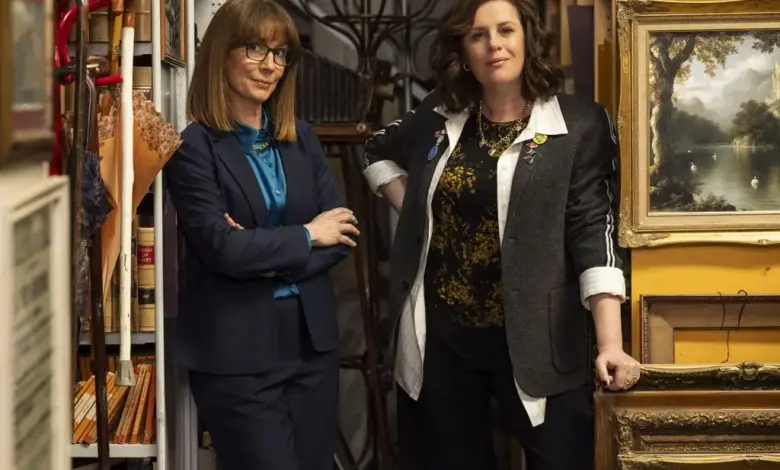
Bad Company arrives with a simple but revealing setup: a successful banking executive is sent to manage a struggling theatre company, and the collision is immediate. In the series, Julia McNamara is all profit and loss, strategic planning, and responsible spending, while Margie Argyle represents feelings, drama, creativity, and spectacle. That contrast is the engine of the comedy, but it also points to a larger truth about how creative work is often judged from the outside.
What is the real conflict at the center of Bad Company?
Verified fact: Bad Company is a new comedy series set to air on the ABC this Sunday. Kitty Flannagan stars as Julia McNamara, a success banking executive redeployed to manage The Argyle, an avant-garde theatre company that is struggling. Anne Edmonds plays Margie Argyle, the company’s over-the-top artistic director, and she is also the writer of the series.
The premise is not subtle, and that is the point. Julia arrives with a managerial language built around budgets, discipline, and accountability. Margie lives in a world where artistic risk and dramatic excess are part of the job. The series places those two worldviews in direct conflict, making the theatre company’s financial trouble the visible pressure point.
Why does the show frame theatre as a management problem?
Verified fact: Julia’s first instinct is to confront the company’s spending habits, and she openly pushes back against the idea that interpretive dance and artistic instinct can substitute for hard decisions. Her response to the company’s dire financial situation is blunt: someone has to make the tough decisions.
That line matters because it captures the show’s central contradiction. The theatre company is described as avant-garde and floundering, which suggests both creative ambition and instability. The joke is not simply that theatre people are impractical. The deeper point is that institutions built around creativity still depend on structures that creativity often resists. Bad Company uses that tension to make the workplace comedy feel less like a fantasy and more like a dispute over who gets to define value.
Who is positioned as the winner in this clash of values?
Verified fact: The series does not present either side as fully right. Julia brings order, but she also enters a world she does not understand. Margie brings vision, but the company is described as floundering, which implies that vision alone is not enough to keep it afloat.
Analysis: That balance is what gives the premise its bite. The banking executive is introduced as someone trained to manage outcomes, while the artistic director is introduced as someone driven by performance and expression. Neither role can fully solve the other’s problem. The theatre needs money, but it also needs a reason to exist beyond the ledger. Julia may stabilize the operation, but her methods could flatten what makes the company distinct. Margie may protect the artistic identity, but the context makes clear that identity has not stopped the financial strain.
What do Kitty Flannagan and Anne Edmonds bring to the series?
Verified fact: Kitty Flannagan and Anne Edmonds are both described as much-loved stars, and Edmonds is also the writer of the series. That makes the show especially notable as a vehicle for performance and authorship at the same time.
The casting reinforces the premise without overexplaining it. Flannagan’s Julia carries the tension of the outsider who must impose structure. Edmonds’ Margie embodies the creative force at the center of the theatre world. Because Edmonds wrote the series, the conflict appears designed from within the comic logic of the show rather than imposed from outside it. That distinction matters: the series does not merely mock the creative world. It stages an argument about how creative institutions survive, who gets to lead them, and what happens when administration and artistry collide.
What should viewers take from the setup of Bad Company?
Verified fact: The series comes to the ABC this Sunday and is built around a theatre company in trouble. Its workplace setting is not incidental; it is the whole frame.
Analysis: Seen together, the details suggest a comedy that is less interested in broad parody than in exposing a familiar institutional dilemma. Creative organizations often depend on people who speak different professional languages and trust different forms of authority. Bad Company makes that disagreement the story. The result is a workplace comedy with a clear internal contradiction: the people who most need each other are also the least likely to agree on what success means.
That is why the title works as more than a joke. It points to the uneasy partnership at the center of the show, where business logic meets artistic pride and neither side can fully win. As the series reaches the ABC this Sunday, Bad Company looks set to turn that clash into its sharpest source of truth.