Andrew Huberman is now appearing in a widening legal narrative that stretches far beyond one wellness-profile dispute. A new court complaint suggests that the online attacks surrounding his ex-girlfriend may be part of a broader smear ecosystem tied to Hollywood reputation battles. The development matters because it connects a March 2024 investigation, anonymous online activity, and fresh defamation claims into one unsettling picture: digital discreditation may be functioning less like isolated trolling and more like coordinated strategy.
Why the Andrew Huberman case matters now
The latest filing arrives in the middle of litigation that began with actress-turned-activist Alexa Nikolas and her defamation claims over multiple smear websites. Her case names attorney Bryan Freedman and his associate Jed Wallace, and it points to digital forensics showing “common authorship” between online accounts promoting Wallace, attacking Nikolas, and targeting the woman identified as the key source in the 2024 New York Magazine story about Huberman. That makes the andrew huberman matter more than a personal controversy; it places him near the center of a larger pattern of alleged online reputation warfare.
How the online campaign formed around the 2024 investigation
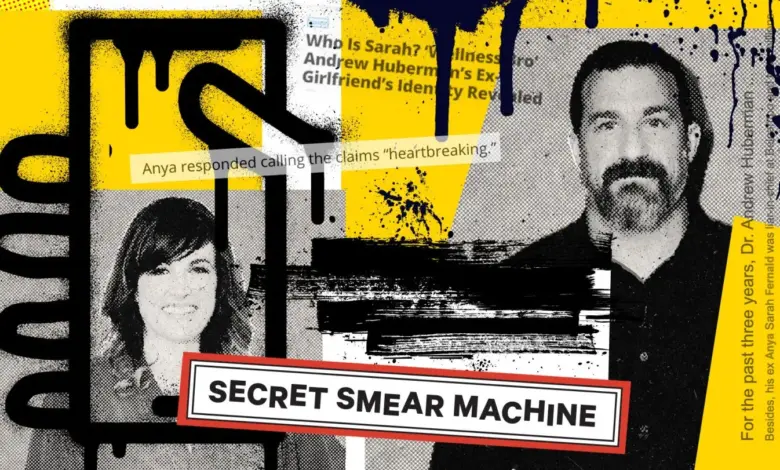
In March 2024, New York Magazine published an investigative cover story describing Huberman’s alleged “mechanisms of control” and portraying “the private and public seductions of the world’s biggest pop neuroscientist. ” The article centered on anonymous women and described a pattern of concealment, manipulation and rage. One source, identified only as “Sarah, ” was later revealed to be Anya Fernald, Huberman’s ex-girlfriend. Around the same time, anonymous web activity emerged targeting Fernald through a dedicated website, a social media account and a Reddit discussion thread, with claims that she was responsible for Belcampo’s collapse after a 2021 mislabeling and sourcing scandal.
What the new complaint suggests beneath the surface
The new complaint does not prove a direct command structure, but it does deepen suspicion about how reputational attacks can travel across separate cases. Fernald had once built her own public profile as CEO of Belcampo, a California-based meat company that was praised for its ethical positioning. After the magazine investigation, her name was pulled into an anonymous online counter-narrative. Now, Nikolas’ filings suggest that the same digital ecosystem may have been interested in both promoting Wallace and smearing women linked to high-profile men. That overlap is why the andrew huberman issue is being read as part of a broader legal and reputational chain rather than a stand-alone allegation.
Expert and legal relationships inside the network
One of the most important details is the role of Bryan Freedman, who has represented both Fernald and Huberman in the past. He negotiated a 2022 settlement for Fernald against Belcampo. During that process, Fernald introduced Huberman to Freedman as legal counsel, and the relationship between the men later became close. Separate materials reviewed in this reporting indicate that Huberman maintained a direct line of communication with Wallace. None of the individuals named in the filing would comment.
The legal significance is not just who knew whom, but what the complaint is trying to establish: whether the same professional network sat near multiple allegations, multiple disputes and multiple online attacks. If digital forensics can show common authorship, then reputational damage may be moving through a repeatable playbook rather than isolated incidents.
Regional and broader impact on Hollywood reputation battles
The case now extends beyond one wellness figure and one ex-girlfriend. Nikolas is one of several people previously linked in separate litigation tied to the Baldoni-Lively dispute as alleged targets of online discreditation. That broader context gives the matter unusual weight in Hollywood, where public image is often commercially valuable and legally fragile. If courts continue to treat these allegations seriously, the result could be a sharper reckoning over how anonymous digital campaigns are organized, funded or amplified. For public figures, the practical concern is not just defamation in the abstract, but the speed at which repeated online narratives can harden into perceived fact. In that sense, andrew huberman sits inside a test case for how modern reputation damage is built.
The unanswered question is whether this cluster of allegations will remain a set of overlapping legal claims or become evidence of a larger machinery that has been operating in plain sight.