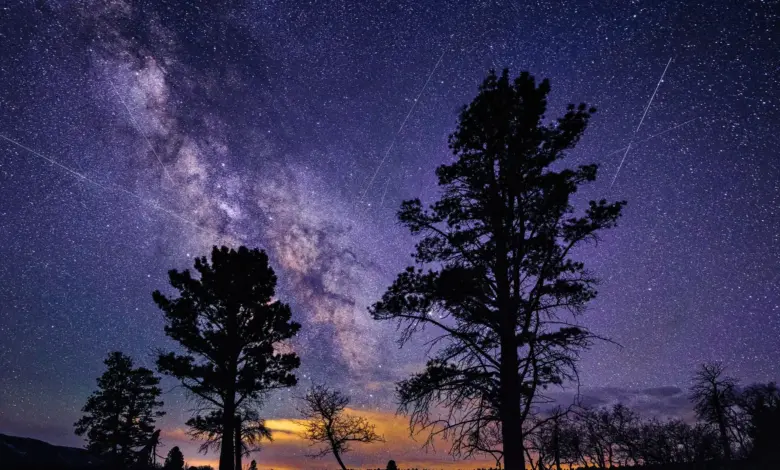
The Lyrid meteor shower will reach its peak in the early hours of April 22, 2026, giving skywatchers their best chance to catch bright streaks before sunrise. The Lyrid meteor shower is active from April 16 to 25, and the clearest viewing window is expected in the predawn hours when the radiant climbs higher in the sky. The moon is not expected to interfere this year, with dark skies available after it sets after midnight.
Best viewing window arrives before dawn
The best time to observe the Lyrid meteor shower is in the early morning on April 22, with the strongest viewing expected in the predawn hours. The radiant, the point from which the meteors appear to come, will be high in the sky as morning approaches, but the brightening sky will make the display harder to see as sunrise nears.
Skywatchers hoping for the sharpest view should plan a watch late into the night and into dawn. The Lyrid meteor shower is tied to Comet Thatcher, and the average shower produces 15 to 20 meteors per hour under clear, dark conditions.
What viewers can expect from the Lyrid meteor shower
The Lyrid meteor shower can sometimes intensify into an outburst, with as many as 100 meteors per hour, although the timing of such a spike is difficult to predict. For the 2026 display, the thin crescent moon should leave the sky dark enough for a better-than-usual look at the meteors once it sets after midnight.
The radiant will appear high in the evening sky in the constellation Lyra, to the northeast of Vega. Viewers are being reminded not to look directly at the radiant, since doing so can make it easier to miss meteors with the longest tails.
How to get the clearest view
A watch from late evening into dawn offers the best chance of seeing the strongest rates, especially on the nights of April 21-22 and April 22-23. The Lyrid meteor shower is described as one of spring’s most reliable sky events, but visibility still depends on clear, dark skies and patience.
For observers who miss the peak, meteors should still be visible later in the week. The Lyrid meteor shower remains active through April 25, so there is still a chance to catch activity after the peak has passed.
What comes next for skywatchers
The next key moment is the early hours of April 22, when the Lyrid meteor shower should deliver its strongest showing. If skies stay clear and the moon stays out of the way as expected, the overnight watch could offer the best chance of the season to spot a shooting star from the Lyrid meteor shower.