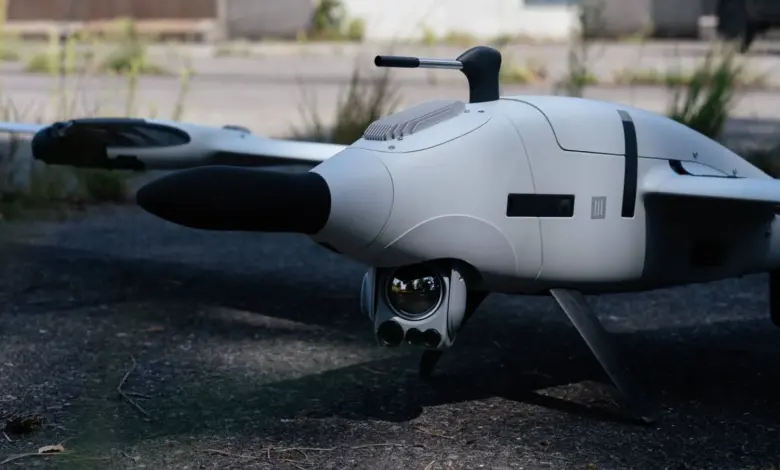
The U. S. Army’s latest unmanned aerial vehicle choice says as much about battlefield adaptation as it does about procurement. In a competitive selection, the service awarded a $15. 3 million contract for Vector AI drones, a modernized reconnaissance system that has already logged more than 20, 000 hours in Ukraine. The decision points to a growing preference for systems tested under real combat pressure, especially for brigade teams that need faster identification, tracking, and decision support.
Why the Vector selection matters now
The contract falls under a program focused on integrating small drones at the unit level, with the goal of improving reconnaissance capabilities for brigade combat teams. That matters because the U. S. military is not just buying hardware; it is selecting an unmanned aerial vehicle platform that must fit existing software and equipment ecosystems. In this case, compatibility was part of the evaluation, alongside performance and integration potential.
Vector AI is the updated version of a medium-range reconnaissance drone, now paired with artificial intelligence functions. The system can automatically classify, identify, and track targets in real time. For military users, that shifts the drone from a passive sensor to a faster decision tool, compressing the time between detection and action. The platform’s technical profile also gives the selection context: a maximum takeoff weight of 9. 5 kilograms, more than 180 minutes of endurance, data transmission beyond 60 kilometers, and a maximum flight altitude of up to 4, 000 meters.
Combat experience became a procurement signal
The central issue is not simply that a new unmanned aerial vehicle was chosen, but that its battlefield record in Ukraine appears to have strengthened its case. The company behind the system has emphasized that combat experience played a key role in the selection. That is significant because the platform was not evaluated in theory alone; it had already accumulated real operational hours in a contested environment.
From an analytical standpoint, this reflects a broader shift in how military buyers weigh resilience. The context provided around the contract makes clear that the modern battlefield demands systems that are adaptable, durable, and proven under real-world conditions. The Vector AI selection fits that logic. Rather than privileging abstract specifications, the Army appears to have valued whether the drone could function in a setting where reconnaissance systems are expected to survive disruption and still deliver usable data.
What the $15. 3 million contract signals for brigade units
The contract is aimed at strengthening medium-range reconnaissance capabilities in brigade units. That makes the unmanned aerial vehicle especially relevant at the level where commanders need rapid situational awareness without waiting for higher echelons to process information. The stated mission of the system — automatic classification, identification, and tracking — aligns with that need.
In practical terms, the award suggests a continuing move toward drones that can help bridge the gap between observation and action. The selection was described as competitive, with the military weighing drone characteristics, equipment integration, and compatibility with Army software. That implies the Army is not just looking for a capable airframe, but for a package that can be absorbed into an operational workflow. For brigade teams, that can matter as much as range or endurance.
Expert and institutional perspective on modern reconnaissance
Quantum Systems’ American division framed the contract around the demands of today’s battlefield, where unmanned systems must be adaptable, resilient, and proven in real-world conditions. That perspective aligns with the selection criteria described in the contract process and helps explain why Ukraine’s operational use became relevant.
Defense Express noted the drone’s combat record in Ukraine and the new artificial intelligence-enabled version. The underlying institutional message is clear: military procurement is increasingly shaped by whether a platform has already demonstrated utility under pressure. In that environment, the unmanned aerial vehicle is no longer evaluated only as an airborne sensor, but as part of a faster, more integrated reconnaissance chain.
U. S. military planners now appear to be betting that medium-range reconnaissance systems will become an important part of brigade-level development. That is not a sweeping doctrinal overhaul, but it is a meaningful indicator of where capability investment is heading.
Regional and global implications of a battlefield-tested drone
The implications extend beyond one contract. A drone with more than 20, 000 hours in Ukraine entering U. S. service shows how combat lessons can move across regions and into formal procurement. It also underscores how one theater’s operational demands can shape expectations in another. For Ukraine, the platform’s selection adds an example of battlefield relevance translating into institutional recognition. For the U. S. Army, it reinforces the value of systems that arrive already tested rather than merely advertised.
There is also a wider signal for the drone sector: competition increasingly rewards not only technical performance, but proof of operational reliability. If that trend continues, future unmanned aerial vehicle programs may be judged less by what they promise and more by what they have already survived.
For now, the key question is whether this kind of procurement will redefine what “ready” means for brigade reconnaissance — and how many more combat-tested systems will follow the same path.