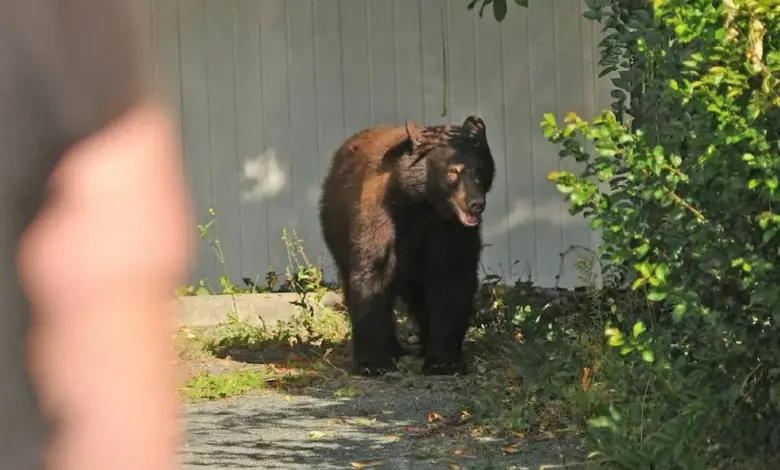
feces is now part of a local research effort in Prince George that is trying to better understand how bears move, behave, and respond to city life. In its second year, the project is again asking residents to help collect samples, with a new partnership designed to sharpen what researchers can learn from urban and captive bears.
What Happens When Residents Turn a Daily Walk Into Research?
The College of New Caledonia Research Forest team says the project is built around a simple idea: residents can help gather bear samples from neighborhoods across the city, then researchers can use those samples to study sex, stress levels, and movement patterns. The work is continuing through late October, when bears begin hibernation.
The project’s first year drew strong participation, with dozens of residents contributing more than 130 samples from areas including College Heights, downtown, Moore’s Meadow, and Ginter’s Meadow. That early response suggests the city already has a practical base for community-led wildlife monitoring, especially when the task is clearly explained and easy to carry out.
Vanessa Fetterly, a senior researcher with CNC Research Forest, said the collection process requires only a small amount and can be handled in a straightforward way. The team says participants can photograph droppings and send the image with a general location, or collect a sample, label it, and place it in the designated fridge at CNC’s Prince George campus.
What If the New Zoo Partnership Changes the Picture?
The biggest shift in this round of feces collection is the new partnership with the Calgary Zoo. Researchers will be able to compare samples from wild bears in Prince George with those from captive bears living in low-stress environments. That comparison is intended to give scientists a clearer baseline for understanding how stress may shape behavior.
In practical terms, that matters because the project is not only about identifying where bears are active. It is also about learning what may be attracting them into urban spaces and whether higher stress levels are linked to a greater risk of negative encounters. The research forest team says those findings could support safer, bear-smart practices in the community.
There is a clear limit to what this work can answer immediately. A sample set, even a growing one, does not solve human-bear conflict on its own. But it can improve the quality of the local evidence base, which is often the difference between general concern and targeted action.
What Does the Current Research Model Tell Us?
| Project element | Current role |
|---|---|
| Resident participation | Expands sample collection across neighborhoods |
| Sample analysis | Helps identify sex, stress levels, and movement patterns |
| Zoo comparison | Provides a low-stress reference point |
| Community use | Supports bear-smart practices and awareness of active areas |
This model matters because it blends public participation with institutional research. The city becomes both the setting and the data source, while the research team tries to turn local observations into a clearer picture of bear behavior. In a year-to-year project like this, the practical value is less about one sample and more about the pattern built from many small contributions.
Residents are also being asked to keep samples cool if they cannot be delivered right away, and to include the date and general location. Trail camera images or security images of bears can also be shared with researchers, broadening the kinds of evidence the team can use.
What Should Residents Expect Next?
Through late October, the collection effort will likely continue to depend on simple public actions and steady follow-through. The project’s next phase is not about dramatic change; it is about accumulating enough information to better identify where bears are active, what draws them in, and how stress may affect the chances of an encounter.
The most likely outcome is a more detailed local map of urban bear activity and behavior. The best case is that the comparison with captive bears helps researchers strengthen their interpretation of stress signals. The most challenging case is that the data remains informative but still limited, leaving some questions about cause and effect unresolved.
For Prince George, the takeaway is straightforward: this is a community research effort with a narrow but useful purpose, and its value will depend on how many residents continue to participate. As the collection window moves toward hibernation, the role of feces in the project remains simple but important: it is the sample that may help explain how bears are adapting to city life.