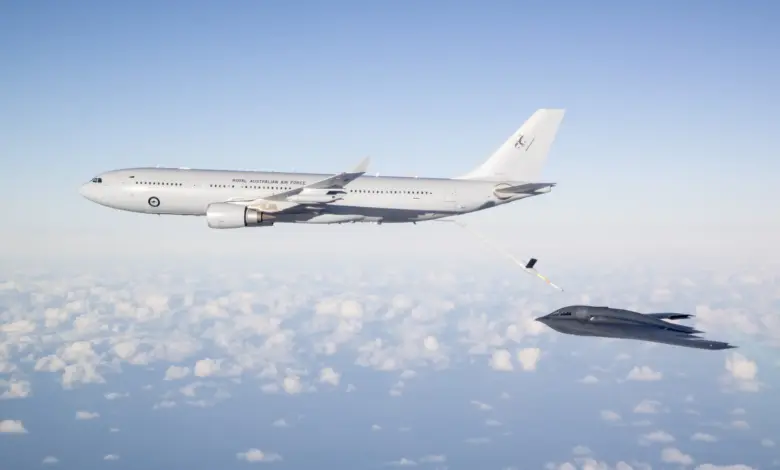
Nds 2026 places an old argument in a new light: Australia cannot afford to confuse self-reliance with self-sufficiency. The strategy, announced by Deputy Prime Minister and Defence Minister Richard Marles, treats the US alliance as fundamental while insisting Australia must strengthen its own capabilities. That balance is not merely rhetorical. It sits at the centre of a wider debate about whether Canberra should respond to a less benign United States by distancing itself, or by preparing for a harsher strategic environment without abandoning the alliance.
The strategic logic behind Nds 2026
The document’s core claim is clear. Australia’s security interests lie in the combination of the US alliance and stronger national capability. It explicitly states that Australia’s alliance with the United States remains fundamental to national security and to the Australian Defence Force’s capacity to generate, sustain and project credible military capability. In that framing, self-reliance is a necessity; self-sufficiency is not a realistic end state. That distinction matters because it rejects the idea that a more transactional Washington automatically demands a wholly independent Australian foreign and defence policy.
That is the first major reason Nds 2026 is significant now. The strategic environment has hardened, and the United States is described in the material as less benign than before, more transactional and coercive in its approach to international relations. But the answer, the strategy argues, is not to abandon the alliance. Instead, it is to make Australia a more capable partner with greater autonomy inside a still-decisive alliance structure.
Why the alliance debate sharpened
The context around Nds 2026 is shaped by concern over the current direction of US power. Recent US military operations are portrayed as tactically impressive but strategically inconsistent, with costs that include depleted munitions stocks, weaker global standing and eroded deterrence credibility. The concern is that such pressures could hand strategic advantage to Iran, China and Russia. That is not simply a critique of one administration; it is a warning that the alliance environment is becoming more demanding for allies that depend on US capacity.
The same logic extends to the wider political consequences of how Washington treats long-standing partners. The material says chastising allies and threatening sovereignty can strengthen those who seek harm against liberal democracy and the global order. In this sense, Nds 2026 is not an argument for complacency. It is a case for hard-headed alliance management in a world where power is being used more bluntly and where allies are expected to carry more of their own weight.
AUKUS, undersea warfare and industrial preparation
The alliance debate is also inseparable from AUKUS. Officials involved in the program now say doubts about the trilateral partnership are behind them and that the work to build nuclear-powered submarines for Australia is on track to begin on the first boat by the end of the decade. The program calls for Australia, the United Kingdom and the United States to cooperate on eight AUKUS-class submarines, with Virginia-class boats expected to serve as a stop-gap in the 2030s.
That program gives practical meaning to Nds 2026. It shows self-reliance is not a slogan but a capability-building project that still depends on allied technology, know-how and industrial cooperation. The material also notes progress in shipyards and workforce preparation, including maintenance work on HMS Anson in Western Australia and the installation of 35 Australian-made parts by about 100 workers, totaling some 600 maintenance hours. These are not symbolic gestures. They are evidence that the alliance is being translated into industrial capacity.
Expert views on the alliance’s future
Sir Stephen Lovegrove, the UK prime minister’s special representative on AUKUS, said public speculation about the future direction of the partnership had been “unequivocally put to bed” and that “that chapter is firmly shut. ” He argued that renewed political direction creates a moment to “reanimate and refocus the partnership. ” Jay Weatherhill, Australia’s high commissioner to the United Kingdom, said the debate over what capabilities Australia needs “has been settled” and that the strategic imperative remains just as relevant today as when it began.
Those views reinforce the logic behind Nds 2026: the question is no longer whether Australia should pursue deeper capability through alliance structures, but how quickly it can turn that strategy into force. Sophia Blix, minister counsellor for AUKUS at the Australian Submarine Agency, also pointed to substantial Australian industry involvement, including about 200 Australian companies. That suggests the alliance is widening beyond diplomacy into a broader national capability ecosystem.
Regional and global consequences
The wider implications reach beyond Australia. The material links the relevance of the partnership to conflicts in the Black Sea, the U. S. -Iran war and vulnerabilities in undersea infrastructure. It also warns that China is likely to study such conflicts closely for lessons in military modernisation, narrowing the qualitative gap between Chinese and US capabilities. For the Indo-Pacific, that means the pressure on Australia’s strategic posture is rising, not falling.
Nds 2026 therefore lands at a moment when the alliance must do two things at once: remain central to Australian security and adapt to a more contested global order. The open question is whether Australia can keep turning alliance dependence into genuine self-reliance fast enough to match the pace of strategic change.