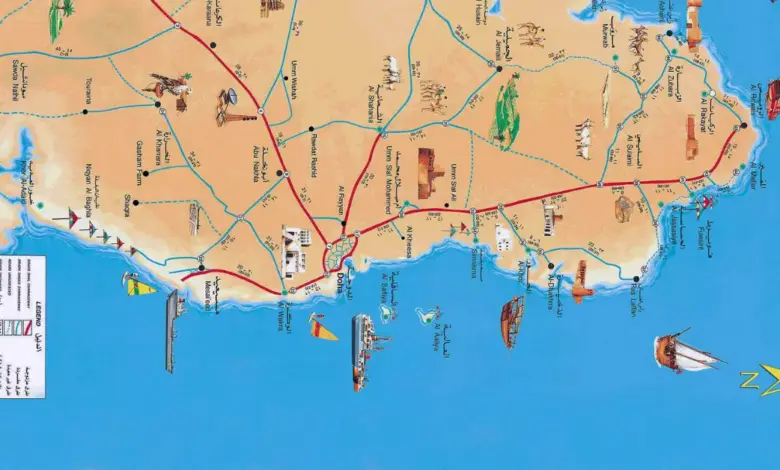
marine traffic in Qatar has taken a meaningful turn, with the Ministry of Transport announcing on April 12 that navigation for all vessel types is restored in Qatari territorial waters between 6 a. m. and 6 p. m. daily. Licensed fishing vessels may operate around the clock. The move matters because it reopens a key layer of day-to-day port and coastal movement at a moment when energy markets, buyers, and shipping operators are still recalibrating.
What Happens When Marine Traffic Reopens in Territorial Waters?
The restoration applies to internal sea routes, anchorages, and port approaches around Doha and Ras Laffan. It does not reopen the Strait of Hormuz, and that distinction is central. Vessel movement inside Qatari waters can resume under the new framework, but the ability of LNG cargoes to move onward to Asia and Europe still depends on transit arrangements outside Qatar that remain unsettled.
The announcement was paired with a safety advisory from Qatar’s Interior Ministry urging operators to make sure navigation systems and life-saving equipment are fully functional before departure. That detail signals a cautious restart rather than an immediate return to normal operating conditions. In practical terms, the change should help with vessel positioning, berthing, maintenance, and preparations for cargoes that have been sitting loaded since late February.
What If Supply Chains Are Only Partly Unblocked?
The market significance is tied to Qatar’s role in global LNG supply. The context places Qatar at roughly 20 per cent of global LNG supply through Ras Laffan, the world’s largest LNG export facility. The past six weeks of effective maritime disruption have therefore carried outsized weight for importers in Asia, Europe, and South Asia.
There is also a direct energy demand angle for India. Petronet LNG receives about 7. 5 million tonnes of Qatari LNG annually under long-term contracts, and the pressure on India’s gas distribution network has already led to 10-20 per cent consumption cuts on industrial gas users since the crisis began. If routing becomes viable again, even gradually, the restoration of marine traffic in Qatari waters should ease that strain.
India’s LPG picture adds another layer. The projected LPG import requirement for FY 2026-27 is 20. 82 million tonnes, reflecting structural growth in household cooking gas demand and limited domestic production capacity. That makes import sourcing a strategic priority, and any improvement in Qatari operations offers an early signal of possible supply relief.
Who Wins, Who Waits?
| Stakeholder | Likely effect |
|---|---|
| Qatari port and terminal operators | Improved ability to move vessels, berth, and prepare cargoes |
| LNG importers in Asia, Europe, and South Asia | First meaningful easing signal after weeks of uncertainty |
| Indian industrial gas users | Potential relief if exports and routing stabilize |
| Shipping operators | Better operational access, but still constrained by external transit conditions |
| Buyers waiting on full regional normalization | Still exposed to uncertainty because the Strait of Hormuz remains outside this decision |
The clear winner is near-term operational flexibility. The clearest limitation is that the broader corridor for exports is not fully restored. That means the announcement is important, but not yet a complete solution.
What Should Readers Watch Next?
The next phase depends on whether restored marine traffic inside Qatar translates into dependable cargo movement beyond territorial waters. If transit clearance improves, the relief could spread through LNG and LPG markets faster. If not, the change will still matter as a stabilizing step, but one that stops short of a full reopening.
For now, the message is straightforward: Qatar has reopened a critical operational layer, but the bigger test remains regional transit. The situation is better than before, but it is not settled, and marine traffic will remain the key variable to watch.