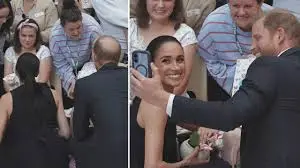
prince harry arrives in Australia at a moment when the meaning of public appearances has changed. What was once framed as a high-glamour royal visit is now a private, at times promotional, tour with commercial events, security limits and a very different public mood shaping the story.
What Happens When a Royal-Style Visit Becomes a Private Tour?
Prince Harry and Meghan are due in Sydney on Tuesday for a four-day visit that includes Sydney and Melbourne, plus a solo Canberra trip for Harry. The structure matters: this is not a royal tour, and it is being treated as something narrower, more commercial and more controlled than their first visit to Australia.
The contrast with 2018 is central to understanding the shift. Then, they were newly married, newly pregnant and greeted with a level of enthusiasm that made the visit feel like a fresh chapter for the monarchy. This time, the public-facing energy is weaker, the schedule is more segmented, and there will be no walkabouts because of security and cost concerns.
The change is not just logistical. It signals a broader recalibration in how high-profile figures can convert attention into relevance. Where the old model depended on ceremony and public spectacle, this trip blends hospitality, speaking engagements and branded wellness activity. That makes the visit more modern in form, but also more exposed to criticism when the commercial pitch looks out of step with the moment.
What If Commercial Access Becomes the Main Event?
The most visible pressure point is the pricing. On Thursday, Prince Harry is expected to speak at InterEdge’s psychosocial safety summit, a two-day professional development event with tickets ranging from $498 for virtual attendance to $2, 378. 65 for the platinum experience. He is expected to speak about workplace mental health.
Meghan will headline the three-day Her Best Life retreat in Sydney, including a question-and-answer session. The event is being presented as a girls’ weekend like no other, with tickets priced at $2, 699 including accommodation or $3, 199 for a more VIP experience that includes a group table photo with Meghan.
That pricing turns the tour into more than a public-relations exercise. It becomes a case study in whether celebrity still commands premium access when the surrounding culture is less forgiving. Flinders University associate professor and royals researcher Giselle Bastin captures the tension clearly: the couple once had glamour attached to them, but the shine has worn off amid fracture and unhappiness around them and their relationship with the royals. She also says they are not reading the room, and that charging such high prices in the current world climate looks tin-eared.
Meghan’s promotional activity also extends beyond the retreat. She is expected to promote As Ever, her collection of products described on its website as more than a brand and framed as a love language. That adds another commercial layer to a visit already being judged through the lens of access, value and taste.
What Happens When Public Interest, Security, and Commerce Collide?
The old model of royal travel depended on visibility. Crowds, receptions and walkabouts gave the trip its force. This one is different. The absence of public walkabouts is not a side note; it is part of the story. Security and cost concerns have narrowed the format, pushing the visit indoors and toward ticketed experiences.
That creates a difficult balance. On one hand, private events may make practical sense. On the other, the absence of open public engagement weakens the symbolic value of the trip and leaves the commercial elements more exposed. The result is a tour that is easier to manage but harder to defend as a meaningful public moment.
| Scenario | What it looks like | Likely effect |
|---|---|---|
| Best case | The speaking and charity-adjacent appearances hold attention without controversy. | The tour is seen as a controlled but successful repositioning. |
| Most likely | Interest concentrates on the pricing, the branding and the lack of public walkabouts. | The visit draws attention, but mostly for its optics. |
| Most challenging | The commercial tone overshadows the intended messages on mental health and wellness. | The tour reinforces criticism that the couple are out of step with the moment. |
The current state of play suggests that the trip will be judged less by ceremony than by credibility. That is a different test, and a harder one. The couple are not entering a royal environment with the usual institutional protections. They are entering a marketplace of attention where every paid appearance and branded message is visible at once.
What Should Readers Watch Next?
The key question is whether this Australian visit can do two things at once: generate interest and avoid looking disconnected from the world around it. The answer will depend on whether the talks and appearances feel substantive enough to outweigh the criticism attached to high-priced access and the absence of open public engagement.
For readers, the lesson is broader than one trip. prince harry is now part of a landscape where legacy, celebrity and commerce are constantly colliding. The same visibility that once created excitement can now trigger skepticism if the format feels inflated or misjudged. The strongest reading of this moment is not that the tour will fail outright, but that it exposes how much the ground has shifted since 2018.
What happens next will likely come down to perception: whether audiences see a serious set of engagements with a modern format, or a branded exercise that confirms the couple’s critics. prince harry closes this visit in a world where access is expensive, symbolism is fragile and timing matters more than ever.