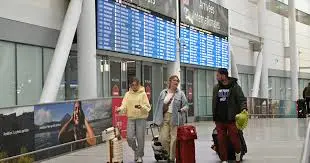
A Europe jet fuel shortage could hit the continent within three weeks if the Strait of Hormuz does not reopen in a significant and stable way, the European airport industry warned on 9 April. Airports Council International Europe said the risk is rising fast as summer travel demand approaches and the Gulf remains a major source of aviation fuel for Europe. The group said smaller airports would be especially exposed if supplies tighten.
Europe Jet Fuel Shortage Fears Rise Ahead of Summer
Airports Council International Europe, the trade body for European airports, said its members are facing “increasing concerns” about jet fuel availability. In a letter to the European commissioners for energy and tourism, director-general Olivier Jankovec warned that a supply crunch could disrupt airport operations, weaken air connectivity, and create harsh economic impacts for affected communities across Europe.
The warning comes as the Gulf accounts for about 50% of Europe’s aviation fuel imports. Jankovec said that if passage through the Strait of Hormuz does not resume in any significant and stable way within the next three weeks, a systemic Europe jet fuel shortage is set to become a reality for the EU.
Airlines, Airports, and Passengers Face Mounting Pressure
Several airlines worldwide have already cut flights and raised passenger charges because of fuel-shortage concerns. Last week, the benchmark European jet fuel price reached an all-time high of $1, 838 per tonne, up from $831 before the war began, adding fresh strain to carriers and airport operators already watching supply conditions closely.
Jankovec said Europe cannot rely on market forces and adaptation alone. He urged the EU to step in, calling for collective purchasing of jet fuel and for temporary lifting of restrictions and regulations on importing jet fuel. He also argued that the current crisis should be used to strengthen support for sustainable aviation fuel production and affordability, while warning that conventional jet fuel is likely to stay expensive in the medium to long term.
Officials Flag Uneven Risk Across the Network
The airport trade body said smaller airports are particularly vulnerable, especially those handling fewer than a million passengers a year. Jankovec warned these airports are already struggling with viability even before accounting for a Europe jet fuel shortage, and he said the pressure could make them more fragile and threaten local communities.
A government spokesperson said UK airlines have not reported any disruption to supplies and continue to operate as normal. The spokesperson added that officials are working with British carriers to support operations against the backdrop of the war in the Middle East and to limit the impact on passengers.
Quick Context on the Stakes
Air travel contributes €851 billion to European economies’ GDP every year and supports 14 million jobs. That scale helps explain why the warning from the airport sector has landed so sharply, with summer tourism season approaching and supply concerns still unresolved.
For now, the central question is whether the Strait of Hormuz reopens soon enough to avoid a broader Europe jet fuel shortage. If it does not, airports, airlines, and passengers could face a fast-moving squeeze that reaches far beyond fuel markets and into travel schedules, local economies, and regional connectivity.