In Terrebonne, the by-election has become more than a routine vote. The contest is drawing attention for one unusual reason after another, and terrebonne is now standing at the center of a political test that combines a razor-thin rerun, a delayed mobile ballot for seniors, and a ballot stretched by 48 candidates. What happens on voting day is not only about choosing a new MP; it is also a test of access, administration, and the limits of an electoral system under pressure.
A vote in Terrebonne shaped by a one-vote margin
Electors in Terrebonne are voting Monday to choose their next federal member of Parliament after the Supreme Court of Canada ordered a new election and overturned the April 2025 result. The earlier contest ended with Liberal Tatiana Auguste declared the winner by a single vote, before Bloc Québécois candidate Nathalie Sinclair-Desgagné secured a new vote. That narrow margin explains why this race is being watched so closely: the smallest possible difference can now decide representation in the House of Commons.
The stakes reach beyond the riding itself. The federal Liberals, led by Prime Minister Mark Carney, are seeking a majority in Ottawa, and the party is close enough that any seat count matters. They hold 171 seats and need 172 for a technical majority, while 173 would provide a more workable governing majority. Terrebonne is one of the few places where a single result can carry national implications.
Why the Terrebonne ballot is unusually long
One of the most striking features of this campaign is the presence of 48 candidates in terrebonne. That number is tied to a coordinated effort by the Committee for the Longest Ballot, a coalition of people pushing for electoral reform by encouraging as many citizens as possible to register on the official voter list and extend the ballot to an extreme length. The group’s 41 independent candidates all promote their own ideas, but the broader purpose is political pressure, not a conventional local campaign.
The committee argues that elected officials should not be the ones setting the rules of the electoral game because they are in a conflict of interest. It wants an independent, non-partisan or citizen-led body to rethink the electoral process. That message matters because the ballot itself becomes a form of protest: legal, disruptive, and highly visible. Last year, the strategy forced Elections Canada to print ballots as long as one meter, creating a practical challenge for voters and poll workers alike.
Mobile voting problems add another layer of concern
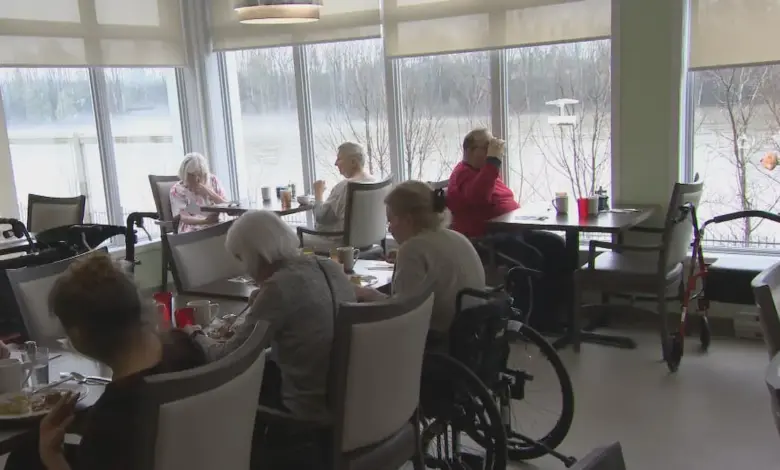
The administrative strain is not limited to the ballot. At Villa Victoire de l’Âge, a seniors’ residence with about 40 residents, a mobile Elections Canada team that was supposed to help older people vote Tuesday morning did not arrive at the scheduled time. The posted schedule showed the team coming in the morning, and several families had traveled to assist relatives. That left residents and their families frustrated, especially because some visitors could not return later in the day.
The residence director, Thouraya Bejaoui, said there had been no follow-up and no call to say the team would not come when expected. Elections Canada later sent a team in the afternoon and said the mobile polling place at the residence would instead be open from 1 p. m. to 5 p. m. ET, which it said were the hours originally planned. The agency also said a notice had been published to inform voters of polling hours. In practical terms, the incident shows how fragile accessibility can be when a schedule slips, even briefly, in a setting where some residents depend on family support to participate.
What the Terrebonne race says about access and legitimacy
The combination of a one-vote rerun, an enormous ballot, and a delayed mobile vote gives terrebonne an unusual national profile. Each issue alone would matter; together they raise a sharper question about how elections function when participation depends on both precise administration and public confidence. The contest is not only about who wins between the Bloc Québécois and the Liberals. It is also about whether voters feel the process is manageable, fair, and accessible.
That broader concern is especially relevant in a riding where every ballot carries symbolic weight. A system can be legally sound and still appear strained when seniors must wait for a mobile team or when the printed ballot becomes so long that it slows the vote. For Elections Canada, the challenge is not just logistical. It is reputational: every disruption becomes part of the story of whether the vote was easy enough to trust.
Expert and institutional readings of a high-stakes by-election
Institutionally, Elections Canada’s position is clear: the mobile voting hours at Villa Victoire de l’Âge were said to be 1 p. m. to 5 p. m. ET, and a notice had been published for electors. That explanation addresses scheduling, but it does not erase the frustration of families who were already on site in the morning. In a close race, the difference between an intended service and an actual interruption can feel consequential even when no vote totals are publicly tied to the incident.
Election law scholar André Blais of the Université de Montréal has long argued in his published work on turnout and electoral systems that small procedural barriers can matter when participation is already difficult. His research is relevant here because the issue in Terrebonne is not abstract: it involves older voters, timing, and the practical ability to cast a ballot. In that sense, the riding is becoming a case study in how administration can shape democratic access as much as campaign rhetoric does.
At the national level, the result will also feed into the larger question facing Mark Carney’s government: whether one seat can help move the Liberals closer to majority status, or whether the Bloc Québécois will hold the line in a riding that has become a symbolic battleground. For now, Terrebonne remains defined by uncertainty, logistics, and a ballot unlike most others in the country.
When a by-election is decided by one vote, does the margin reveal the strength of democracy, or the pressure points that still need fixing in terrebonne?