Masters Winner tradition exposed: who puts the jacket on a repeat champion when the defending champ also wins?

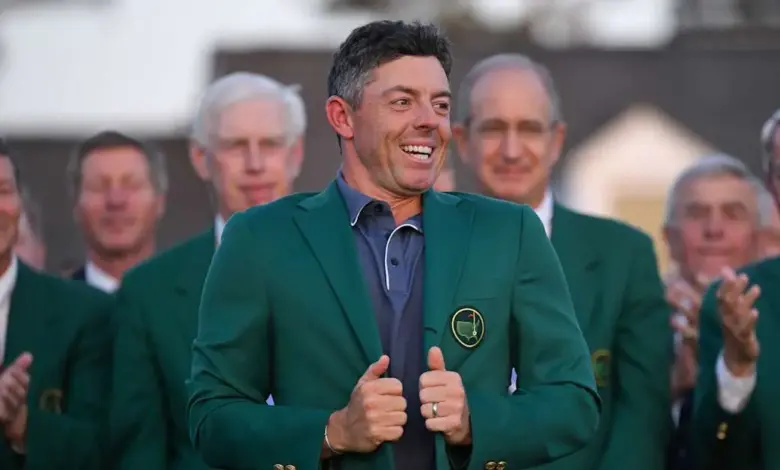
The masters winner ceremony sounds simple: the previous champion slips the green jacket onto the new champion’s shoulders. But one rare twist changes everything. When the defending champion wins again, the role shifts away from the prior winner and back to the club chairman, a rule that has only been tested a few times in Masters history.
Verified fact: The defending champion normally presents the jacket twice each year, once inside Butler Cabin for the television broadcast and again on the grounds outside the clubhouse. Informed analysis: That familiar ritual becomes the story only when the same player repeats, because the ceremony is built around continuity, not self-recognition. With Rory McIlroy tied for the lead at 11 under entering the final round in Augusta, the question is no longer theoretical.
What happens when the defending champion wins again?
The Masters does not leave the moment to improvisation. Tournament traditions call for the club’s chairman to put the jacket back on the defending champion if the reigning titleholder wins again. In the current setup, that would mean Fred Ridley would handle the presentation if the defending champion also becomes the new champion.
That rule matters because back-to-back Masters victories have happened only three times. The first was Jack Nicklaus in 1966, the second Nick Faldo in 1990, and the third Tiger Woods in 2002. In each of those cases, the ceremony adjusted to the unusual outcome rather than forcing the previous champion to present a jacket to the same player twice.
The first instance is the most unusual. Bobby Jones suggested that Nicklaus should slip the jacket on himself, and Nicklaus did so while Clifford Roberts looked on. That detail is important because it shows the tradition was still being shaped in real time when a repeat winner first appeared. By 1990 and 2002, the chairman performed the duty instead.
Why does the ceremony matter so much?
The jacket is not treated as ordinary apparel. It is reserved for club members and Masters winners, and it is tied to a tightly controlled ritual that extends beyond the final putt. The club selects several jackets that might fit the winner before the tournament ends, but the jacket worn on victory night is not usually the one the champion keeps. A new one is fitted immediately after the win.
The jacket’s history adds to the weight of the moment. The club bought its first jackets in 1937, the jackets were first awarded to Masters champions in 1949 when Sam Snead won, and the tradition has stayed closely managed since then. Hamilton Tailoring Co. has made the jackets since 1967. The color is Pantone 342, also known as Masters Green.
Verified fact: the reigning champion may wear the jacket off the grounds only in limited circumstances, such as representing the tournament or club at a function or event, and only with permission. Informed analysis: That restriction shows the jacket is not just a symbol of victory, but a controlled emblem of membership and status.
Who is involved if the same player wins twice?
In the standard Masters ceremony, the previous year’s champion puts the Green Jacket on the new winner. If the same player wins again, that role cannot function in the usual way. The club chairman takes over, which keeps the ritual intact without bending the symbolism too far.
That approach has now been used in the only two modern repeat victories named in the record: Nick Faldo in 1990 and Tiger Woods in 2002. In both cases, the chairman presented the jacket back to the champion. The system is narrow, but it is deliberate.
There is also a practical side. The club keeps the process private enough to preserve the tradition, but visible enough to make the ceremony feel official. The jacket is fitted immediately after the win, and a champion returning the next April does not keep the same jacket on hand in the way casual observers might assume. If a jacket is taken off the grounds, permission is required and the reason must fit the club’s standards.
What does the rare repeat-winner rule reveal about the Masters?
The repeat-winner exception exposes how much of the Masters is designed around control, identity, and continuity. The ceremony is not built to celebrate chaos. It is built to preserve form, even when the outcome becomes exceptional. That is why the chairman steps in when the defending champion is also the winner.
It also shows why the question around a possible repeat champion attracts attention each year. The club has only had to resolve this situation three times, but the answer is already fixed. The defending champion does not simply put the jacket on himself in the modern era; the chairman does the honors. That rule has become part of the event’s hidden structure, even if most viewers only notice it when the rare scenario appears.
For now, the only certainty is that Rory McIlroy will take part in the green jacket ceremony. Whether another player joins him remains unresolved. If the defending champion wins again, the ceremony will return to a rule tested only a few times before, and the masters winner moment will once again depend on the chairman, not the champion.