Olivier Awards 2026: Paddington’s seven wins expose a night where theatre’s biggest names shared the spotlight

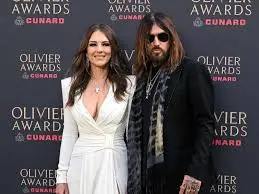
The Olivier Awards 2026 delivered an unusually clear message: spectacle still matters, but so does the craft behind it. Paddington: The Musical did not just win; it dominated, collecting seven prizes at London’s Royal Albert Hall and turning Michael Bond’s bear into the evening’s defining presence. Yet the night was not a one-title story. Rachel Zegler, Rosamund Pike and other major names also left with key honours, showing how the Olivier Awards 2026 spread recognition across a wide theatre field while still rewarding the production that arrived with the strongest momentum.
Paddington’s sweep and what it reveals
The scale of Paddington: The Musical’s success mattered as much as the number itself. The show won best new musical and picked up further awards for best actor in a musical, best supporting actor in a musical, best supporting actress in a musical, best director, costume design and set design. That breadth suggests a production that was judged not as a single star vehicle but as a complete theatrical machine. In the Olivier Awards 2026, that kind of all-round recognition signalled that voters responded to cohesion as much as visibility.
The acting award for Paddington was also unusual in its shared structure. James Hameed provides the voice and remote puppeteering, while Arti Shah performs in the costume. Their joint recognition points to a central feature of the production: the title character is built through collaboration rather than a single performance mode. That detail gives the evening’s biggest winner a technical and artistic identity that is broader than a conventional lead role.
Olivier Awards 2026 and the strength of ensemble theatre
The wider results reinforced that point. Tom Edden and Victoria Hamilton-Barritt were recognised for the villainous roles of Mr Curry and Millicent Clyde, while Luke Sheppard won best director. The production also took awards for costume and set design from Gabriella Slade, Tahra Zafar, Tom Pye and Ash J Woodward. Taken together, the wins suggest the production’s appeal came from precision in design, performance and stagecraft rather than nostalgia alone.
That matters because the show had already led the nominations with 11, tied with Into the Woods. In a field that competitive, a seven-award haul indicates a strong consensus around the production’s execution. It also shows how the Olivier Awards 2026 rewarded a work that translated a familiar character into a large-scale stage event without relying on a single aspect of acclaim.
Star turns, serious roles and the evening’s wider shape
The ceremony did not belong only to Paddington. Rachel Zegler won best actress in a musical for Evita, a performance linked to the production’s balcony scene at the London Palladium. She described it as an “accessible moment” of theatre and thanked Londoners for making her feel welcome. Elaine Paige received a special award for her stage career, presented by Andrew Lloyd Webber, adding a lineage-focused note to the evening.
Rosamund Pike won best actress for Inter Alia, beating Cate Blanchett and Marianne Jean-Baptiste. Pike said it had been 14 years since she last performed on stage and described the return as a huge risk. Her comments framed the result as more than a trophy: it was a marker of a major stage comeback, one already reflected in her earlier recognition at the Critics’ Circle theatre awards last month. Inter Alia will move to Broadway in November, extending the reach of a play that already carries topical weight.
What the night means beyond the Royal Albert Hall
The ceremony also highlighted how theatre continues to travel across audiences and geography. Evita drew street-level crowds in London, while Inter Alia is headed for Broadway. Paddington: The Musical, meanwhile, showed the export power of a distinctly British character reimagined with technical ambition. The green carpet used since 2022 also underscored the event’s environmental framing, even if the awards remain widely referred to as the red carpet in everyday conversation.
Seen together, the results suggest a theatre landscape that still rewards scale, but only when scale is matched by detail, performance and design. The Olivier Awards 2026 made that balance visible in one room: a bear took the biggest share, but the evening still made space for musical revival, courtroom drama and long-service stage honour alike. The question now is whether the season’s next major productions can match that blend of popular pull and artistic depth.