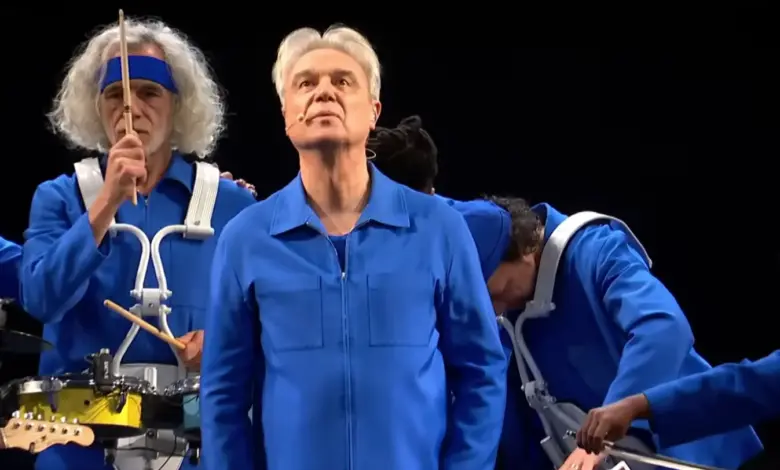
David Byrne used a recent appearance on The Late Show to explain why he has been showing ICE footage during performances of “Life During Wartime” while touring behind his latest album, Who Is the Sky?. He said the clip appears only at the very end of the song, a choice he described as deliberate and restrained. The conversation also touched on why Byrne keeps rethinking his concerts and how he shapes the look and feel of his current stage show.
Byrne explains the performance choice
On the program, Byrne said he licensed ICE footage to play at the close of “Life During Wartime. ” He told Stephen Colbert that he did not want the material to run through the entire song, saying that would make the performance feel too depressing. Byrne said the clip was first shown in Chicago, where he introduced it as part of the song’s ending.
Byrne also said he began with footage that caught his attention because it showed a delivery rider on a bike being chased by ICE agents and getting away. In the same exchange, he said the crowd reaction was immediate when the footage appeared. John Mulaney, who was also a guest on the show, said he was at the concert and described the audience response as the biggest and coolest he had ever seen.
Why the show keeps changing
Byrne said he keeps reimagining his concerts because he wants them to feel alive and reflective of the moment. He told Colbert that he wanted the production to be colorful, adding that the previous show was gray. He said that, in his view, “the times we live in, we need some color. ”
The performance on The Late Show also included “When We Are Singing, ” giving viewers a look at Byrne’s theatrical staging, blue-clad musicians, and dancers. The song comes from Who Is the Sky?, which Byrne released in September.
What Byrne said about the songs
Colbert asked Byrne whether songs like “Psycho Killer” and “Life During Wartime” feel different when performed in the present. Byrne said “Life During Wartime” does feel different and pointed to the use of ICE footage as part of that reading. He framed the decision as a brief visual ending rather than a full-screen political statement, keeping the focus on the song while still making the point he wanted.
Elsewhere in the conversation, Byrne said he likes being able to mix and match material in a way that fits the sound he is making now without losing the integrity of older songs. He also warned that leaning too heavily on legacy material can turn an artist into someone who only cashes in on past hits.
What comes next
For now, Byrne is continuing to tour with a set that blends new work with Talking Heads songs, including “Psycho Killer” and “Life During Wartime. ” The specific use of ICE footage suggests Byrne is still treating the stage as a place for adjustment, contrast, and surprise. As that tour continues, David Byrne appears set to keep shaping David Byrne performances around the moment he thinks the songs live in.