The wind turbine dispute now sits at the center of a project worth $4. 5 billion, and the numbers alone show how far this fight has spread. Vineyard Wind says the 62-turbine offshore project southwest of Nantucket is complete in construction but still vulnerable to collapse as a business, because its manufacturer is trying to exit while unresolved repair and commissioning work remains unfinished.
What is not being said about the project’s condition?
Verified fact: Vineyard Wind has filed suit against GE Renewables in Suffolk Superior Court to stop the company from backing out of the project. The developer says GE Renewables sent a termination notice on February 27 after claiming Vineyard Wind had failed to pay more than $300 million in bills. Vineyard Wind says the breakup would leave it unable to operate and maintain the turbines, because the machines run on GE Renewables’ proprietary designs, technology, and software.
Verified fact: The legal filing goes further, saying the entire offshore wind project is imperiled without the manufacturer. Vineyard Wind’s attorneys wrote that GE Renewables “walking away threatens the project’s very survival” and that failure would leave behind “a dormant wind farm graveyard. ” The company also states there is no viable replacement for the manufacturer at this stage.
Analysis: The central issue is not just payment. It is control over a finished asset that cannot yet function as a stable operating business. That makes the wind turbine contract more than a commercial dispute; it is the operating backbone of the project itself.
Why does the blade problem still matter now?
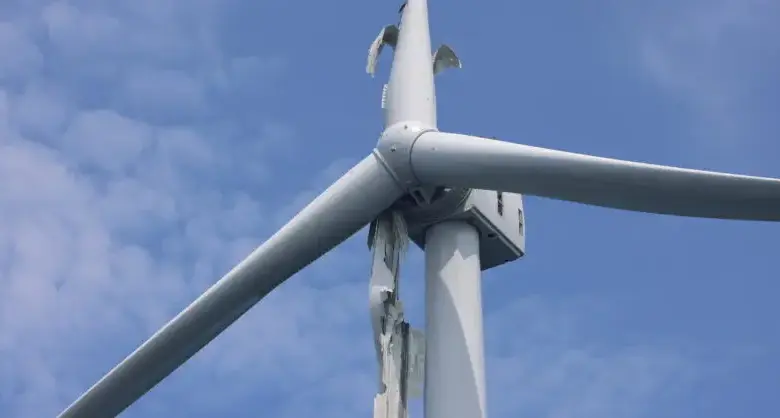
Verified fact: Vineyard Wind says it is owed more than $545 million by GE Renewables for expenses tied to defective blades shipped from the company’s manufacturing plant in Gaspe, Canada. In July 2024, one of those blades collapsed and shattered, sending debris onto Nantucket’s beaches and surrounding waters and prompting the federal government to shut down the project for months. Vineyard Wind also says more than 60 installed blades were later determined to be defective and needed replacement.
Verified fact: The complaint says substantial remediation and repair work remains and that not one of the 62 GE turbines has yet met the contractual requirements for Vineyard Wind to take them over. The developer says the project is still short of the electricity output required to sustain financing viability during the operating phase.
Analysis: This is why the blade failure remains decisive. The incident did not end with a single damaged component; it triggered a broader remediation burden that now sits inside the dispute over payment, performance, and project ownership. The phrase wind turbine no longer describes only equipment. In this case, it defines the point where construction, maintenance, and financing all collide.
Who benefits if the agreements collapse?
Verified fact: GE Vernova, the parent company of GE Renewables, said Vineyard Wind has withheld more than $300 million in payments for more than 18 months for work performed. GE Vernova says it exercised its contractual right to terminate the project agreements for non-payment, and it says it remains committed to the safety of the wind farm and to its contractual obligations. The company also said it will defend its position through the appropriate legal process.
Verified fact: Vineyard Wind says it asked GE Renewables multiple times to withdraw the termination notice after February 27, but was turned down each time. Executives from both companies met as recently as Monday, April 6, in an attempt to resolve the dispute, but they did not reach an accord.
Analysis: Both sides now have incentives that are hard to reconcile. Vineyard Wind needs the manufacturer to finish the remaining work and help the project move into operation. GE Vernova is using payment default to justify exit. If the agreements fail entirely, the project could be stranded between a completed construction site and an unfinished operating system. That makes the future of the wind turbine fleet a legal question as much as an industrial one.
What does this dispute reveal about accountability?
The facts point to a project caught between defective hardware, unpaid invoices, and a manufacturer that says it can walk away. The public-facing promise was a large offshore wind installation. The operational reality described in court is different: unresolved repairs, disputed billing, and turbines that have not yet met contractual handover standards. The developer says the project is far from generating the electricity output needed for financing viability, while the manufacturer says it has the right to terminate for non-payment.
Accountability conclusion: What should now be transparent is the full chain of responsibility for the blade failures, the unpaid bills, and the unfinished commissioning work. Without that clarity, the project risks becoming exactly what Vineyard Wind warned against: a dormant wind farm with no clear path forward. The outcome of this case will determine whether the wind turbine project becomes a functioning energy asset or a stranded dispute over who must finish what was promised.