In Sydney, one underground blockage and one delayed rail rollout tell the same story: public systems can be pushed so far that the consequences surface far from where the problem began. At the Malabar wastewater treatment plant, a 300 cubic metre chamber has become the centre of a stubborn pollution problem. On the rail network, the long-awaited Mariyung Fleet is only now starting service after years of delay. The two cases are different, but each shows what happens when infrastructure falls behind reality.
What is being left unsaid about Sydney’s wastewater problem?
Verified fact: The Malabar wastewater treatment plant contains a deep, inaccessible area behind a bulkhead door where accumulated fats, oils and grease remain trapped. The space is described as an “inaccessible dead zone, ” and Sydney Water does not know exactly how large the fatberg is. A drone was sent into the small space above the congealed material, but turbulence from sewer gases and the flow of treated effluent stopped it from flying straight.
That detail matters because the problem is not only the existence of the fatberg itself. The working theory is that parts of it are dislodged during rapid changes in pumping pressure, including periods of power loss or heavy rainfall. Once that happens, the material can be forced through diffusers at the end of the deepwater ocean outfall, 2. 3 kilometres out to sea. In late 2024 and early 2025, those “poo balls” were carried back to shore by waves and wind, and beaches including Coogee, Bondi and Manly were closed.
Analysis: The central issue is access. A contamination source that cannot be fully reached cannot be fully removed, and the public consequence is not abstract. It becomes visible on beaches, in closures, and in the refusal of the problem to stay contained. The NSW Environment Protection Authority issued a pollution reduction program to Sydney Water in February this year, requiring significant works, including fat removal from the bulkhead area. That makes the issue less a technical nuisance and more a compliance test for the entire system.
How much can Sydney Water actually remove?
Verified fact: Crews can access only a smaller chamber behind the bulkhead door at certain times. That access depends on lower flow, a lunar low tide and minimal rainfall. When conditions allow, the smaller chamber is used to remove spillover, typically every four to six months. Six people pump out rainwater that collects between the door and the stopboards, then insert a hose to remove about two hours worth of fatberg.
There is also an easier option above ground: a gas vent can be opened and a hose lowered down 20 metres to suck up fat in front of the stopboards. But the inaccessible fatberg remains beyond that point. In other words, the system can address what it can reach, not what is most deeply embedded.
Analysis: That distinction is important. The easier removal method may reduce buildup in one section, yet it does not eliminate the core hazard. The plant appears to be operating in partial containment mode, not complete remediation. For residents whose beaches were closed, the question is not whether some material can be removed. It is whether the problem is being managed in a way that prevents repeat pollution.
Sydney’s trains are finally moving, but why did the delay last this long?
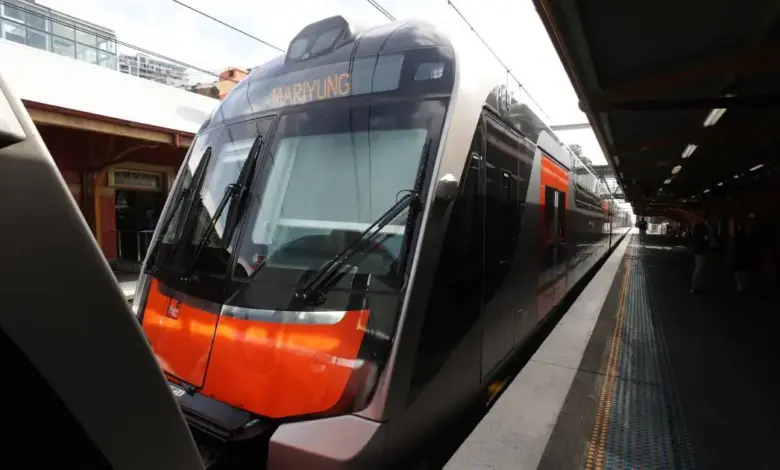
Verified fact: The Mariyung Fleet will begin carrying passengers on the South Coast line on Tuesday, with the first service leaving Kiama Station at 7. 56am ET for Central Station. The fleet was originally slated to enter service in 2021, but the rollout was delayed by ordering more carriages, infrastructure upgrades and conflict with rail unions. The South Coast line is the last intercity line to receive the new trains.
The rollout will be phased. Seven new train sets will arrive in April in four- and six-car sets, which will not be used for peak-hour services because of their smaller size. Eight-car sets are due later this year, followed by 10-car configurations in 2027. The 10-car sets will have seating capacity similar to the eight-car Oscars now on the line.
Analysis: The delay is not just a scheduling problem; it shapes what passengers receive and when. Transport Minister John Graham said the trains will bring comfort, safety and convenience, and that more services will follow later this year. That promise is meaningful, but the phased rollout also shows how long passengers have waited for benefits that were planned years ago.
Who benefits, and who absorbs the cost?
Verified fact: The new timetable later this year will move South Coast services to and from Central, ending running on the Eastern Suburbs line to Bondi Junction. Commuters traveling to stations between Town Hall and Bondi Junction will need to change at Hurstville, Sydenham, Redfern or Central. South Coast trains will also stop serving Wolli Creek Station, affecting about two per cent of passengers, because the trains will use tracks not next to the station platform.
Analysis: The benefits are clear: more services are expected, and the line will finally receive new rolling stock. The cost is also clear: some passengers will lose direct patterns they have relied on. That trade-off is not unusual in transport planning, but it deserves plain explanation. In both the rail and wastewater cases, the public is being asked to adapt to systems that are still catching up with their own failures.
The common thread is accountability. One issue is buried under a plant, the other delayed in a timetable, but both are reminders that infrastructure problems do not stay hidden forever. Sydney deserves full transparency on what can still be removed from the fatberg, what remains inaccessible, and whether the rollout of new trains will deliver the service improvements promised. On both fronts, the public should expect evidence, not reassurance, and a timetable for action that matches the scale of the problem in Sydney.