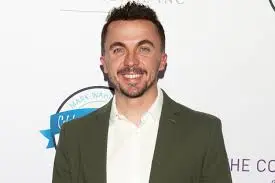
Frankie Muniz is pushing back on a rumor that has followed him for years: he says he does not have amnesia, but he does have a “bad memory” shaped by nine concussions and a life spent moving from one demand to the next. The clarification came during an appearance on the Inside of You podcast on Tuesday, 7 April ET, where he said his comments have often been taken out of context.
What did Frankie Muniz actually say about his memory?
The key point is simple, and Muniz made it explicit: “It’s not like I’ve got amnesia. I have had nine concussions. That doesn’t help. ” That statement matters because it draws a line between a medical condition he rejects and the memory struggles he says he has experienced. He described the issue as forgetfulness rather than a formal diagnosis, and he linked it to the cumulative effect of high-impact injuries plus the pace of his working life.
Verified fact: Muniz said he has had nine concussions and does not claim amnesia. Informed analysis: His correction appears aimed at narrowing a long-running public story into something more precise and less sensational.
Why does he say the problem is bigger than one explanation?
Muniz did not frame his memory concerns as the result of a single cause. He said his career as a professional racer has not helped, and he suggested that years of working nonstop since age eight may have shaped how he processes experience. In his telling, acting requires him to take on emotions and characters, then discard them quickly when a scene ends. That rhythm, he said, has trained his brain to move on before an experience fully settles in.
He also said that once a scene is finished, he often forgets it immediately to make space for the next day’s work. That detail is important because it shifts the discussion away from a dramatic label and toward a broader question about what a relentless career can do to memory over time. Muniz did not present this as a tragedy. He presented it as the working pattern of a life that has not paused long enough for every moment to be retained.
Did the Malcolm in the Middle revival change the conversation?
The revival project Malcolm in the Middle: Life’s Still Unfair gave Muniz a fresh way to measure his own memory against the past. While filming the upcoming revival, he said he noticed that his co-stars, including Bryan Cranston and Jane Kaczmarek, also struggled to recall specific moments from the original series when shown old clips. That observation adds a useful correction to the public narrative around Frankie Muniz: forgetting is not presented as uniquely his, even if his case has drawn the most attention.
Muniz compared the experience to trying to remember a random week from school. The highlights remain, he said, but the daily details fade. He also admitted: “I’ll watch episodes and I’ll be like, ‘Whoa, I don’t remember that episode. ’” The quote is striking not because it confirms a clinical label, but because it shows how large parts of a life can become distant even when they were once central.
Who benefits from the misunderstanding?
The misunderstanding benefits no one, but it does create a simplified story that is easier to repeat than the one Muniz actually gave. A dramatic word like amnesia can flatten a more complicated reality involving injury history, professional racing, and the emotional habits of working from childhood. Muniz’s response suggests he is trying to replace a public myth with a narrower truth.
Named sources in the record: Frankie Muniz, actor; Bryan Cranston, actor; Jane Kaczmarek, actor; Inside of You podcast. The only fully stated institutional context in the record is the upcoming revival, Malcolm in the Middle: Life’s Still Unfair. No other outside source is needed to understand the point he made: his memory issues are real to him, but he does not describe them as amnesia.
His comments also indicate a practical message for viewers: not every memory gap points to a single diagnosis. Sometimes it reflects a combination of injury, workload, and the mental habits formed by long-term performance.
What does this mean for the story going forward?
The broader significance of Frankie Muniz’s clarification is that it pulls the conversation back from speculation and toward accountability in language. He is not asking for pity, and he is not presenting himself as defined by loss. He says he remains positive, does not feel sad about the gaps, and focuses on living as fully as possible instead of dwelling on what he cannot retrieve.
Verified fact: Muniz says he is not sad about the forgetfulness and does not let it dampen his spirits. Analysis: That posture makes the public fascination around his memory less about scandal and more about the costs of a life lived at full speed. If the public conversation is going to be honest, it should use his own terms, not the rumor he corrected. In the end, Frankie Muniz is asking for something basic: to be heard precisely, not mythologized under the label of Frankie Muniz.