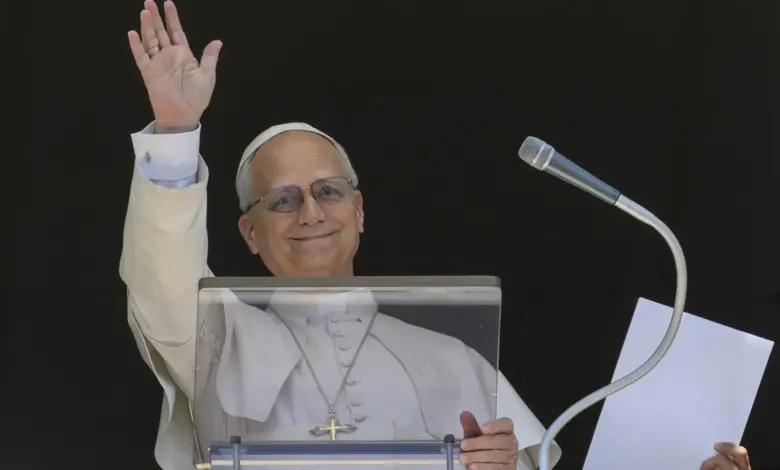
Pope Francis was at the center of a solemn Easter reflection from Pope Leo XIV, who used his Regina Caeli message to connect remembrance, truth, and the public responsibility of Christians in a troubled world. The moment mattered because it joined grief over a predecessor with a direct warning about distorted communication, false claims, and the need for faithful witness.
What Happens When Tribute Becomes a Public Message?
Addressing pilgrims in St. Peter’s Square on April 6 ET, Pope Leo recalled Pope Francis as the pontiff “who, on Easter Monday of last year, returned to the Lord. ” The tribute was brief, but it framed the rest of the message: honoring a predecessor was not only about memory, but about continuing a pattern of witness in difficult times.
That framing matters because Pope Leo linked Easter faith to moral clarity. He pointed to the Gospel reading of two contrasting accounts: the women who encountered the risen Christ and the guards who accepted a bribe and denied the resurrection. In his telling, the contrast became a lesson about “the value of Christian witness and the integrity of human communication. ”
For readers trying to understand the moment, the signal is clear: the Vatican is presenting truth not as an abstract idea, but as a lived standard for speech, conduct, and public trust. In that sense, Pope Francis remains part of the argument, not simply part of the remembrance.
What If Truth Is Harder to Hear Than Falsehood?
Pope Leo said that the proclamation of truth is often obscured by what he called “fake news” — lies, insinuations, and unfounded accusations. That line places the church’s message inside a wider information crisis: public life is crowded with competing claims, while trust is easier to erode than to restore.
The pope’s language suggests a challenge that extends beyond religion. If falsehood spreads quickly, then institutions that rely on trust must speak with consistency and restraint. His answer was not defensive silence, but witness. He urged Christians not to be afraid and to announce the good news of the resurrection with both word and deed.
He also broadened the reach of that witness. The Easter message was directed toward those affected by war, Christians persecuted for their faith, and children deprived of an education. That is a narrow set of examples, but it carries a wider implication: truth is not only about correcting error, but about sustaining hope where suffering has narrowed the future.
What Does This Mean for the Church’s Next Step?
The practical message is less about spectacle and more about persistence. Pope Leo said that proclaiming the Paschal mystery gives “a new voice to hope, ” even where violence tries to silence it. He also described the Easter proclamation as something that “redeems our future from the tomb, ” a line that turns resurrection language into a forward-looking social claim.
For a church navigating uncertainty, the emphasis is on continuity: keep speaking plainly, keep praying for peace, and keep connecting belief to action. Pope Leo closed by expressing gratitude for Easter messages and urging faithful to spend Easter Monday and the Easter Octave in joy and faith while continuing to pray for peace for the whole world.
| Scenario | What it suggests |
|---|---|
| Best case | The tribute to Pope Francis strengthens a shared call for truthful speech, steady faith, and wider prayers for peace. |
| Most likely | The message remains a moral marker: a reminder that Christian witness must resist confusion, falsehood, and fear. |
| Most challenging | The warning about fake news and public distrust remains unresolved, making truth harder to defend in daily life. |
The lesson for readers is straightforward: this is not only a Vatican ritual, but a signal about the kind of leadership the moment demands. In a climate marked by confusion, war, and fragile confidence, the call is to speak carefully, act faithfully, and measure influence by truth rather than noise. Pope Francis remains part of that standard, and Pope Francis closes the story with the same challenge he helped shape: witness with clarity, patience, and courage.