The new tui group-backed initiative in Spain is less about adding another tourism project and more about testing whether innovation can ease a crowded system from within. The TUI Care Foundation, working with Target 8. 9 and Wayra Telefonica, has launched TUI Futureshapers Spain as a two-year acceleration programme for young entrepreneurs and startups. Its aim is not cosmetic change. It is designed to push green and digital solutions into tourism at a moment when pressure on destinations, communities, and infrastructure has become harder to ignore.
Why TUI Futureshapers Spain matters now
Spain’s tourism sector is facing a complex landscape shaped by overtourism, sustainability pressures, and the need for deeper diversification. The initiative responds to that reality by connecting universities, innovation centres, and tourism companies in one network. Its purpose is to turn tourism innovation into a driver of long-term prosperity while using technology to support de-seasonalisation, decentralisation, decongestion, and diversification.
That matters because the programme is not built around a single solution. Instead, it links training, mentorship, testing, and market access across the tourism value chain. In practical terms, tui group is placing young talent at the centre of a broader effort to make tourism less concentrated and more adaptable. The structure reflects a clear editorial point: overtourism is not only a destination-management issue, but also an innovation gap.
Inside the three-pathway model
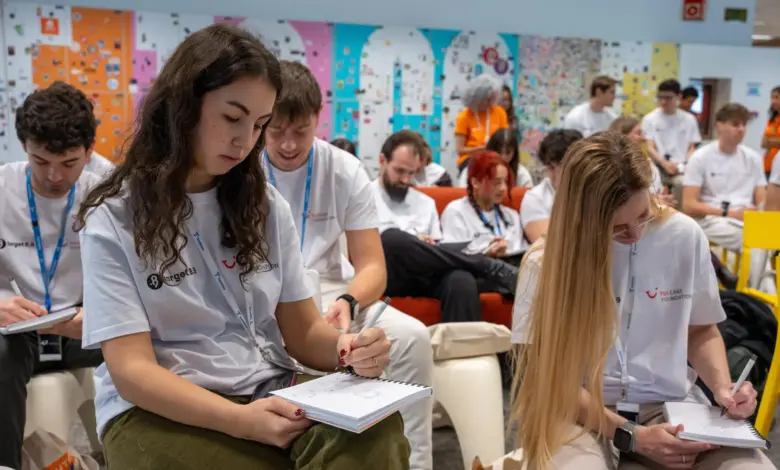
The programme is divided into three complementary pathways that move ideas from concept to readiness for the market. The Ignite Path focuses on young entrepreneurs at the earliest stage, helping them move from concept to prototype. Through six practical training modules, 100 young participants will strengthen digital skills and learn to use vertical technologies to design green and digital solutions for Spain’s tourism sector.
That stage ends with a two-day tourism hackathon, where around 50 young entrepreneurs will work with mentors to build minimum viable products. At least eight prototypes are expected. The Grow Path then shifts to early-stage startups that already show product-market fit. At least nine startups will receive personalised advisory support to refine business models with strong attention to environmental and social sustainability, as well as digital innovation.
Dedicated networking and market-linkage events are intended to connect these ventures with partners, clients, and investors. During the final demo day, participants will present solutions to key stakeholders. Five startups will gain access to a curated validation network, and three finalists will move to the Scale Path. There, the focus turns to technology adoption, piloting, and investment readiness. Each of the three selected startups will receive tailored technical assistance and customised roadmaps, with at least one startup expected to be positioned for venture capital or another investment mechanism by the end of the programme.
What the numbers say about the challenge
The programme is being launched against a backdrop of 96. 8 million international arrivals recorded in 2025, a figure that underscores the scale of tourism demand in Spain. The context also points to a wider structural issue: around 80% of travellers visit just 10% of destinations globally. That concentration helps explain why the initiative places such emphasis on de-seasonalisation, decentralisation, decongestion, and diversification.
Overall, the project will directly support 200 people through technical assistance, create or maintain 25 jobs, and organise 15 events across Spain’s tourism innovation ecosystem. Those figures are modest when compared with the size of the sector, but they are meaningful in another sense: they show an attempt to build capacity rather than rely on one-off interventions. For tui group and its partners, the logic is that innovation needs an ecosystem, not just an accelerator.
Expert views and wider impact
The structure of TUI Futureshapers Spain suggests a deliberate effort to connect academic, entrepreneurial, and commercial actors around a shared tourism challenge. By involving universities, innovation hubs, and tourism businesses, the programme aims to create a pipeline that starts with young talent and ends with tested solutions that can be adopted in real destinations and businesses.
From a policy perspective, the broader significance lies in the combination of environmental and social sustainability with digital transition. The initiative frames tourism not as a sector to be protected from change, but as one that must be reshaped to remain resilient. Its emphasis on pilot opportunities, validation networks, and investment readiness indicates a belief that scalable solutions are more likely to emerge when startups are supported across multiple stages, not just at the idea stage.
If the programme meets even part of its targets, it could offer a practical template for how tourism ecosystems respond when growth and pressure collide. The larger question is whether the mix of young talent, technology, and cross-sector collaboration can create lasting change beyond the programme itself — and whether tui group’s model can help redefine what sustainable tourism innovation looks like in Spain.