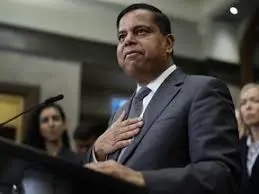
Debt is now at the center of a warning from Ruchir Sharma, chair of Rockefeller International, as he says the world is facing an energy crisis with far less fiscal room than in past shocks. In comments published Sunday, Sharma said the United States looks especially vulnerable even though it is the world’s biggest oil producer. The warning comes as President Donald Trump’s war on Iran enters its sixth week in Eastern Time, with no quick end in sight.
Debt, deficits, and a shrinking safety net
Sharma said the scale of public borrowing is what changes the risk this time. He pointed to a global debt load that hit a record $348 trillion last year, more than three times global GDP, while average government debt across the Group of Seven climbed to more than 100% of GDP from only 20% in earlier decades.
He said the historical pattern matters because oil shocks in the 1970s helped push governments into a lasting habit of deficits rather than occasional shortfalls. Now, he argued, those same governments have far less room to cushion an energy shock with price controls, rationing, or subsidies without worrying about bond investors.
“Longer-term inflation expectations remain stable, but markets fear the Iran oil shock will trigger more spending on top of rapidly expanding deficits and debt, which is resulting in a higher-term premium for bonds, ” Sharma wrote.
Debt pressure is already showing in the U. S.
Sharma said the strain is already visible in the United States, where recent weak demand for Treasury auctions pushed yields higher than expected. He said that reflects investor concern about the impact of the Iran war on both deficits and debt.
He also said the Federal Reserve has failed to bring U. S. inflation back to its 2% target for five years, which limits the central bank’s ability to cut rates if the oil shock slows the economy. In Sharma’s view, that leaves the most vulnerable countries exposed where debt is high, deficits are large, and inflation targets are still missed.
He named the U. S. and the U. K. as the most prominent developed-world examples, with Brazil, Egypt, and Indonesia singled out among emerging markets.
What the officials and markets are signaling
Sharma said the U. S. is not immune despite its position as the world’s largest oil producer. He noted that its nearly 6% annual budget deficit last year was the highest in the developed world, and he warned that Trump’s plan to raise yearly defense spending by 50% to $1. 5 trillion could worsen the debt outlook further.
Interest costs are already heavy, with annual payments on federal borrowing above $1 trillion. Sharma estimated that, combined with recent tax cuts, the deficit could reach 7% of GDP this year.
On the military side, the conflict is also becoming more expensive. The Defense Department is reportedly seeking $200 billion from Congress for the war, after the military depleted much of its most expensive munitions. Iranian attacks have damaged or destroyed U. S. aircraft, radar systems, and bases, adding to the cost and uncertainty surrounding the conflict.
There is also a broader market backdrop: with one-fifth of the world’s oil and liquefied natural gas bottled up in the Persian Gulf, governments are scrambling to respond, while bond investors are ready to punish overspending. In that setting, debt has become more than a balance-sheet issue; it is now part of the crisis itself.
Quick context on the debt backdrop
Sharma tied the current moment to a longer shift that began after the oil shocks of the 1970s, when deficits became persistent rather than occasional. He said that shift helped set the stage for today’s fragile balance between energy disruption, inflation pressure, and public borrowing.
The result, he argued, is a world where governments face an energy shock without the fiscal breathing room they once had.
What comes next for debt and the war
Trump has said he expected the Iran war to last four to six weeks, but it has now entered its sixth week in Eastern Time and there are few signs of a swift conclusion. With more troops heading to the region and a third aircraft carrier en route, the conflict could keep testing government budgets and investor patience.
If the war drags on, Sharma’s warning suggests that debt may become one of the defining pressure points, not just for the U. S. but for the wider global system.