The price shock now running through energy markets is no longer just a story about drivers at the pump. A sharp oil price rise has already filtered into consumer expectations, but the deeper concern is what happens when fuel becomes more expensive for trucks, farms, factories, and households at the same time. The Economic and Social Research Institute has warned that the effect is likely to be broader than a simple rise in petrol and diesel costs, with inflation pressure spreading through the wider economy as energy inputs move higher.
Why the oil price rise matters beyond fuel
Oil has risen about 45 per cent since the United States and Israel launched their war on Iran, while natural gas futures were 56 per cent higher than at the end of February. The ESRI used a rough rule of thumb in its latest economic commentary: a 30 per cent increase in oil and gas prices would translate into an overall 1 per cent rise in Irish inflation. On that basis, the institute revised its inflation forecast for the year from 2. 1 per cent to 3. 2 per cent.
That revision matters because it suggests the oil price rise is not being treated as a one-off squeeze limited to transport. The ESRI has since indicated that it may need to lift that headline number again in its June commentary. The reason is simple: the longer the energy shock persists, the more likely it is to work its way into prices far removed from the original source.
Second-round inflation effects are the real test
Associate research professor Conor O’Toole, one of the authors of the ESRI report, said the institute took its forward trajectory around March 16 and that the effects now appear “longer lasting than we anticipated. ” He added that the institution was “probably on the low side” in its inflation forecast, because damage to infrastructure in the region has proved more enduring than markets had expected. That, in turn, points to higher inflation rates than previously assumed.
The key issue is not only the first-round increase in fuel bills. Economists refer to the wider pass-through as second-round effects, and those are what give the current oil price rise its broader significance. O’Toole said the ESRI does not model inflation product by product, but it does recognise that individual industries may be differently exposed depending on whether they have hedged energy costs or insulated themselves in other ways. In practice, that means the same energy shock can arrive unevenly across the economy while still leaving consumers with a broad increase in prices.
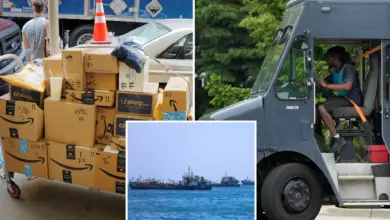
Hauliers are one of the most exposed groups because they rely heavily on diesel, which has been rising in price. Nearly all of them have been passing on surcharges to customers, and those businesses are then passing the cost down the line to consumers. That creates a chain reaction in which the original energy shock is no longer confined to energy itself. Instead, it becomes part of the cost base for goods that move by road, and eventually for the household budgets that absorb those costs.
What the latest forecasts are signalling
The ESRI’s latest adjustment is important not only for the Republic’s inflation outlook, but also for how policymakers and businesses interpret the durability of the current shock. O’Toole said the institute expects higher prices to come through within this year, moving “from now to the summer months into the winter. ” That time frame implies a persistent rather than temporary effect, with the oil price rise potentially shaping inflation well beyond the immediate headlines about transport fuel.
This is also why the natural gas surge matters alongside oil. Gas has become central to the mass production of food, so a higher gas price does not stay isolated in the energy market. It affects input costs across production chains, making the inflation problem more structural than a simple comparison of fuel station receipts would suggest.
Regional and wider economic consequences
For Ireland, the concern is that a relatively familiar energy spike may prove more embedded than earlier shocks. The ESRI’s move from a 2. 1 per cent to a 3. 2 per cent inflation forecast already shows how quickly assumptions can change when energy markets move sharply. If the latest trajectory holds, the pressure on consumer prices could intensify through transport, logistics, food production, and other energy-dependent sectors.
More broadly, the episode underlines how modern economies remain tied to oil and gas in ways that are easy to overlook until prices jump. The immediate rise in petrol and diesel is visible. The less visible risk is the transmission into wages, contracts, supply chains, and everyday goods. That is why the current oil price rise is being watched less as a single-market event and more as a test of how quickly inflation can reassert itself through the wider economy.
With the ESRI preparing to revisit its forecast, the central question is no longer whether prices will rise, but how far and how long the pressure will spread before the next adjustment arrives.