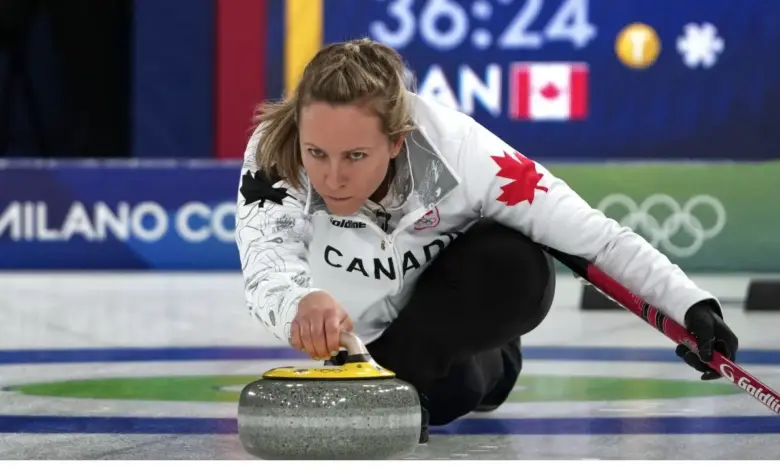
The rock league schedule is more than a list of games. It marks the first week of a new professional curling experiment in Toronto, where six teams will compete from April 6-12 at TMU’s Mattamy Athletic Centre under a format designed to reward both results and showmanship.
Verified fact: The inaugural season features 60 male and female athletes, a $250, 000 prize pot, and a scoring system that gives teams one point for winning two of three games from Monday to Friday, or 1. 5 points for sweeping all three. Informed analysis: That structure makes the rock league schedule central to the competition itself, not just to its timing, because every match day can shift the standings.
What does the rock league schedule actually reveal?
The central question is not simply who plays when. It is what the format says about the league’s priorities. The rock league schedule runs across a compressed seven-day window, with matches on weekdays, mixed fours on Saturday, and semifinals and a final on Sunday. That arrangement puts constant pressure on teams to perform immediately, while keeping the audience engaged day after day.
The structure is also unusual in how points are earned. Teams can build an advantage by winning two of three games or by sweeping a matchup, and Saturday’s mixed fours games each carry one point. In practical terms, that means the standings can move quickly. The schedule itself becomes part of the story, because the order of play can shape who reaches the semifinal stage.
Who is involved in the first week, and why does it matter?
The first season includes six franchises: Maple United, Shield Curling Club, Frontier Curling Club, Northern United, Typhoon Curling Club and Alpine Curling Club. Their rosters place established names in a format that blends mixed team concepts with a new professional presentation.
Maple United is captained by Rachel Homan, with Xenia Schwaller, Maria Larsson, Karlee Burgess, Jocelyn Peterman, Mike McEwen, Ross Whyte, Colton Flasch, Tanner Horgan and Brett Gallant, and Glenn Howard listed as general manager. Shield Curling Club is led by Brad Jacobs, with Benoit Schwarz-van Berkel, Jacob Horgan, Dan Marsh, Amos Mosaner, Kerri Einarson, Tracy Fleury, Agnes Knochenhauer, Marlee Powers and Carole Howard, and Carter Rycroft as general manager. Frontier Curling Club features Korey Dropkin, Josh Shuster, Grant Hardie, Colin Hufman, Danny Casper, Stefania Constantini, Tabitha Peterson, Taylor Anderson-Heide, Sarah Wilkes and Cory Thiesse, with Chris Plys as general manager.
Northern United is captained by Bruce Mouat and includes Robin Brydone, Rasmus Wrana, Martin Sesasker, Yannick Schwaller, Isabella Wrana, Sara McManus, Jennifer Dodds, Giulia Zardini Lacedelli and Kristin Skaslien. The context also identifies Alpine Curling Club as part of the opening slate, and the league’s Toronto debut adds a public test for a project meant to look and feel different from traditional curling.
How does the opening week shape the competition?
The rock league schedule begins on Monday, April 6, with Alpine Curling Club vs. Shield Curling Club at noon ET, Typhoon Curling Club vs. Frontier Curling Club at 3: 30 p. m. ET, and Maple United vs. Northern United at 7 p. m. ET. Tuesday, Wednesday, Thursday and Friday continue the same cadence of daytime and evening matches. That rhythm is deliberate: it keeps all six teams active while giving the standings a near-daily reset.
Verified fact: Saturday, April 11 shifts to mixed fours, with No. 1 vs. No. 6 at noon ET, No. 2 vs. No. 5 at 3: 30 p. m. ET, and No. 3 vs. No. 4 at 7 p. m. ET. Sunday, April 12 then closes with semifinals at 10 a. m. ET and 1 p. m. ET, followed by the final at 4 p. m. ET. Informed analysis: This progression creates a visible climb from league play to elimination games, making the week feel like a staged build rather than a standard tournament.
For the league, that matters because the format is part of the message. This is not presented as a routine event but as a pilot designed to be fully rolled out next year if the concept succeeds. The schedule is therefore both a sporting framework and a public test of the product.
Who benefits if the pilot works?
The context points to a clear beneficiary: the league itself, which wants to capitalize on increased interest and on a more energetic presentation. The project comes after the Winter Olympics in Milan Cortina, which helped boost attention around the sport. Rock League founder Nic Sulsky said the aim is not only to highlight the action on the ice, but also the atmosphere around it, including walk-on music, costumes and a more theatrical setting.
That goal explains why Scottish players appear prominently across the competition. Five of the six franchises include Scottish athletes. Mouat captains Northern United, where he is joined by Jennifer Dodds and Robin Brydone. Olympic gold medallist Eve Muirhead is general manager of Alpine Curling Club, where Hammy McMillan Jr is among the players. Grant Hardie, Ross Whyte and Bobby Lammie are listed with Frontier Curling Club, Maple United and Typhoon Curling Club respectively.
Those names suggest the league is trying to make the sport feel both familiar and newly packaged. The benefit, if it succeeds, is not only commercial. It could alter how curling is presented to fans who expect a quieter setting and more traditional tone.
What should readers take from the debut week?
The most important fact is that the rock league schedule is doing more than organizing matches. It is structuring a public experiment in how curling can be staged, scored and sold. The combination of a prize pot, a condensed timetable and a performance-driven atmosphere shows a league trying to challenge the sport’s old image without abandoning competition.
Accountability lens: What remains to be watched is whether the pilot delivers a durable professional model or only a short-lived spectacle. The opening week will answer that in part through attendance, attention and competitive clarity, but the broader verdict will depend on whether the league can justify its design beyond novelty. For now, the rock league schedule is the clearest sign that curling’s next chapter is being written in public.