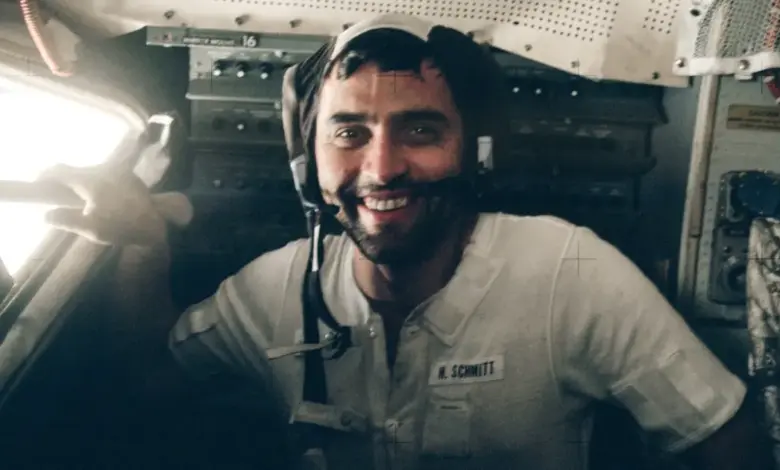
Harrison Schmitt, who left bootprints on the Moon during apollo 17 in 1972, tells the Artemis II crew one clear thing: “Make sure that you’ve got your training down pat. Be ready for anything unexpected, but have a great time. Enjoy it. ” As NASA prepares a crewed flyby scheduled to lift off as early as 6: 24 p. m. ET, Schmitt frames a return to lunar operations as both wonder and hard work.
What Apollo 17 actually accomplished — the science and the distance
Verified fact: Eugene Andrew Cernan, commander of Apollo 17, led a mission that became the final crewed lunar landing of the Apollo program. Apollo 17 astronauts spent nearly 13 days in space, more than three of those on the lunar surface. The crew drove a lunar rover a total of about 19 miles and brought geology samples back to Earth, listed in mission records as 243 pounds.
Analysis: Those operational benchmarks—duration in space, surface time, rover distance and the mass of returned samples—anchor why Schmitt’s practical advice carries weight. The mission produced tangible scientific returns and a procedural knowledge base that future crews will not re-create by sentiment alone.
What Harrison Schmitt wants Artemis II to know
Verified fact: Harrison Schmitt, an Apollo 17 astronaut, described his own experience as a sequence of new perceptions: “Every day, every hour, every minute, is a new experience. ” He recalled entering lunar orbit on the far side and noticing a bluish tint from Earth light. Schmitt told the Artemis II crew to rely on rigorous training and readiness for unexpected events while also enjoying the voyage.
Analysis: Schmitt’s counsel emphasizes operational preparedness over symbolic gestures. His recollection of the far side’s darkness and the subtle Earthlight effect is presented as concrete experience that modern crews will now see under different conditions; it is practical guidance shaped by direct exposure to the mission environment.
How Apollo 17’s legacy shapes Artemis II — and why the missions are different
Verified fact: Reid Wiseman, commander of the Artemis II mission, says the Artemis II crew will get better glimpses of the Moon’s far side than Apollo crews did; he noted that roughly 60% of the far side has never been seen by human eyes because of lighting conditions. NASA positions Artemis II as a crewed lunar flyby intended to kick-start a new era of lunar exploration, with the crew planned to circle the Moon as a step toward a planned lunar landing in 2028. The Apollo era ended its series of landings after Apollo 17 as NASA’s budget shrank, additional missions were canceled and focus shifted to space stations.
Analysis: The operational profile is fundamentally different. Apollo 17 focused on surface science and extended surface stays; Artemis II is a flyby that tests systems and human performance on a trajectory intended to inform longer-term ambitions. Schmitt’s emphasis on training addresses the continuity between those objectives: different mission architectures still demand the same baseline of crew readiness.
What the public should demand now
Verified fact: The public will soon witness a crewed lunar flyby designed to inform future landings; senior figures from both the Apollo and Artemis eras have highlighted the technical and experiential differences between the missions.
Analysis and accountability: Policymakers and mission managers should make training standards, flight objectives and measurable success criteria explicit before launch windows close. Schmitt’s advice is concrete and testable; the question for program managers is whether training regimens and mission objectives will be published in a manner that allows independent assessment of readiness and mission outcomes. Transparency about what Artemis II will validate—navigation profiles, life‑support performance, crew procedures in deep space and far‑side observations—would convert Schmitt’s practical counsel into institutional practice.
Final note: For a mission that will travel where few humans have seen, Schmitt’s core message remains simple and verifiable: rigorous training, documented objectives and clear measures of success are the best way to turn a historic flyby into a durable step forward.