Commonwealth Debate Exposes Paradox: Simultaneous Para and Non‑Para Games Promised as Equality Measure — But Is Integration Symbolic?

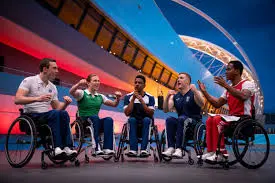
The commonwealth will stage a high‑profile debate in London that confronts a core tension in international sports policy: can staging Para and non‑Para competitions at the same event, while keeping categories separate, deliver genuine equality and inclusion? The 10th Commonwealth Debate on Sport and Sustainable Development convened by the Commonwealth Secretariat is positioned as a test of that claim.
What is the motion and who is convening the debate?
Verified facts: The Commonwealth Secretariat will convene the 10th Commonwealth Debate on Sport and Sustainable Development in London on 31 March 2026, co‑organised with Commonwealth Sport. The motion to be debated is: “Sporting equality is best achieved when Para and non‑Para games are staged simultaneously. ” The event will gather ministers, senior officials, high commissioners, athletes, young people, academics, sports advocates and Commonwealth accredited organisations. Tanmaya Lal, Commonwealth Deputy Secretary‑General (Programmes) at the Commonwealth Secretariat, framed sport as an avenue for confidence building, social inclusion and peace. Martin Reynolds, Deputy Chief Executive Officer at Commonwealth Sport, said the debate is intended to challenge and hold stakeholders to account. Stef Reid MBE PLY, World Champion and four‑time Paralympian, will moderate the debate.
Analysis: The structure and participant list signal that this is more than a seminar: it is a policy‑facing forum that links advocacy, ministerial priorities and sporting administrators. Labeling the motion in stark terms forces a binary test — simultaneous staging versus separation — which concentrates attention on operational, symbolic and political implications rather than incremental adjustments.
How will the debate intersect with Glasgow 2026 and ministerial planning?
Verified facts: The debate takes place ahead of International Day of Sport for Development and Peace (observed each year on 6 April), the 12th Commonwealth Sports Ministers Meeting (12CSMM), and the 23rd Edition of the Commonwealth Games in Glasgow. Organisers expect around 3, 000 athletes from 74 Commonwealth Games Associations to compete for 215 gold medals across 10 sports. Glasgow 2026 will be the first time Para athletes and non‑Para athletes compete at the same event and time, while remaining in separate categories. Commonwealth Sport describes Glasgow’s Para programme as the largest ever in Games history.
Analysis: The timing links debate outcomes directly to decision windows for ministers and Games planners. If participants draw a direct line between the motion and Glasgow’s model, that could reinforce Glasgow’s approach as a template; conversely, critiques voiced in London could prompt ministers at the 12CSMM to seek clarifications or policy adjustments. The institutional proximity of the debate to both ministerial and Games‑planning milestones amplifies its potential policy impact while keeping the focus on demonstrable practices rather than rhetoric.
What accountability and policy questions must be clarified after the debate?
Verified facts: The debate is described as a mechanism to explore how inclusive sporting practices contribute to Sustainable Development Goal targets, notably health and well‑being, reduced inequalities and promoting inclusive societies. The event is accessible online and is explicitly framed as part of a broader commitment to using sport as a bridge for development, jobs, social inclusion and peace, language used by Tanmaya Lal in advance of the debate.
Analysis: The most concrete accountability questions emerging from these facts are procedural: how will equality and inclusion be measured when events are staged simultaneously; which institutions will report metrics to ministers; what legacy commitments will Commonwealth Sport and the Commonwealth Secretariat make public after the debate? These are not answered by the convening alone. A meaningful public reckoning requires that participants move from debate to named deliverables — measurement frameworks, reporting timetables and clear responsibilities tied to the 12CSMM and Glasgow organisers.
Verified facts versus informed analysis: the preceding paragraphs clearly separate stated facts drawn from the event announcement and named participant roles from interpretive points that assess potential policy pathways. Verified facts are drawn from the Commonwealth Secretariat’s event convening, participant lists and programme framing; analysis is identified as inference grounded in those facts and framed conditionally.
Next steps: transparency from conveners and ministers on measurement, timelines and concrete legacy commitments is necessary for the debate’s promise — of making sport a vehicle for equality — to move beyond symbolism into sustained policy change.