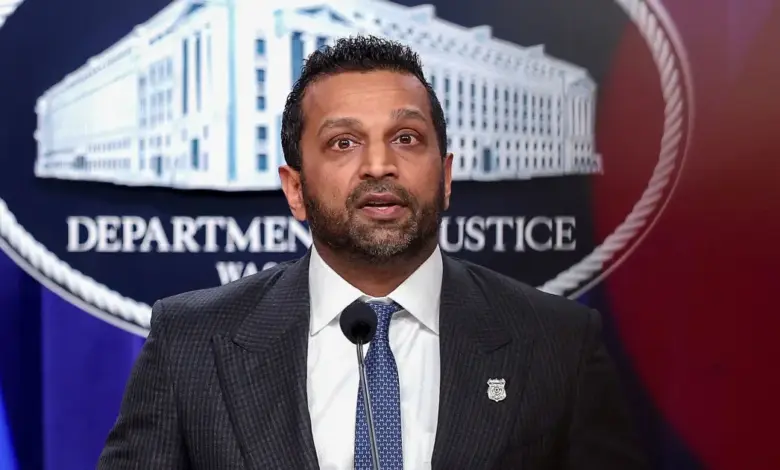
On Friday, pro-Iran hackers published more than 300 emails and photos from what appears to be a personal email account for fbi director kash patel, exposing family correspondence and images that have not been forensically verified. The leak followed an online confrontation between the hackers and U. S. authorities.
What did Fbi Director Kash Patel’s leaked emails contain?
The files made public by a group calling itself Handala include hundreds of messages and several photos. Most of the emails are dated between 2010 and 2012, and the most recent file in the collection is a plane ticket receipt from 2022. The materials appear curated into folders last modified on May 21, 2025. Many of the messages are personal in nature and involve correspondence among family members; some images show what appears to be a trip to Cuba.
Metadata in the published files indicates the material was obtained before a wider regional conflict began. In one item from 2014, when Patel worked in the Justice Department’s National Security Division, an email appears to show him sending himself a link and cc’ing both a former FBI address and a personal Gmail account. U. S. officials informed Patel in late 2024 that he had been a target of an Iranian cyberattack and that the hackers had sought his communications.
What is known about the hackers and the U. S. response?
The hacking group Handala posted the files and said the leak was retaliation after the FBI and the Justice Department seized several of its websites, accusing the group of psychological operations and of being a front for Iran’s Ministry of Intelligence and Security. Handala posted on its Telegram channel that the FBI “shouldn’t have started a confrontation and conflict with us” and that it would soon post evidence of “the biggest security breach of the past decade. ” That Telegram channel has since been deleted.
An FBI spokesman acknowledged the campaign and said, “The FBI is aware of malicious actors targeting Director Patel’s personal email information, and we have taken all necessary steps to mitigate potential risks associated with this activity. The information in question is historical in nature and involves no government information. ” The State Department offered a reward of up to $10 million for information on Iranian hackers that threaten U. S. critical infrastructure.
Handala has also claimed responsibility for a destructive cyberattack on a U. S. medical technology supplier earlier this year, a rare instance of a damaging strike since the regional conflict began. In the lead-up to the 2024 election, the FBI, Microsoft and Google each said hackers working for Iran’s Islamic Revolutionary Guard Corps had tried to hack multiple political figures; the hackers targeted affiliates of both major parties.
Gmail did not respond to a request for comment. Telegram did not respond to a request for comment. The published cache contains several photos of Patel that do not appear to have been previously public.
How are institutions and outlets handling the material?
Officials have emphasized that the material released is personal and historical in nature and that steps have been taken to limit risk. U. S. action included the seizure of Handala websites. Some media outlets that were approached with other stolen documents in recent weeks declined to publish them, and some of the material circulated by the hackers was curated rather than a raw dump.
Security questions remain. The published files have not been forensically verified as authentic, and the motivations behind the timing of the release are tied by Handala to recent enforcement actions against the group. The State Department’s reward offer underscores how authorities are treating Iran-linked cyber activity as a national-security priority.
Back where the leak landed — on personal devices and inboxes — the photos and family emails change the tone of a national-security story into something intimate and immediate. For the fbi director kash patel named in the files, the hack turned private snapshots and routine correspondence into a public record, raising unresolved questions about what more might follow and how officials will shield personal data without curtailing accountability.