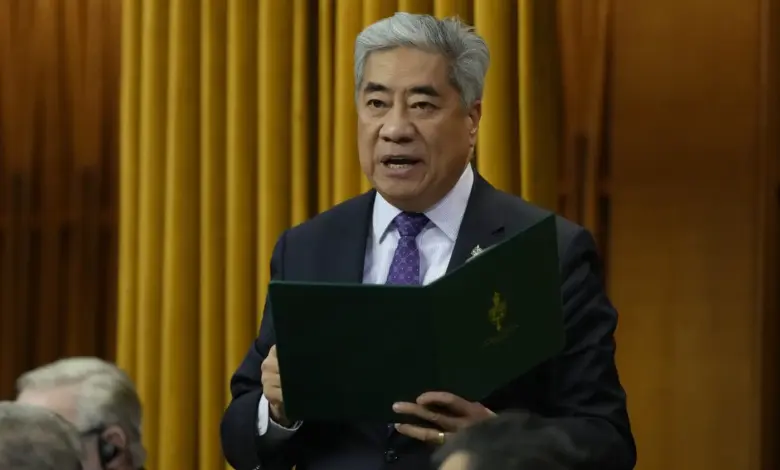
michael ma is at the center of a parliamentary controversy after he questioned an expert’s testimony on forced labour in Xinjiang. The exchange took place as the House industry committee examined a decision by Prime Minister Mark Carney to lower Canadian restrictions on Chinese electric vehicles and clear some of those cars for sale in Canada.
What happens when Michael Ma presses an expert on forced labour?
During committee hearings, Margaret McCuaig-Johnston, a senior fellow at the University of Ottawa, told the committee that Chinese vehicles are made with products that come from slave labour by the Uyghur minority. Michael Ma repeatedly asked whether McCuaig-Johnston had personally witnessed forced labour in Xinjiang and suggested the testimony amounted to hearsay. That line of questioning prompted outrage from Conservatives on the committee.
Ma crossed the floor from the Conservatives to the Liberals in December and joined the Prime Minister’s caucus and its trip to Beijing in January. Ma’s office has said he will release a statement shortly. The Prime Minister’s Office did not immediately respond when asked whether Ottawa no longer believes Beijing uses slave labour in Xinjiang.
What happens when the committee reviews eased rules on Chinese electric vehicles?
The House industry committee is examining a decision to lower Canadian restrictions on Chinese electric vehicles and allow some of those cars to be sold in Canada. That policy review has been framed in the hearing by testimony linking components in Chinese vehicles to alleged slave labour involving the Uyghur minority. The juxtaposition of expert testimony and Ma’s questioning placed human rights claims and trade policy under the same parliamentary spotlight.
The hearing therefore combined three explicit elements: an institutional review of vehicle approvals, expert claims about supply chains and forced labour, and a high-profile line of questioning by an MP who recently changed parties and travelled with the Prime Minister’s caucus to Beijing. Those elements are on the public record from the committee session.
Who is affected and what are the immediate stakes?
- Michael Ma — the MP who crossed from the Conservatives to the Liberals and raised the questions at committee.
- Margaret McCuaig-Johnston — senior fellow at the University of Ottawa and the expert who linked vehicle components to alleged forced labour.
- House industry committee members — responsible for examining the decision on Chinese electric vehicles.
- Prime Minister Mark Carney and the Prime Minister’s Office — linked through the policy decision and the Beijing trip.
- Conservative MPs on the committee — expressed outrage at Ma’s characterization of the testimony.
- The Uyghur minority — named in the expert testimony as the group alleged to have been subjected to forced labour in relation to vehicle components.
- Chinese vehicles cleared for sale — the subject of the committee’s review and the policy decision under scrutiny.
The immediate stakes are procedural and political: the committee must continue its examination of the vehicle-approval decision while members of parliament, parties and officials respond to the exchange. Ma’s forthcoming statement and any committee follow-up are the next observable steps noted by participants.
Readers should expect further clarification from michael ma’s office and from the committee as it proceeds with its review. The hearing made clear that questions about supply chains, human rights claims and trade approvals are entangled in ongoing parliamentary oversight.