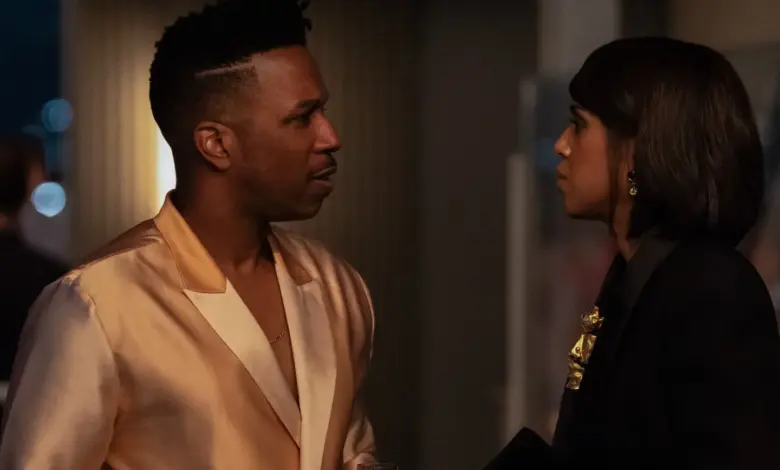
On screen, three women whirl under warm lights, laughing and drunk in a moment of private joy — and then, quietly, one leans in to confess an affair. That jolt, in which a secret slips between friends, is the first sting of imperfect women in the Apple TV limited series: an instant that maps desire, class and the brittle architecture of long friendship.
What is Imperfect Women about?
The series opens by showing how a single revelation can destabilize a tightly woven life. The pilot places Eleanor, Nancy and Mary at the center of an unraveling: Nancy is revealed to be carrying secrets, Eleanor harbors a decades-long crush on Nancy’s husband Robert, and Mary keeps her own private distance from both. Nancy’s murder early in the story becomes the engine for suspicion, grief and fractured trust among a circle that includes Eleanor’s brother Donovan and Nancy’s husband and daughter. Annie Weisman, the showrunner who adapted Araminta Hall’s novel for the screen, says, “We want everyone to keep guessing, ” a design choice that pushes writers to give the audience reasons both to love and to doubt each character.
Why did the showrunner change the book’s setting and structure?
Adaptation choices are explicit in the storytelling. Annie Weisman describes moving the story from its original England location to Southern California and adding characters not present in the book, choices meant to reshape the texture and stakes of the drama. Araminta Hall, who serves as an executive producer, gave the creative team room to reinterpret the material. Weisman recounts Hall’s blessing: “Best of luck to you, I can’t wait to see it on the air. ” That trust allowed the writers to design the series as a limited run so it could “land in a place where you feel like you know what happens, ” another goal Weisman names — an attempt to give viewers a satisfying narrative arc within eight episodes.
How do class, secrecy and human error drive the mystery?
The series frames personal failing and social standing side by side. Nancy’s life — raised “on the wrong side of the tracks” yet now married to a wealthy heir — and Eleanor’s role as an intergenerationally wealthy philanthropist set up a tension of origins and access. Mary is cast as a stay-at-home mother whose marriage to an English professor reads differently in the world of the show, where domestic appearance and economic reality collide. Those contrasts shape motive and motive-reading: Eleanor’s decision to sleep with Robert in episode two reframes grief as something more complicated, hinting at long-harbored feelings rather than mere grief mismanagement. It is, in Weisman’s words echoed in the writers’ room debate, an admission of human fallibility: “They’re making bad choices sometimes — we all do. ” The narrative uses those bad choices to widen the pool of suspects and to make character more than caricature.
Voices inside the story and what they reveal
The cast is central to the series’ pull: Kerry Washington plays Eleanor, Kate Mara plays Nancy, and Elisabeth Moss plays Mary. Other named figures orbit the central trio, including Donovan, Nancy’s husband Robert, and their daughter Cora, each adding relational pressure to the core friendship. Weisman also highlights the addition of Donovan’s character as an invention of the adaptation — a deliberate structural change to sharpen certain emotional dynamics. Through those individual perspectives the series keeps the mystery at once procedural and intimate: a police inquiry sits atop a tangle of private choices.
Writers and producers designed the show to be both alluring and unsettling. Weisman says the goal is to seduce viewers into empathy while still surprising them at the end of episodes, preserving the feel of not knowing what is true. That creative posture — a push-and-pull between sympathy and suspicion — is the dramatic engine that sustains the limited series format.
Back where the story begins, the three women who danced and confided stand again in that light, now refracted through loss and revelation. The opening laughter registers differently, and the question that remains as viewers watch the remaining episodes is the same one a good mystery leaves: how much of friendship survives when everyone has something to hide? As the series progresses, imperfect women continue to make choices that complicate both motive and mercy — and the show asks whether knowing the truth will heal them, or only expose new fractures.