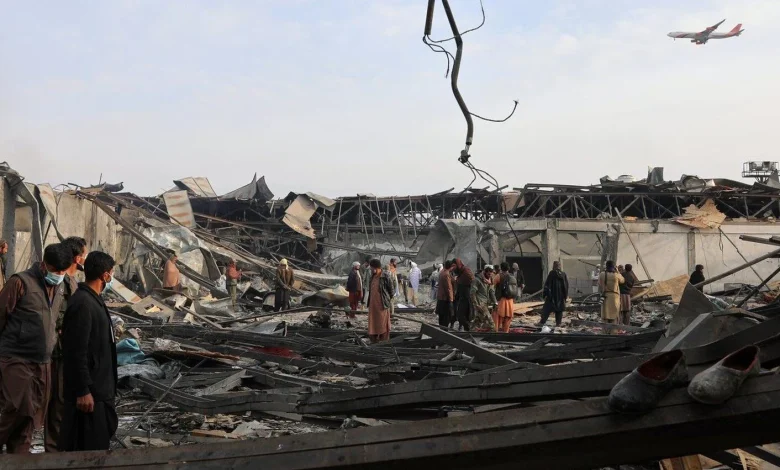
Rescue crews spent the morning digging bodies from the ruins of a drug rehabilitation facility in Kabul after Afghan a late-night strike killed at least 400 people at the Omid Addiction Treatment Hospital. The Afghan government blamed pakistan for the attack, saying the 2, 000-bed facility was largely destroyed and about 250 people were injured. Flames and scattered rubble left volunteers and firefighters struggling to recover casualties while officials condemned the strike and international calls for a ceasefire remained unheeded.
Background & context: how the hospital became a focal point
The strike occurred amid a sharp escalation of fighting between the two neighbors that began late last month, a period that has included repeated cross-border clashes and airstrikes inside Afghanistan. Afghan authorities said the facility struck was the Omid Addiction Treatment Hospital, a 2, 000-bed center in Kabul. Deputy government spokesperson Hamdullah Fitrat said the attack hit the hospital at about 9 p. m. local time and that the death toll had “so far” reached 400 people, with roughly 250 injured. Local footage showed security forces and volunteers working in flashlights as firefighters extinguished flames and cleared rubble.
Pakistan Denial and official reactions
Islamabad rejected the allegation that a hospital was targeted. Pakistani Prime Minister Shehbaz Sharif’s spokesperson, Mosharraf Zaidi, dismissed the allegations as baseless and said no hospital was hit in Kabul. Afghan government spokesperson Zabihullah Mujahid condemned the strike, stating, “We strongly condemn this crime and consider such an act to be against all accepted principles and a crime against humanity. ” The exchange of fire along the common border earlier that day had already been blamed for killing four people inside Afghanistan, underscoring how rapidly the confrontation has intensified.
Deep analysis: immediate causes, implications and ripple effects
The devastation at a large medical facility shifts the crisis from cross-border skirmishes to allegations of attacks on civilian infrastructure, a threshold that tends to draw sharper domestic outrage and international scrutiny. Analysts and officials will assess why a high-capacity treatment center was struck and how rescue operations can proceed amid continuing hostilities. The presence of hundreds of casualties places enormous strain on local emergency response and medical capacity; volunteers and firefighters were reported carrying casualties through unstable rubble as they sought to extinguish lingering fires. With strikes also reported in eastern Afghanistan and the border exchanges continuing, the incident may further erode fragile channels for de-escalation that had been sought since clashes intensified last month.
Regional and global impact: what this means next
The attack — and the sharp official exchanges that followed — heightens the risk of broader regional destabilization. International calls for a ceasefire were said to have gone unheeded, and the scale of reported deaths at a single facility could harden positions on both sides while complicating humanitarian access in Kabul and border provinces. Questions will focus on accountability for civilian harm and on whether current diplomatic pressure can reopen avenues to halt strikes and cross-border fire. With pakistan accused and Islamabad denying responsibility, the path forward depends on verifiable investigation and renewed diplomatic engagement. Will those efforts follow, and can they prevent further civilian catastrophe?